Laurentian
Brassica napus
Round, uniform roots with excellent taste and texture. Purple tops with pale yellow flesh.
Harvest
95d
Days to harvest
Sun
Full sun to part shade
Zones
8–9
USDA hardiness
Height
4 feet
Planting Timeline
Showing dates for Laurentian in USDA Zone 7
All Zone 7 root-vegetable →Zone Map
Click a state to update dates
Laurentian · Zones 8–9
Growing Details
Succession Planting
Rutabaga takes 95 days to harvest and holds a bed for the better part of a season, so you're not running tight 2-week successions the way you would with arugula or radishes. Two sowings staggered about 3 weeks apart — starting in late March — is about as much succession planting as makes practical sense. That spread gets you harvests running from late summer into November rather than everything bulking up at once.
Stop sowing by mid-May. Rutabaga germinates best in soil temperatures between 45°F and 85°F, and roots that develop through peak summer heat tend to come out woody and bitter. One early sowing and one follow-up is the ceiling here.
Complete Growing Guide
Round, uniform roots with excellent taste and texture. Purple tops with pale yellow flesh. According to Johnny's Selected Seeds, Laurentian is 95 days to maturity, annual, open pollinated.
Light: Full sun (6 or more hours of direct sunlight a day), Partial Shade (Direct sunlight only part of the day, 2-6 hours). Soil: Clay, Loam (Silt), Sand. Soil pH: Acid (<6.0), Neutral (6.0-8.0). Drainage: Good Drainage, Moist. Height: 0 ft. 10 in. - 2 ft. 0 in.. Spread: 1 ft. 0 in. - 2 ft. 0 in.. Spacing: 12 inches-3 feet. Growth rate: Medium. Maintenance: Medium. Propagation: Seed, Stem Cutting. Regions: Coastal, Mountains, Piedmont.
Harvesting
Laurentian reaches harvest at 95 days from sowing per Johnny's Selected Seeds. As an annual, harvest continues until frost ends the season.
The fruits dry and split when ripe.
Color: Brown/Copper, Green. Type: Siliqua. Length: > 3 inches.
Garden value: Edible
Harvest time: Fall, Summer
Bloom time: Spring, Summer
Edibility: The foliage is edible raw or cooked but when cooked can emit an unpleasant odor.
Storage & Preservation
# Storage and Preservation
Laurentian rutabagas keep best in cool, humid conditions between 32–40°F with 90–95% relative humidity. Store unwashed roots in perforated plastic bags or wooden crates lined with damp sand or sawdust to prevent shriveling. Properly stored roots will remain firm and usable for 4–6 months, making them ideal for winter eating.
For longer preservation, freeze rutabagas by peeling, cubing, blanching for 3–4 minutes, then packing in freezer bags; they'll hold quality for 8–10 months. Canning is less common but possible using pressure-canning methods for safety. Dehydration works well for chips or rehydration in soups.
Laurentian's dense, waxy skin resists storage rot better than many varieties, so avoid storing alongside apples and other ethylene producers, which can trigger early sprouting and bitterness.
History & Origin
Laurentian is open-pollinated, meaning seed saved from healthy plants will produce true-to-type offspring. Listed in the Johnny's Selected Seeds catalog.
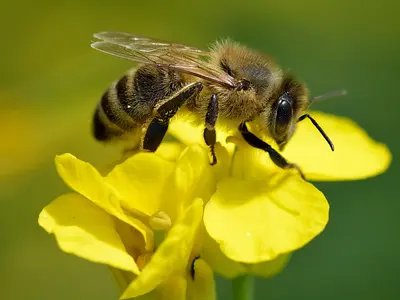
Rapeseed, also known as rape and oilseed rape and canola, is a yellow-flowered member of the Brassicaceae family.
Advantages
- +Round, uniform roots make harvesting and storage incredibly convenient
- +Excellent taste and texture distinguish Laurentian from many other rutabagas
- +Purple tops with pale yellow flesh provide attractive visual appeal
- +95-day maturity allows two crops in longer growing seasons
- +Easy difficulty rating means beginners can successfully grow Laurentian
Considerations
- -Extended 95-day growing season limits options in short-season regions
- -Susceptible to clubroot disease in acidic or contaminated soils
- -Purple-topped varieties sometimes develop bitter flavor if stressed by heat
- -Pale yellow flesh can split or crack if soil moisture fluctuates excessively
Companion Plants
Onions and garlic are the companions worth planting closest to Laurentian. Alliums release sulfur compounds that interfere with the host-finding behavior of aphids and flea beetles — both of which locate Brassica leaves with depressing efficiency. They also run shallow and fibrous, so their roots stay out of the zone where a rutabaga taproot is doing its work. No real resource competition to speak of.
Carrots earn a spot for the same root-depth logic: they're pulling from a different soil layer, have different nutrient demands, and their presence helps keep the row from compacting. Radishes are useful for a different reason — sown in the same bed, they mature in 25–30 days and get pulled well before rutabagas need the space at 95 days. Marigolds (Tagetes spp.) and nasturtiums work along bed edges as trap crops, pulling aphids away from the main planting and drawing in lacewings and hoverflies that clean up after them.
Tomatoes and fennel stay out. Tomatoes are heavy nitrogen feeders that complicate your rotation planning — put them next to rutabagas and you're essentially guaranteeing a bed that's been through two demanding crops with overlapping soil disease pressure, which is exactly the setup NC State Extension's rotation guidance warns against. Fennel is allelopathic and suppresses germination and root development in most vegetables nearby; isolate it in a container if you grow it at all. Sunflowers are the less-obvious problem — they compete hard for water during dry stretches and can cast enough shade to stunt a crop that's already pushing 4 feet tall.
Plant Together
Carrots
Break up soil with their taproots, improving drainage and soil structure for rutabagas
Onions
Repel root maggots and other soil-borne pests that commonly attack rutabagas
Garlic
Natural fungicide properties help prevent clubroot and other soil diseases
Peas
Fix nitrogen in soil, providing nutrients for heavy-feeding rutabagas
Lettuce
Shallow roots don't compete with rutabagas, provides living mulch to retain soil moisture
Radishes
Fast-growing trap crop for flea beetles, also helps break up compacted soil
Marigolds
Repel nematodes and other soil pests while attracting beneficial insects
Nasturtiums
Act as trap crop for aphids and cucumber beetles, protecting rutabaga foliage
Keep Apart
Tomatoes
Heavy feeders that compete for nutrients and may stunt root development
Sunflowers
Allelopathic compounds inhibit growth of brassicas including rutabagas
Fennel
Releases allelopathic chemicals that inhibit growth of most vegetables including rutabagas
Nutrition Facts
Per 100g serving. % Daily Value based on 2,000 calorie diet. Source: USDA FoodData Central (FDC #170393)
Troubleshooting Laurentian
What you'll see, why it happens, and what to do about it.
Seedlings collapse at soil level within the first 1–2 weeks after germination — stems pinched, blackened, and almost girdled; roots brown and slimy
Likely Causes
- Damping off — a complex of soil-borne pathogens (Pythium spp., Rhizoctonia solani) that thrive in cold, wet, poorly drained soil
- Overwatering or heavy clay soil that stays saturated around the stem base
What to Do
- 1.Pull and discard affected seedlings immediately — roots and all — don't compost them
- 2.Let the bed surface dry slightly between waterings; Laurentian needs consistent moisture but not standing water pooled around the crown
- 3.If you're direct-sowing into a bed that grew any Brassica last year, move the planting — NC State Extension's IPM guidance recommends keeping related crops out of the same spot for at least 3 years
Slow growth, pale or yellowing leaves, and small misshapen roots at harvest — no visible insects anywhere on the plant
Likely Causes
- Compacted or depleted soil from planting root crops in the same bed in consecutive years
- Nitrogen deficiency after a season of heavy-feeding Brassicas in the same location
What to Do
- 1.Rotate rutabagas out of any bed that grew turnips, cabbage, kale, or other Brassicas the previous season — NC State Extension recommends avoiding the same plant family in one spot more often than once every 3 years
- 2.Before the next sowing, work in a 2–3 inch layer of compost, or follow with a nitrogen-fixing legume cover crop like crimson clover or field peas to rebuild fertility
- 3.Loosen the bed to at least 10–12 inches with a broadfork before direct sowing — rutabaga roots need unobstructed depth to size up
Frequently Asked Questions
How long does it take to grow Laurentian root vegetables from seed to harvest?▼
Is Laurentian a good variety for beginning gardeners?▼
Can you grow Laurentian root vegetables in containers?▼
What does Laurentian taste like and how should you use it?▼
When should I plant Laurentian root vegetables in my garden?▼
Does Laurentian prefer full sun or partial shade?▼
Zone-by-Zone Planting Calendar
| Zone | Indoor Start | Transplant | Direct Sow | Harvest |
|---|---|---|---|---|
| Zone 1 | — | — | June – July | September – September |
| Zone 2 | — | — | May – July | August – September |
| Zone 11 | — | — | January – February | March – December |
| Zone 12 | — | — | January – February | March – December |
| Zone 13 | — | — | January – February | March – December |
| Zone 3 | — | — | May – June | August – October |
| Zone 4 | — | — | April – June | July – October |
| Zone 5 | — | — | April – May | July – November |
| Zone 6 | — | — | April – May | July – November |
| Zone 7 | — | — | March – May | June – November |
| Zone 8 | — | — | March – April | June – December |
| Zone 9 | — | — | February – March | May – December |
| Zone 10 | — | — | January – March | April – December |
Growing Guides from Wind River Greens
Sources & References
External authority sources used in compiling this guide.
- BreederJohnny's Selected Seeds
- USDAUSDA FoodData Central
See the Methodology page for how this data is sourced, what's AI-assisted, and known limitations.