Porto Spineless
Cynara cardunculus
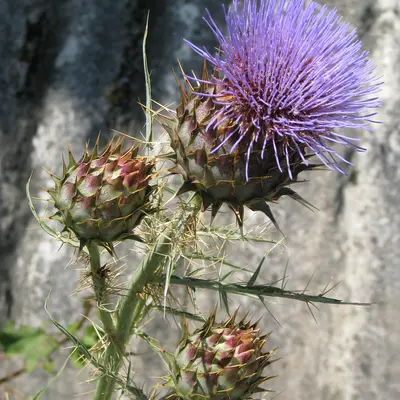
The midrib and leaf stalks of cardoon have a similar flavor to artichoke when boiled (not for eating raw). Both portions are commonly used as a side vegetable, addition to stuffing, or in soups and stews. Cardoon must be blanched before it can be eaten. To blanch, tie the stalks up firmly and wrap with black plastic or black-and-white newspaper. If left unharvested, the 3-4' tall plants will produce large purple thistle-like flowers. The sharply lobed and serrated silver-green leaves are a unique addition to flower arrangements. Significantly reduced spines. Perennial in Zones 6-10.
Harvest
100d
Days to harvest
Sun
Full sun
Zones
7–10
USDA hardiness
Height
3-6 feet
Planting Timeline
Showing dates for Porto Spineless in USDA Zone 7
All Zone 7 herb →Zone Map
Click a state to update dates
Porto Spineless · Zones 7–10
Growing Details
Complete Growing Guide
Light: Full sun (6 or more hours of direct sunlight a day). Soil: Clay, High Organic Matter, Sand, Shallow Rocky. Soil pH: Acid (<6.0), Alkaline (>8.0), Neutral (6.0-8.0). Drainage: Good Drainage, Moist, Occasionally Dry. Height: 3 ft. 0 in. - 6 ft. 0 in.. Spread: 2 ft. 0 in. - 3 ft. 0 in.. Spacing: 3 feet-6 feet. Growth rate: Rapid. Maintenance: Low. Propagation: Division, Root Cutting, Seed. Regions: Coastal, Piedmont.
Harvesting
White to brown cylindrical fruits with numerous bristles are attached at the base.
Color: Brown/Copper, White. Length: < 1 inch. Width: < 1 inch.
Harvest time: Fall
Edibility: Leaf stalks are blanched, harvested, and cooked as a vegetable. Roots may also be cooked and eaten.
Storage & Preservation
Porto Spineless cardoons are best stored in the crisper drawer at 32–40°F with 90–95% humidity, wrapped loosely in damp cloth or perforated plastic bags to prevent moisture loss while allowing air circulation. Fresh stalks maintain quality for 7–10 days under these conditions. For longer preservation, blanch stalks for 3–4 minutes, cool immediately, and freeze in airtight containers for up to eight months. Drying is also effective: slice stalks lengthwise, dry at 95–105°F until brittle, then store in airtight jars away from light. Fermentation works well for a tangy condiment—pack blanched stalks in brine with garlic and herbs for three to four weeks. A particular advantage of Porto Spineless is its tender, thornless ribs require minimal peeling before storage or preservation, reducing prep time compared to spined varieties and lowering the risk of product damage during handling.
History & Origin
Origin: Europe, Africa
Advantages
- +Attracts: Bees, Butterflies, Pollinators
- +Edible: Leaf stalks are blanched, harvested, and cooked as a vegetable. Roots may also be cooked and eaten.
- +Fast-growing
- +Low maintenance
Companion Plants
Tomatoes and Porto Spineless have similar long-season timelines, and in our zone 7 Georgia gardens cardoon's deep taproot pulls moisture from well below where tomato roots concentrate, so they're not fighting each other for water. Marigolds at the bed edge add nematode suppression, worth doing in heavy clay soils where root-knot nematodes (Meloidogyne spp.) build up fast. Sage, thyme, and lavender attract parasitic wasps and tolerate the occasional dry stretch cardoon shrugs off anyway. Cucumbers, pumpkins, and lettuce are all aggressive surface feeders that spread wide fast — any of them planted within 2 feet will crowd out a cardoon seedling before it hits its stride at around 60 days post-transplant.
Plant Together
Tomatoes
Rosemary repels tomato hornworms and other pests that damage tomatoes
Cabbage
Rosemary deters cabbage moths, cabbage loopers, and other brassica pests
Carrots
Rosemary repels carrot flies and helps improve carrot growth
Beans
Rosemary attracts beneficial insects that help with bean pollination
Sage
Both Mediterranean herbs have similar growing requirements and complement each other
Thyme
Compatible growing conditions and both help repel garden pests
Lavender
Similar water and soil requirements, both attract beneficial pollinators
Marigolds
Both repel harmful insects and attract beneficial predatory insects
Keep Apart
Cucumber
Rosemary can stunt cucumber growth and affect fruit development
Lettuce
Rosemary's strong oils can inhibit lettuce germination and growth
Pumpkins
Allelopathic compounds from rosemary can reduce pumpkin vine vigor
Nutrition Facts
Per 100g serving. % Daily Value based on 2,000 calorie diet. Source: USDA FoodData Central (FDC #172232)
Pests & Disease Resistance
Common Pests
Slugs, snails, carrot rust fly
Diseases
Powdery mildew, root rot in poorly drained soils
Troubleshooting Porto Spineless
What you'll see, why it happens, and what to do about it.
White powdery coating on leaves and stalks, usually showing up mid to late summer
Likely Causes
- Powdery mildew — a fungal disease that thrives in warm days and cool nights with poor airflow
- Crowded planting at less than 24 inches apart, which traps humidity around the foliage
What to Do
- 1.Strip and trash (don't compost) the worst-affected leaves to open up airflow
- 2.Spray a preventive mix of 1 tablespoon baking soda plus 1 tablespoon summer horticultural oil per gallon of water — NC State's Organic Gardening chapter notes this combination works against powdery mildew and should be applied every 3 to 5 days
- 3.Next season, give plants the full 36-inch spacing so air can move between those 3-to-6-foot stalks
Irregular holes chewed in leaves overnight, silvery slime trails visible on or near the plant base
Likely Causes
- Slugs or snails — NC State Extension lists both as common pests on cardoon, and they're especially bad in wet springs or after heavy mulching
- Debris and dead leaf tissue sitting on the soil surface, which gives slugs daytime cover
What to Do
- 1.Clear fallen leaf tissue off the soil promptly — dead plant matter at the base is prime slug habitat and also invites fungal disease
- 2.Set out iron phosphate bait (Sluggo or similar) around the base of plants at transplant and after heavy rains
- 3.Hand-pick at night with a flashlight for a week straight — it makes a real dent in the population
Frequently Asked Questions
How long does Porto Spineless cardoon take to harvest?▼
Is Porto Spineless cardoon good for beginner gardeners?▼
What does Porto Spineless cardoon taste like?▼
When should I plant Porto Spineless cardoon?▼
How do you blanch Porto Spineless cardoon?▼
Can Porto Spineless cardoon be used as an ornamental?▼
Zone-by-Zone Planting Calendar
| Zone | Indoor Start | Transplant | Direct Sow | Harvest |
|---|---|---|---|---|
| Zone 3 | April – May | June – July | — | July – October |
| Zone 4 | March – April | June – July | — | July – October |
| Zone 5 | March – April | May – June | — | June – October |
| Zone 6 | March – April | May – June | — | June – November |
| Zone 7 | February – March | April – June | — | June – November |
| Zone 8 | February – March | April – May | — | May – December |
| Zone 9 | January – February | March – April | — | April – December |
| Zone 10 | January – January | February – April | — | April – December |
Growing Guides from Wind River Greens
Sources & References
External authority sources used in compiling this guide.
- BreederJohnny's Selected Seeds
- USDAUSDA FoodData Central
See the Methodology page for how this data is sourced, what's AI-assisted, and known limitations.