Cilantro
Coriandrum sativum
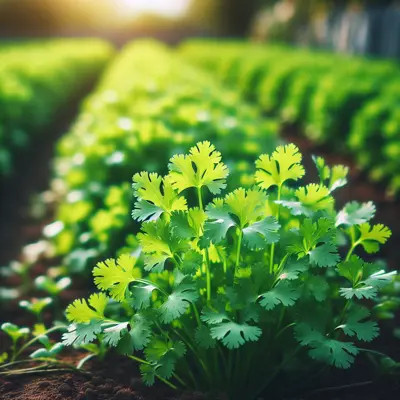
Cilantro is a delicate leafy herb with feathery, triangular green foliage that reaches harvest maturity in 16-25 days. The plant produces thin, lacy stems bearing distinctive serrated leaves with a bright, citrusy flavor profile that carries subtle soapy notes and fresh herbal undertones. Cilantro thrives in full sun to partial shade and prefers well-drained, fertile soil. As a quick-maturing heirloom variety, it's ideal for succession planting throughout the growing season. Widely used in Latin American, Asian, and Mediterranean cuisines as a fresh garnish and flavor component in salsas, curries, and chutneys.
Harvest
16-25d
Days to harvest
Sun
Full sun to partial shade
Zones
2–11
USDA hardiness
Height
12-24 inches
Planting Timeline
Showing dates for Cilantro in USDA Zone 7
All Zone 7 herb →Zone Map
Click a state to update dates
Cilantro · Zones 2–11
Growing Details
Succession Planting
Direct sow cilantro every 14–21 days from your last frost date through mid-spring, then stop once daytime highs are consistently above 85°F — the plant bolts fast in heat, and no amount of extra watering slows it down. Pick back up with sowings in late summer, about 8–10 weeks before your first fall frost, and you'll get a second productive stretch as temperatures drop back into the 60s and 70s.
In zone 7, that translates to a spring run from roughly late February through April, a summer gap, then fall sowings starting in August. A single sowing gives you about 3–4 weeks of usable leaf harvest before the plant sends up a flower stalk, so staggering is the only way to keep a steady supply rather than a brief glut followed by nothing but seeds.
Complete Growing Guide
Light: Full sun (6 or more hours of direct sunlight a day), Partial Shade (Direct sunlight only part of the day, 2-6 hours). Soil: Loam (Silt). Drainage: Good Drainage, Moist. Height: 1 ft. 0 in. - 2 ft. 0 in.. Spread: 1 ft. 0 in. - 2 ft. 0 in.. Spacing: 12 inches-3 feet. Growth rate: Rapid. Maintenance: Low. Propagation: Seed. Regions: Coastal, Mountains, Piedmont.
Harvesting
Coriander seeds ripen in round, yellow-brown pod
Color: Brown/Copper, Gold/Yellow. Length: < 1 inch.
Garden value: Edible
Edibility: Leaves, stems, flowers and seeds are edible. Leaves/flowers as an herb and seeds (Coriander) as a spice.
Storage & Preservation
Fresh cilantro leaves are extremely perishable and best used within 3-5 days of harvest. Store unwashed leaves in the refrigerator by placing stems in a glass of water and covering loosely with a plastic bag. Change the water every 2-3 days. Alternatively, wrap clean, dry leaves in slightly damp paper towels and store in a perforated plastic bag in the crisper drawer.
For longer preservation, freezing works better than drying since cilantro loses most of its flavor when dried. Freeze whole leaves in ice cube trays with water or oil, or chop and freeze in small portions using freezer bags. The texture changes but flavor remains intact for cooking applications.
Consider making cilantro paste by blending leaves with a small amount of oil and freezing in ice cube trays. This method preserves color and flavor beautifully for up to six months and works perfectly for adding to soups, curries, and marinades.
History & Origin
Origin: Western Mediterranean, Southern Europe, Western Asia
Advantages
- +Attracts: Butterflies, Predatory Insects
- +Edible: Leaves, stems, flowers and seeds are edible. Leaves/flowers as an herb and seeds (Coriander) as a spice.
- +Fast-growing
- +Low maintenance
Companion Plants
Carrots share root depth with cilantro without much competition, and if you let a few plants bolt, the flower umbels pull in parasitic wasps and hoverflies that hunt aphids and leaf miners — which happen to be two of cilantro's own pest problems. Spinach and lettuce fit neatly underneath: both are short, both tolerate partial shade, and they'll occupy the ground-level space without fighting for water. Chives tucked nearby add a mild allium deterrent for aphid pressure. One note on dill: if you're growing cilantro to seed, keep the two at least 10 feet apart to prevent cross-pollination muddying both crops. For leaf harvest only, they coexist without issue.
Fennel belongs on the far side of the garden. Its roots release allelopathic compounds that suppress germination and can stunt nearby plants — cilantro is sensitive enough that you'll notice the difference in seedling vigor within the first 3 weeks. Rosemary and lavender aren't chemically aggressive, but both want dry, slightly alkaline conditions around pH 6.5–7.5, while cilantro needs consistent moisture and a tighter pH window of 6.2–6.8. Trying to water for both in the same bed means one of them loses.
Plant Together
Spinach
Provides shade for cilantro in hot weather, preventing early bolting
Chives
Repels aphids and other pests that commonly attack cilantro
Dill
Attracts beneficial insects like ladybugs and parasitic wasps
Anise
Improves cilantro germination and growth when planted nearby
Tomatoes
Cilantro repels spider mites and aphids that damage tomato plants
Lettuce
Both prefer cool conditions and lettuce provides ground cover
Carrots
Cilantro attracts beneficial insects that prey on carrot fly
Peas
Nitrogen fixation by peas benefits cilantro growth
Keep Apart
Fennel
Inhibits cilantro growth through allelopathic compounds
Lavender
Requires different watering needs and may compete for nutrients
Rosemary
Prefers dry conditions while cilantro needs consistent moisture
Nutrition Facts
Per 100g serving. % Daily Value based on 2,000 calorie diet. Source: USDA FoodData Central (FDC #169997)
Pests & Disease Resistance
Resistance
Good resistance to most diseases
Common Pests
Aphids, spider mites, leaf miners
Diseases
Bacterial leaf spot, powdery mildew, damping off
Troubleshooting Cilantro
What you'll see, why it happens, and what to do about it.
Seedlings collapse at soil level — stems go black and shrunken, roots brown and slimy, sometimes white fuzzy mold on the soil surface
Likely Causes
- Damping off — typically Pythium or Rhizoctonia species, thriving in cold, wet, poorly-drained soil
- Overwatering or starting seeds in trays without adequate drainage
What to Do
- 1.Pull and discard affected seedlings immediately; don't compost them
- 2.Let the top inch of soil dry slightly between waterings — cilantro wants consistent moisture, not soggy
- 3.Start future batches in fresh, sterile seed-starting mix and make sure trays drain freely; NC State's organic gardening guidance flags damping off as highly tied to waterlogged conditions
Leaves develop a white powdery coating, usually appearing first on older foliage as temperatures climb past 80°F
Likely Causes
- Powdery mildew — a fungal infection that spreads by airborne spores and accelerates when plants are crowded or airflow is poor
- Sowing too late into warm weather, which stresses the plant and lowers its resistance
What to Do
- 1.Thin plants to at least 4 inches apart to open up airflow
- 2.Cut the plant back by one-third to remove heavily colonized growth before spores spread to neighboring rows
- 3.Move your next sowing earlier — cilantro germinates best at soil temps between 50–85°F, and late plantings pushed into summer heat are, per NC State Extension guidance, especially prone to late-season fungal problems
Frequently Asked Questions
How long does cilantro take to grow?▼
Can you grow cilantro in containers?▼
Why does my cilantro keep bolting?▼
Is cilantro good for beginners?▼
When should I plant cilantro?▼
What does cilantro taste like?▼
Zone-by-Zone Planting Calendar
| Zone | Indoor Start | Transplant | Direct Sow | Harvest |
|---|---|---|---|---|
| Zone 2 | April – May | June – August | — | August – September |
| Zone 11 | January – January | January – March | — | March – December |
| Zone 3 | April – May | June – July | — | July – October |
| Zone 4 | March – April | June – July | — | July – October |
| Zone 5 | March – April | May – June | — | June – October |
| Zone 6 | March – April | May – June | — | June – November |
| Zone 7 | February – March | April – June | — | June – November |
| Zone 8 | February – March | April – May | — | May – December |
| Zone 9 | January – February | March – April | — | April – December |
| Zone 10 | January – January | February – April | — | April – December |
Growing Guides from Wind River Greens
Sources & References
External authority sources used in compiling this guide.
- BreederJohnny's Selected Seeds
- USDAUSDA FoodData Central
See the Methodology page for how this data is sourced, what's AI-assisted, and known limitations.