Pineapple Sage
Salvia elegans
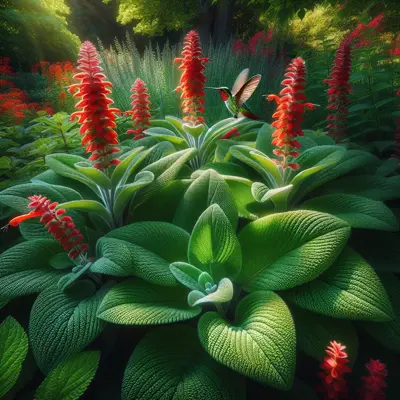
A spectacular perennial herb with heart-shaped leaves that smell exactly like fresh pineapple when crushed, followed by brilliant red tubular flowers that hummingbirds absolutely adore. This fast-growing sage variety brings tropical fragrance to temperate gardens and offers a unique fruity flavor unlike any other herb. The stunning late-season blooms make it a standout in both herb and ornamental gardens.
Harvest
70-90d
Days to harvest
Sun
Full sun to partial shade
Zones
8–10
USDA hardiness
Height
3-5 feet
Planting Timeline
Showing dates for Pineapple Sage in USDA Zone 8
All Zone 8 herb →Zone Map
Click a state to update dates
Pineapple Sage · Zones 8–10
Growing Details
Complete Growing Guide
Light: Full sun (6 or more hours of direct sunlight a day), Partial Shade (Direct sunlight only part of the day, 2-6 hours). Soil: High Organic Matter. Soil pH: Neutral (6.0-8.0). Drainage: Good Drainage, Moist, Occasionally Dry. Height: 3 ft. 0 in. - 5 ft. 0 in.. Spread: 3 ft. 0 in. - 4 ft. 0 in.. Spacing: 12 inches-3 feet. Growth rate: Rapid. Maintenance: Low. Propagation: Seed, Stem Cutting. Regions: Coastal, Mountains, Piedmont.
Harvesting
Schizocarp has 4 chambers with 1 nutlet each
Type: Schizocarp.
Edibility: It is used in teas, potpourri, cream cheese, jams, and jellies.
Storage & Preservation
Fresh pineapple sage leaves keep best stored like fresh basil – place cut stems in water and cover loosely with a plastic bag, then refrigerate for 7-10 days. For longer storage, remove leaves from stems, wrap gently in damp paper towels, and store in the refrigerator for up to two weeks.
Dry leaves by hanging small bundles in a warm, well-ventilated area away from direct sunlight, or use a dehydrator at 95°F for 4-6 hours. Properly dried leaves retain their pineapple scent for 8-12 months when stored in airtight containers. For immediate use, freeze whole leaves in ice cube trays with water for adding to beverages, or chop and freeze in olive oil for cooking applications. The leaves also make excellent herbal vinegars and simple syrups that capture their unique tropical essence.
History & Origin
Origin: Mexico, Guatemala
Advantages
- +Attracts: Butterflies, Hummingbirds
- +Edible: It is used in teas, potpourri, cream cheese, jams, and jellies.
- +Fast-growing
- +Low maintenance
Companion Plants
Tomatoes and peppers make the most practical neighbors for pineapple sage in a mixed bed. NC State Extension notes that mixing plant families breaks up pest-preferred monocultures and slows early damage from crop-specific insects — and since pineapple sage pulls hard pollinator traffic once it blooms in fall (hummingbirds especially), situating it near fruiting crops is a reasonable trade. Marigolds fit the same logic at 12-18 inches apart; they won't crowd the sage's 24-36 inch footprint, and the interplanting keeps any single pest from finding an easy run. Rosemary and lavender are comfortable at the same soil pH range (both tolerate up to 8.0) and similar drought habits, so they won't compete for water during the dry stretches we get here in the southeast.
Fennel is the one plant worth keeping on the opposite end of the garden — it releases allelopathic compounds that suppress a wide range of herbs, and pineapple sage is susceptible. Black walnut is a harder problem: juglone from the roots and decomposing leaf litter can stunt or kill sensitive plants, and the affected zone typically extends 50-60 feet from the trunk, which rules out most planting spots near an established tree.
Plant Together
Tomatoes
Pineapple sage repels pests like hornworms and whiteflies that commonly attack tomatoes
Peppers
Attracts beneficial pollinators and repels aphids that damage pepper plants
Marigolds
Both repel nematodes and garden pests while attracting beneficial insects
Basil
Similar growing conditions and both repel flies, mosquitoes, and aphids
Rosemary
Compatible Mediterranean herbs that repel cabbage moths and carrot flies
Lavender
Both attract pollinators and beneficial insects while repelling moths and fleas
Beans
Pineapple sage attracts pollinators for bean flowers and repels bean beetles
Nasturtiums
Acts as trap crop for aphids and both attract beneficial predatory insects
Keep Apart
Black Walnut
Produces juglone which inhibits growth of sage family plants
Cucumber
Strong sage aromatics can inhibit cucumber growth and flavor development
Fennel
Allelopathic properties inhibit growth of most herbs including sage varieties
Nutrition Facts
Per 100g serving. % Daily Value based on 2,000 calorie diet. Source: USDA FoodData Central (FDC #170935)
Pests & Disease Resistance
Resistance
Excellent disease resistance, very hardy plant
Common Pests
Generally pest-free, occasional aphids or whiteflies
Diseases
Root rot in poorly drained soils, otherwise disease resistant
Troubleshooting Pineapple Sage
What you'll see, why it happens, and what to do about it.
Stems blackening at the soil line, leaves wilting despite moist soil, roots brown and mushy
Likely Causes
- Root rot — most likely Pythium or Phytophthora species — triggered by waterlogged or poorly drained soil
- Overwatering in heavy clay soil that doesn't dry out between waterings
What to Do
- 1.Pull the plant and check the roots; if more than half are brown and soft, start fresh in a raised bed or container with well-draining mix rather than trying to rescue it
- 2.Amend planting beds with coarse sand or pine bark fines before replanting — pineapple sage wants soil that dries slightly between waterings
- 3.Cut back to about 1 inch per week once established; this plant handles dry stretches well and root rot almost always traces back to too much water, not too little
Sticky residue on leaves and stems, small soft-bodied insects clustered on new growth tips, leaves curling inward
Likely Causes
- Aphids (likely Aphis gossypii or Myzus persicae) — drawn to soft new growth, especially on plants pushed with high-nitrogen fertilizer
- Whiteflies (Trialeurodes vaporariorum) — more common late summer through fall as populations build from the previous spring flush
What to Do
- 1.Knock aphids off with a firm spray of water in the morning so foliage dries before evening
- 2.If populations don't drop after 2-3 days, apply insecticidal soap directly to affected stems and leaf undersides; repeat every 5-7 days for 2-3 applications
- 3.NC State Extension's IPM guidance flags overfertilizing as a driver — lush nitrogen-fed growth is exactly what aphids prefer, so ease off any high-nitrogen feeds by midsummer
Frequently Asked Questions
How long does pineapple sage take to grow from seed?▼
Can you grow pineapple sage in containers?▼
What does pineapple sage taste like compared to regular sage?▼
When do pineapple sage flowers bloom?▼
Is pineapple sage good for beginner gardeners?▼
Can pineapple sage survive winter outdoors?▼
Zone-by-Zone Planting Calendar
Growing Guides from Wind River Greens
Sources & References
External authority sources used in compiling this guide.
- ExtensionNC State Extension
- USDAUSDA FoodData Central
See the Methodology page for how this data is sourced, what's AI-assisted, and known limitations.