Lime Basil
Ocimum x citriodorum
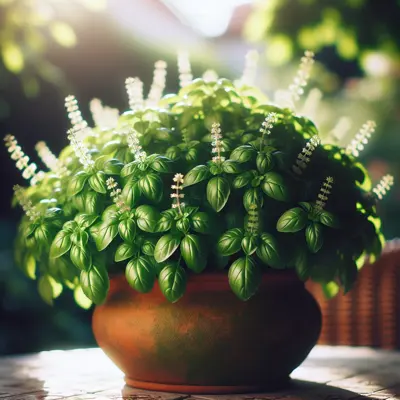
Adds a unique flair to cocktails, fish, and salads. Compact plant has 2" long bright-green leaves. Ht. 16-20".Edible Flowers: Use the flowers in any recipe that calls for basil, or to garnish drinks, salads, soups, pasta, and desserts. Flavor is of intense basil and citrus.
Harvest
60d
Days to harvest
Sun
Full sun
Zones
9–11
USDA hardiness
Height
12-18 inches
Planting Timeline
Showing dates for Lime Basil in USDA Zone 11
All Zone 11 herb →Zone Map
Click a state to update dates
Lime Basil · Zones 9–11
Growing Details
Succession Planting
Start seeds indoors 6–8 weeks before your last frost date, then transplant once nighttime lows hold reliably above 50°F. Sow a fresh tray every 3–4 weeks from your first indoor start through early summer — once daytime highs push past 90°F, transplants stall and bolting accelerates sharply, so the last useful sow is roughly 8 weeks before that threshold. In zone 9, that puts the window from a January indoor start through a May or early June final sow, with harvest stretching from April into December on the earliest plantings.
Complete Growing Guide
Start lime basil indoors 6-8 weeks before your last frost date for the longest harvest season. Sow seeds 1/4 inch deep in seed-starting mix at 70-75°F — they'll germinate in 5-10 days. Keep seedlings under grow lights or in a sunny south window, maintaining soil moisture without waterlogging. Once seedlings develop their first true leaves, transplant to individual 3-inch pots.
Prepare your garden bed by working 2-3 inches of compost into well-draining soil. Lime basil thrives in slightly alkaline conditions (pH 6.5-7.2), so add lime if your soil tends acidic. Choose a spot with morning sun and some afternoon protection in zones 9-10, as intense heat can stress plants and reduce essential oil production.
Transplant outdoors only after soil temperatures consistently reach 60°F and nighttime lows stay above 50°F. Space plants 12-15 inches apart — closer than sweet basil since lime basil stays more compact. Water deeply at transplant time, then maintain consistent moisture without soggy conditions.
Fertilize every 3-4 weeks with a balanced organic fertilizer like fish emulsion diluted to half strength. Over-fertilizing, especially with nitrogen, reduces the intensity of lime basil's signature citrus oils. In containers, use a slightly richer mix and feed every 2 weeks with diluted liquid fertilizer.
Pinch flower buds as soon as they appear to keep leaves tender and flavorful. This variety flowers earlier than sweet basil, so stay vigilant from week 6 onward. Regular harvesting also prevents flowering — aim to harvest leaves weekly once plants reach 6 inches tall.
Avoid the common mistake of planting too early or in cool, wet conditions. Lime basil is even more cold-sensitive than other basil varieties and will sulk or die from slight frost exposure. In northern gardens (zones 3-6), grow in containers you can move indoors when temperatures drop below 45°F at night. Southern gardeners can often grow lime basil through winter with protection during occasional cold snaps.
Harvesting
Begin harvesting lime basil when plants reach 6-8 inches tall, typically 6-8 weeks after transplanting. Look for bright green leaves that feel firm and glossy — avoid yellowing or wilted foliage which indicates stress or overmaturity. The most intense lime fragrance develops in young leaves before the plant flowers.
Harvest in early morning after dew dries but before heat builds, when essential oils are most concentrated. Pinch or cut stems just above a leaf pair, never taking more than one-third of the plant at once. The 'pinch test' works perfectly — if you can cleanly pinch through the stem with your fingernails, it's at peak tenderness.
Unlike sweet basil's larger leaves, lime basil produces smaller foliage that's best harvested as whole sprigs rather than individual leaves. Cut 3-4 inch stem tips, which encourages bushier growth. Each harvest should leave at least 4-6 leaf pairs on main stems to ensure continued production. Regular weekly harvesting prevents the premature flowering that this variety is prone to, extending your harvest season into fall.
Storage & Preservation
Fresh lime basil keeps best stored like cut flowers — place stems in water at room temperature away from direct sunlight. This method preserves the volatile citrus oils for 5-7 days. Refrigerated storage in plastic bags quickly diminishes the signature lime fragrance, so avoid cold storage for immediate use.
For longer preservation, freeze whole leaves in ice cube trays covered with olive oil — perfect for dropping into curries or soups. The citrus oils survive freezing better than traditional drying methods, which often leave lime basil tasting flat and hay-like.
Make lime basil salt by layering fresh leaves with coarse sea salt in a food processor — the salt draws out essential oils while preserving the intense citrus flavor for months. This Southeast Asian preservation technique creates an versatile seasoning for fish dishes and vegetables. Lime basil also makes excellent infused vinegars, capturing the bright citrus notes that fade quickly in dried preparations.
History & Origin
Lime basil (Ocimum americanum) originated in Southeast Asia, particularly Thailand and Vietnam, where it's known as 'horapha' or 'bai maenglak.' Unlike Mediterranean sweet basil (Ocimum basilicum), this species evolved in tropical monsoon climates, developing its intense citrus characteristics to attract specific pollinators in dense forest understories.
Thai cooks have cultivated lime basil for over 800 years, selecting plants with the strongest lime fragrance for traditional dishes like green curry and tom yum soup. The variety spread through Southeast Asian trade routes, becoming essential in Vietnamese pho and Cambodian fish amok.
Western gardeners discovered lime basil through increased interest in authentic Asian cuisine during the 1980s. Seed companies began importing varieties directly from Thai markets, though many early introductions struggled in temperate climates. Modern heirloom strains represent selections that balance the traditional intense lime flavor with better adaptation to diverse growing conditions.
This true-breeding heirloom variety maintains genetic stability passed down through generations of careful seed saving by Thai farming families, preserving the authentic flavor profile essential to traditional Southeast Asian cooking.
Advantages
- +Exceptional lime fragrance intensity that surpasses any other herb variety
- +Better general disease resistance than sweet basil, especially to fungal issues
- +Compact growth habit perfect for container gardening and small spaces
- +Authentic flavor essential for traditional Thai and Vietnamese dishes
- +Earlier maturity than most basil varieties at 60-75 days
- +Self-pollinating annual that produces viable seeds for saving
- +Heat tolerance superior to Mediterranean basil varieties in southern climates
Considerations
- -More cold-sensitive than sweet basil, requiring careful timing and protection
- -Flowers earlier and more aggressively, requiring frequent pinching for leaf production
- -Smaller leaf size means longer harvest time compared to large-leaf basil varieties
- -Limited culinary versatility outside Southeast Asian cuisine applications
- -Essential oils fade quickly in dried preparations, reducing preservation options
Companion Plants
Tomatoes and peppers are the natural fit — same warm-season timing, similar 1-inch-per-week water needs, and neither outcompetes lime basil for root space. French marigolds (Tagetes patula) are worth planting in any nearby gap: NC State Extension notes their effectiveness at suppressing soil nematode populations, which is a real problem in beds that have grown susceptible crops. Carrots and parsley root at a shallower depth than basil's 6–8 inch zone, so they slot in without a fight. Fennel is the one to pull far away — it releases allelopathic compounds that stunt most neighboring herbs, and rue has shown specific inhibition of basil germination in close-range plantings.
Plant Together
Tomatoes
Basil repels hornworms and aphids that commonly attack tomatoes, may enhance tomato flavor
Peppers
Basil deters aphids, spider mites, and thrips that damage pepper plants
Oregano
Both herbs have similar growing requirements and oregano helps repel cucumber beetles
Parsley
Compatible growing conditions and parsley attracts beneficial insects like hoverflies
Lettuce
Basil provides light shade for lettuce and repels aphids that damage leafy greens
Marigolds
Attract beneficial insects and repel nematodes and whiteflies
Asparagus
Basil repels asparagus beetles and both plants have complementary root depths
Carrots
Basil helps deter carrot fly and other root maggots
Keep Apart
Rue
Allelopathic compounds inhibit basil growth and development
Sage
Competes for nutrients and may inhibit basil growth through chemical interactions
Fennel
Releases allelopathic compounds that inhibit growth of most herbs including basil
Nutrition Facts
Per 100g serving. % Daily Value based on 2,000 calorie diet. Source: USDA FoodData Central (FDC #172232)
Pests & Disease Resistance
Resistance
Good general disease resistance, better than sweet basil varieties
Common Pests
Aphids, spider mites, flea beetles
Diseases
Fusarium wilt, downy mildew, bacterial leaf spot
Troubleshooting Lime Basil
What you'll see, why it happens, and what to do about it.
Seedlings or young plants suddenly wilt and collapse at the soil line, stem appears pinched or darkened at the base
Likely Causes
- Fusarium wilt (Fusarium oxysporum) — soil-borne fungus that colonizes roots and vascular tissue
- Overwatering combined with poor drainage, which creates ideal conditions for fungal infection
What to Do
- 1.Pull and trash infected plants immediately — don't compost them
- 2.Don't replant basil in the same bed for at least 2 seasons; rotate to an unrelated crop
- 3.Before the next planting, amend beds with compost to improve drainage and keep the pH between 6.0 and 7.0
Gray-purple fuzz on the undersides of leaves, with yellowing patches on the upper surface — typically appearing during humid stretches
Likely Causes
- Basil downy mildew (Peronospora belbahrii) — a water mold that spreads rapidly in warm, humid conditions above 65°F
- Dense planting or overhead watering that keeps foliage wet for extended periods
What to Do
- 1.Space plants at least 10–12 inches apart so air moves between them
- 2.Water at the base, not overhead, and do it in the morning so leaves dry before nightfall
- 3.Strip and trash affected leaves at the first sign; if the plant is more than half gone, pull it
Small, irregular brown or water-soaked spots on leaves that enlarge and sometimes develop a yellow halo
Likely Causes
- Bacterial leaf spot (Pseudomonas cichorii) — spreads by rain splash and overhead irrigation
- Aphid feeding on new growth, which opens secondary infection sites
What to Do
- 1.Switch to drip or soaker irrigation to keep water off the foliage
- 2.Check leaf undersides for aphid colonies — knock them off with a firm spray of water or apply insecticidal soap
- 3.Remove and discard spotted leaves; copper-based sprays can slow spread but won't reverse heavy infection
Frequently Asked Questions
How long does lime basil take to grow from seed?▼
Can you grow lime basil in containers?▼
What does lime basil taste like compared to regular basil?▼
Is lime basil good for beginners?▼
When should I plant lime basil seeds?▼
How do you keep lime basil from flowering?▼
Zone-by-Zone Planting Calendar
Growing Guides from Wind River Greens
Sources & References
External authority sources used in compiling this guide.
See the Methodology page for how this data is sourced, what's AI-assisted, and known limitations.