Bronze Queen
Nicotiana langsdorffii
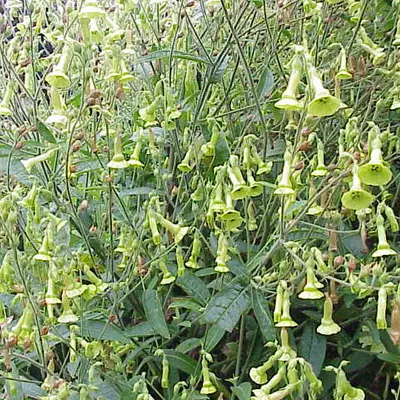
Bell-shaped, chocolate-purple blooms dance on contrasting bright green stems. Long stems add movement and interest to arrangements. Nicotiana flowers continuously for most of the season when cut back regularly. Blooms are relatively fragile and have a short vase life (5-7 days), making them best for casual bouquets, design work (not requiring a long vase life) and home cutting gardens. A favorite of pollinators and hummingbirds. Also known as flowering tobacco.
Harvest
70-80d
Days to harvest
Sun
Full sun
Zones
1–11
USDA hardiness
Height
3-4 feet
Planting Timeline
Showing dates for Bronze Queen in USDA Zone 7
All Zone 7 flower →Zone Map
Click a state to update dates
Bronze Queen · Zones 1–11
Growing Details
Complete Growing Guide
Growing Bronze Queen (Nicotiana langsdorffii) flower. Light: Full sun. Hardy in USDA zones 1 to 11. Days to maturity: 70. Difficulty: Easy.
Harvesting
Bronze Queen reaches harvest at 70 - 80 days from sowing per Johnny's Selected Seeds. As an annual, harvest continues until frost ends the season.
This is an ornamental variety — not grown for harvest. Enjoy in the garden landscape.
Storage & Preservation
Fresh Bronze Queen blooms last 5-7 days in water at room temperature, or 7-10 days if refrigerated at 34-40°F in a cool room away from ripening fruit (which produces ethylene gas that wilts flowers). Use clean vases, change water every 2-3 days, and trim stem ends at a diagonal angle to maximize water uptake. Strip all foliage below the waterline.
For preservation, air-dry flowers by hanging small bunches upside-down in a warm, dark, well-ventilated space for 2-3 weeks; dried Bronze Queen flowers retain color and can be used in dried arrangements indefinitely. Alternatively, press flowers between parchment paper under weights for 2-3 weeks to preserve them flat for crafts or pressed-flower art. Freezing is not practical for ornamental flowers. Dried blooms work beautifully in potpourri or as decorative accents in herbal crafts.
History & Origin
Nicotiana langsdorffii, Langsdorff's tobacco, is a species of flowering plant in the nightshade family Solanaceae, native to Brazil. Growing to 1.5 m (4.9 ft) tall by 0.5 m (1.6 ft) broad, it is an annual plant with large sticky leaves up to 10 in (25 cm) long. It bears 2 in (5.1 cm) long, nodding, tubular bell-shaped flowers that are apple green in colour, with blue anthers. N. langsdorfii lacks fragrance, unlike some of the other tall species. It is grown as an ornamental garden plant.
Advantages
- +Stunning chocolate-purple blooms contrast beautifully with bright green stems
- +Continuous flowering throughout season when regularly deadheaded or cut back
- +Long stems perfect for adding movement and visual interest to arrangements
- +Highly attractive to pollinators and hummingbirds, supporting garden ecosystems
- +Easy to grow with minimal care requirements for beginners
Considerations
- -Very short vase life of only 5-7 days limits commercial appeal
- -Fragile blooms unsuitable for formal arrangements requiring extended longevity
- -Requires regular cutting back to maintain continuous blooming performance
Companion Plants
Marigolds (especially Tagetes patula) and nasturtiums do real work alongside Bronze Queen. Marigolds emit thiophenes from their roots that deter soil nematodes, and their flowers draw in predatory wasps that take on the same aphids and whiteflies that target Nicotiana. Nasturtiums act as a trap crop — aphids genuinely prefer them and pile on first, which keeps pressure off your Bronze Queen without any intervention from you. Sweet alyssum and catmint pull in hoverflies and lacewings within a 3-4 foot radius; the larvae of both species are voracious aphid predators, so planting them nearby adds a layer of biological control you don't have to manage.
Black walnut is a hard no — juglone, the compound it releases through roots and decomposing leaf litter, damages a wide range of plants, and Nicotiana is sensitive enough that even a tree 30 feet away can cause wilting and decline. Sunflowers aren't as severe, but they compete aggressively for shallow soil moisture and are known hosts for Alternaria leaf spot fungi that spread readily to neighboring plants.
Plant Together
Marigolds
Repel nematodes and aphids while attracting beneficial insects
Nasturtiums
Act as trap crops for aphids and cucumber beetles
Sweet Alyssum
Attracts beneficial insects like lacewings and parasitic wasps
Zinnia
Attracts pollinators and beneficial predatory insects
Cosmos
Provides habitat for beneficial insects and adds vertical interest
Catmint
Repels ants, aphids, and rodents while attracting pollinators
Lavender
Deters pests with aromatic oils and attracts beneficial pollinators
Petunias
Repel aphids, tomato hornworms, and other garden pests
Keep Apart
Black Walnut
Produces juglone toxin that inhibits growth of many flowering plants
Eucalyptus
Releases allelopathic compounds that suppress nearby plant growth
Sunflowers
Can produce allelopathic compounds and compete aggressively for nutrients
Pests & Disease Resistance
Common Pests
Whiteflies, spider mites, aphids
Diseases
Powdery mildew (in humid conditions), leaf spot fungi
Troubleshooting Bronze Queen
What you'll see, why it happens, and what to do about it.
Leaves stippled silver or bronze, with fine webbing on the undersides, especially during hot dry stretches
Likely Causes
- Two-spotted spider mite (Tetranychus urticae) — populations explode when temperatures stay above 85°F and humidity drops
- Water stress making plants more susceptible
What to Do
- 1.Blast the undersides of leaves with a strong stream of water every 2-3 days — it knocks mites off and they rarely climb back
- 2.Keep soil consistently moist; drought-stressed plants attract heavier mite pressure
- 3.If the infestation is bad, apply insecticidal soap (2 tablespoons per gallon of water) in the early morning, coating leaf undersides thoroughly
White powdery coating on upper leaf surfaces, usually appearing mid-summer when nights cool down
Likely Causes
- Powdery mildew — most likely Erysiphe or Golovinomyces spp. — thrives when days are warm and nights drop below 65°F
- Poor airflow from crowded planting at less than 18-inch spacing
What to Do
- 1.Remove and trash the worst-affected leaves immediately — don't compost them
- 2.Thin plants or stake neighboring plants back to restore airflow between stems
- 3.Spray with a baking soda solution (1 teaspoon baking soda + 1 teaspoon horticultural oil per quart of water) weekly as a preventive once you see the first signs
Sticky residue on stems and leaves, with small clusters of pale soft-bodied insects at growing tips and flower buds
Likely Causes
- Aphids — likely green peach aphid (Myzus persicae), which is strongly attracted to Nicotiana species
- Ant activity farming aphid colonies, protecting them from predators
What to Do
- 1.Pinch off and discard the most heavily infested growing tips
- 2.Spray affected areas with insecticidal soap, making sure to coat the stem joints where aphids cluster — repeat every 4-5 days for 2-3 rounds
- 3.Check for ant trails and, if present, use a sticky band around pot rims or nearby stakes to cut off their access to the colonies
Frequently Asked Questions
How long does Bronze Queen Nicotiana take to bloom from seed?▼
Is Bronze Queen Nicotiana good for beginners?▼
Can you grow Bronze Queen in containers or pots?▼
Why are my Bronze Queen flowers drooping or wilting after cutting?▼
What does Bronze Queen Nicotiana need to flower continuously?▼
Can you save seeds from Bronze Queen Nicotiana?▼
Zone-by-Zone Planting Calendar
| Zone | Indoor Start | Transplant | Direct Sow | Harvest |
|---|---|---|---|---|
| Zone 1 | May – June | July – August | July – September | — |
| Zone 2 | April – May | June – July | June – August | — |
| Zone 11 | January – January | January – February | January – March | — |
| Zone 12 | January – January | January – February | January – March | — |
| Zone 13 | January – January | January – February | January – March | — |
| Zone 3 | April – May | June – July | June – August | — |
| Zone 4 | March – April | June – June | June – July | — |
| Zone 5 | March – April | May – June | May – July | — |
| Zone 6 | March – April | May – June | May – July | — |
| Zone 7 | February – March | April – May | April – June | — |
| Zone 8 | February – March | April – May | April – June | — |
| Zone 9 | January – February | March – April | March – May | — |
| Zone 10 | January – January | February – March | February – April | — |
Growing Guides from Wind River Greens
Sources & References
External authority sources used in compiling this guide.
- BreederJohnny's Selected Seeds
See the Methodology page for how this data is sourced, what's AI-assisted, and known limitations.