Azumi XL Blue
Callistephus chinensis
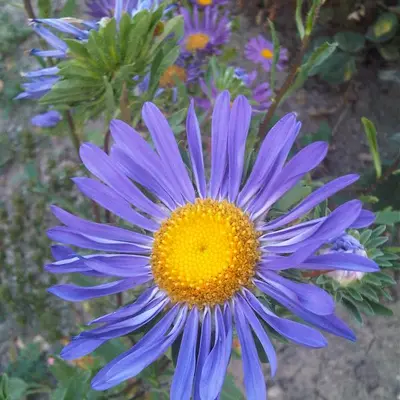
The Azumi series offers 2-3 1/2" pom-pom style blooms in rich jewel tones on sturdy, vigorous plants. Recommended for growing as a spray-type cut flower. Plants yield one cut per plant; each cut is a large spray of stems and flowers. The primary flower will be larger, surrounded by multiple slightly smaller blooms. Alternately, single stems can be harvested, although stem length will be shorter than when harvested as a one-cut spray type. Lavender-blue bloom color. Azumi XL Blue flowers are the earliest of the Azumi series in our trials. Fusarium tolerant.
Harvest
105-120d
Days to harvest
Sun
Full sun to partial shade
Zones
2–11
USDA hardiness
Height
1-3 feet
Planting Timeline
Showing dates for Azumi XL Blue in USDA Zone 7
All Zone 7 flower →Zone Map
Click a state to update dates
Azumi XL Blue · Zones 2–11
Growing Details
Succession Planting
Azumi XL Blue takes 105–120 days to bloom, so you don't get the continuous cut-and-come-again cycle you'd expect from zinnias — each plant gives you one main flush. Stagger indoor sowings every 3 weeks from early February through mid-March to spread those flush windows across summer and into early fall. Don't start new seeds after late May; plants sown past that point won't accumulate enough days before heat shuts them down or early frost arrives.
Complete Growing Guide
The Azumi series offers 2-3 1/2" pom-pom style blooms in rich jewel tones on sturdy, vigorous plants. Recommended for growing as a spray-type cut flower. Plants yield one cut per plant; each cut is a large spray of stems and flowers. The primary flower will be larger, surrounded by multiple slightly smaller blooms. Alternately, single stems can be harvested, although stem length will be shorter than when harvested as a one-cut spray type. Lavender-blue bloom color. Azumi XL Blue flowers are the earliest of the Azumi series in our trials. Fusarium tolerant. According to Johnny's Selected Seeds, Azumi XL Blue is 105 - 120 days to maturity, annual, open pollinated. Notable features: Use for Cut Flowers and Bouquets.
Light: Full sun (6 or more hours of direct sunlight a day), Partial Shade (Direct sunlight only part of the day, 2-6 hours). Soil: Clay, High Organic Matter, Loam (Silt), Sand. Soil pH: Acid (<6.0), Neutral (6.0-8.0). Drainage: Good Drainage, Moist. Height: 1 ft. 0 in. - 3 ft. 0 in.. Spread: 1 ft. 0 in. - 1 ft. 6 in.. Spacing: Less than 12 inches. Growth rate: Rapid. Maintenance: Medium. Regions: Coastal, Mountains, Piedmont.
Harvesting
Azumi XL Blue reaches harvest at 105 - 120 days from sowing per Johnny's Selected Seeds. Expect 2-3 1/2" at peak. As an annual, harvest continues until frost ends the season.
The fruit is a rough-textured, glandular, purple-mottled cypsela that turns gray with age.
Storage & Preservation
For cut flowers, immediately place Azumi XL Blue stems in clean, cool water (65-72°F) upon harvest. Store in the refrigerator at 34-40°F with 80-90% humidity to maximize vase life of 7-10 days. Change water every 2-3 days and re-cut stems at an angle. Preservation methods: (1) Dry blooms by hanging upside-down in a dark, well-ventilated space for 2-3 weeks to create long-lasting dried arrangements; (2) Preserve with silica gel in an airtight container for 1-2 weeks to retain color and form; (3) Press individual flowers between parchment paper under weight for 2-3 weeks for floral crafts and scrapbooking.
History & Origin
Azumi XL Blue is open-pollinated, meaning seed saved from healthy plants will produce true-to-type offspring. Listed in the Johnny's Selected Seeds catalog.
Origin: China and Southern Russia
Advantages
- +Earliest Azumi series variety with reliable 105-120 day maturity
- +Large pom-pom blooms in attractive lavender-blue jewel tone
- +One plant yields abundant spray of multiple stems and flowers
- +Fusarium tolerant, reducing disease pressure in susceptible soils
- +Sturdy, vigorous plants need minimal staking or support
Considerations
- -Requires full one-cut harvest to maximize spray-type yield potential
- -Single stem harvests produce noticeably shorter stem lengths than sprays
- -Pom-pom style blooms may shatter easily during rough handling
- -Best as spray cut flower, limiting design flexibility versus other forms
Companion Plants
Marigolds — specifically French marigolds (Tagetes patula) — release thiophenes from their roots that suppress soil nematodes, and their scent is thought to confuse aphids before they locate your asters. Sweet alyssum draws in parasitic wasps and hoverflies that knock back thrip and aphid pressure without much effort on your part. Nasturtiums work well as a trap crop for black aphids, pulling them off the asters onto expendable foliage. Skip black walnut anywhere nearby: juglone, the compound it produces, leaches through soil and can stunt or kill annuals planted within the drip line. Sunflowers are a subtler problem — decomposing sunflower roots and tissue release allelopathic compounds that can suppress neighboring plants, so give them their own bed.
Plant Together
Marigolds
Repel aphids, whiteflies, and nematodes while attracting beneficial insects
Sweet Alyssum
Attracts beneficial insects like lacewings and provides ground cover
Nasturtiums
Act as trap crops for aphids and cucumber beetles while deterring pests
Lobelia
Complements blue flowers and attracts pollinators with similar growing requirements
Petunias
Repel aphids, tomato hornworms, and squash bugs while providing color contrast
Zinnia
Attracts butterflies and beneficial insects while providing height variation
Catnip
Repels mosquitoes, ants, and aphids more effectively than DEET
Lavender
Deters moths, fleas, and mice while attracting pollinators
Keep Apart
Black Walnut
Produces juglone toxin that inhibits growth and can kill sensitive plants
Eucalyptus
Allelopathic compounds suppress growth of nearby plants
Sunflowers
Compete aggressively for nutrients and water, may stunt smaller plants
Troubleshooting Azumi XL Blue
What you'll see, why it happens, and what to do about it.
Seedlings collapse at soil level, stems pinched off or rotted at the base
Likely Causes
- Damping off — typically Pythium or Rhizoctonia fungi thriving in wet, poorly drained seed-starting mix
- Overwatering combined with low airflow around seedlings
What to Do
- 1.Toss the affected seedlings; don't try to save them — the fungus spreads fast
- 2.Water only from the bottom, let the top of the mix dry slightly between waterings
- 3.Run a small fan near your seedling trays for 30–60 minutes a day to improve airflow
White powdery coating on leaves and stems, usually appearing mid-summer
Likely Causes
- Powdery mildew (Erysiphe cichoracearum) — very common on Callistephus chinensis, especially when nights cool below 65°F and days stay warm
- Crowded planting that blocks air circulation
What to Do
- 1.Strip and bag badly affected leaves — don't compost them
- 2.Spray remaining foliage with a potassium bicarbonate solution or diluted neem oil every 7 days
- 3.Space plants at least 12 inches apart next season and avoid overhead irrigation
Stunted plants with yellowed, distorted new growth; flower buds fail to develop or abort
Likely Causes
- Aster yellows — a phytoplasma disease vectored by the aster leafhopper (Macrosteles quadrilineatus)
- Infected plants cannot be cured
What to Do
- 1.Pull and bag infected plants immediately — leaving them in the bed gives leafhoppers more time to ferry the phytoplasma to healthy plants
- 2.Cover transplants with floating row cover early in the season before leafhopper populations build
- 3.Rotate out of this bed entirely the following year; the phytoplasma has a wide host range
Petals and flower heads show gray-brown rot, especially during wet weather close to bloom time
Likely Causes
- Botrytis blight (Botrytis cinerea) — opportunistic fungus that moves fast on dense, double-flowered blooms like Azumi XL
- High humidity or overhead watering that leaves petals wet overnight
What to Do
- 1.Cut and discard affected blooms at first sign — don't leave spent or rotting heads on the plant
- 2.Water at the base of the plant in the morning so foliage dries before nightfall
- 3.Stake flopping stems so heads aren't pressing against each other and trapping moisture
Frequently Asked Questions
How many days until Azumi XL Blue is ready to harvest?▼
Is Azumi XL Blue good for beginner flower growers?▼
Can you grow Azumi XL Blue in containers?▼
What does Azumi XL Blue look like as a cut flower?▼
When should I plant Azumi XL Blue?▼
How long do Azumi XL Blue flowers last in a vase?▼
Zone-by-Zone Planting Calendar
| Zone | Indoor Start | Transplant | Direct Sow | Harvest |
|---|---|---|---|---|
| Zone 1 | May – June | July – August | July – September | — |
| Zone 2 | April – May | June – July | June – August | — |
| Zone 11 | January – January | January – February | January – March | — |
| Zone 12 | January – January | January – February | January – March | — |
| Zone 13 | January – January | January – February | January – March | — |
| Zone 3 | April – May | June – July | June – August | — |
| Zone 4 | March – April | June – June | June – July | — |
| Zone 5 | March – April | May – June | May – July | — |
| Zone 6 | March – April | May – June | May – July | — |
| Zone 7 | February – March | April – May | April – June | — |
| Zone 8 | February – March | April – May | April – June | — |
| Zone 9 | January – February | March – April | March – May | — |
| Zone 10 | January – January | February – March | February – April | — |
Growing Guides from Wind River Greens
Sources & References
External authority sources used in compiling this guide.
- BreederJohnny's Selected Seeds
See the Methodology page for how this data is sourced, what's AI-assisted, and known limitations.