Delft Blue
Nigella papillosa
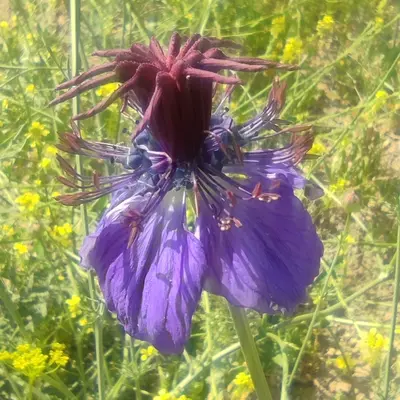
Named for the famous Dutch Delft blue pottery. Blue splashes on flower petals in varying shades of blue and gray, and intricate deep-purple centers. Produces unusual seed pods that can be used in fresh or dried arrangements.
Harvest
65-70d
Days to harvest
Sun
Full sun
Zones
1–11
USDA hardiness
Height
18-24 inches
Planting Timeline
Showing dates for Delft Blue in USDA Zone 7
All Zone 7 flower →Zone Map
Click a state to update dates
Delft Blue · Zones 1–11
Growing Details
Succession Planting
Delft Blue finishes its bloom cycle and goes to seed quickly — 65 to 70 days from sow — so staggered sowings make sense if you want continuous flowers rather than one big flush. Direct sow every 3 to 4 weeks starting in April, and stop by late June in most climates; sowings after that tend to hit peak bloom during the hottest stretch of summer, which shortens flower life and pushes the plant toward seed faster than you'd like.
Because Nigella has a taproot that resents disturbance, stick to direct sow for succession rounds rather than starting trays indoors. Thin to 9 to 12 inches and let a few plants go fully to seed — the inflated pods are worth keeping for dried arrangements, and the plant self-sows lightly in a well-mulched bed, dropping volunteers that will come up the following spring with no extra work on your end.
Complete Growing Guide
Delft Blue is one of the most rewarding hardy annuals you can grow, and it asks for very little in return. Choose a site in full sun with well-drained soil — Nigella tolerates average garden soil and actually resents anything too rich. If your bed is heavy clay, work in some compost and coarse sand before sowing to improve drainage. Skip heavy nitrogen fertilizers; they produce lush foliage at the expense of flowers and weaken stems.
The single most important thing to know about Delft Blue is that it hates being transplanted. Direct sow whenever possible. In zones 7 and warmer, sow in fall for early summer blooms — seedlings overwinter happily and produce stronger, earlier-flowering plants. In colder zones, sow as soon as the soil can be worked in spring, even while light frosts are still possible. Seeds need darkness to germinate, so cover them with about 1/8 inch of fine soil and keep evenly moist until sprouts appear in 10-14 days.
If you must start indoors, use deep biodegradable pots so you can plant the entire pot without disturbing the taproot, and start only 4 weeks before your last frost. Thin or space seedlings to 9-12 inches apart. Crowding leads to weak stems and powdery mildew.
For a continuous display, succession sow every 3-4 weeks until early summer. Once daytime temperatures climb consistently above 80°F, germination drops off and plants begin to set seed rather than bloom — this is normal Nigella behavior, not a failure on your part.
Water moderately. Delft Blue prefers slightly dry conditions and is surprisingly drought-tolerant once established. Overwatering causes root rot and floppy growth. A single light feeding with a balanced flower fertilizer when buds form is plenty; more than that and you'll sacrifice the distinctive coloring.
Staking is rarely necessary, but if you're growing for cut flowers, run a single layer of horizontal netting over the bed when plants are 6 inches tall — they'll grow up through it and stay upright through summer storms. Pinching is not recommended; Nigella branches naturally and pinching delays flowering.
The most common mistake gardeners make is deadheading too aggressively. Leave at least a third of the spent flowers on the plant — those become the showstopper seed pods that make Delft Blue special. To maximize both flowers and pods, harvest blooms for bouquets in the first half of the season and let later flowers mature into pods. Plants will self-sow generously if you leave a few pods to shatter, giving you volunteer seedlings next spring.
Harvesting
Delft Blue offers two distinct harvests: flowers and seed pods. For fresh-cut flowers, harvest in the cool of early morning when blooms are fully open but before the sun stresses the petals. Cut stems just as the flower opens fully, choosing stems at least 12 inches long for arrangements. Use sharp, clean snips and place stems immediately into cool water. Cut flowers last 5-7 days in a vase.
For seed pods — arguably the main event with this variety — wait until the pods have fully inflated and begun to show streaks of burgundy, purple, or tan. For fresh arrangements, harvest while pods are still green and firm. For dried arrangements, wait until pods are fully mature and starting to dry on the plant but before they split open and release seeds. Cut entire stems at the base, strip lower foliage, and bundle loosely.
Handle pods gently — the horned tips are decorative but brittle. If saving seeds, harvest pods just as they begin to brown and finish drying indoors over paper.
Storage & Preservation
Fresh-cut Delft Blue flowers should be kept in clean water in a cool spot away from direct sun and ripening fruit; refresh water every two days for maximum vase life of about a week. The seed pods are where this variety truly shines for preservation. To dry, hang stem bundles upside down in a warm, dark, well-ventilated space for 2-3 weeks until pods rattle and stems snap cleanly. Properly dried pods retain their shape and subtle coloring for years and are stunning in wreaths, fall arrangements, and shadow boxes. For seed saving, store fully dried seeds in a paper envelope in a cool, dry place — viability remains strong for 2-3 years. Avoid plastic containers, which trap residual moisture and cause mold.
History & Origin
Delft Blue is a modern heirloom selection of Nigella papillosa (sometimes classified as Nigella hispanica), a species native to southern Spain and North Africa. The genus Nigella has been cultivated in European cottage gardens since at least the 16th century, with the common name 'love-in-a-mist' referring to the misty veil of threadlike bracts surrounding each bloom. Delft Blue was specifically selected and named for its resemblance to the famous tin-glazed earthenware produced in the Dutch city of Delft since the 1600s — pottery characterized by cobalt blue patterns on a white ground that itself was inspired by imported Chinese porcelain. While most Nigella varieties offer solid-colored blooms, Delft Blue's distinctive variegated petals — splashed and streaked in shades of blue, slate, and gray with deep plum centers — make it a relatively recent and prized addition to the cut-flower garden, especially popular with floral designers seeking unusual seed pod material.
Advantages
- +Unique variegated blue-and-gray petal pattern unlike any other Nigella
- +Produces dramatic horned seed pods that dry beautifully and last for years
- +Self-sows readily for naturalized cottage garden plantings
- +Tolerates poor soil and drought once established
- +Cold-hardy enough for fall sowing in zones 7 and warmer
- +Deer and rabbit resistant
- +Excellent dual-purpose cut flower (fresh blooms and dried pods)
Considerations
- -Strongly resents transplanting — must be direct sown for best results
- -Short individual bloom period; succession sowing required for continuous flowers
- -Stops flowering once summer heat consistently exceeds 80°F
- -Self-sown seedlings can become weedy if pods aren't managed
- -Brittle dried pods require careful handling in arrangements
Companion Plants
Marigolds and sweet alyssum are the most practical companions here. Marigolds (especially French types like 'Bonanza') deter aphids — the one pest NC State Extension flags for Nigella — partly through scent and partly by drawing in predatory wasps that keep soft-bodied insect populations from building up. Sweet alyssum does similar work at ground level, feeding those same parasitic wasps with its tiny flowers while filling in bare soil that would otherwise invite weeds around Nigella's thin stems.
Nasturtiums pull double duty as a trap crop, drawing aphid colonies away from Delft Blue before they reach damaging numbers. Chives and garlic both contain sulfur compounds that confuse aphids and other soft-bodied insects, and neither competes aggressively for root space with a shallow annual. Lavender and catnip are worth planting nearby if you have them — both emit volatile oils that repel a range of general garden pests — though don't expect dramatic results from either; it's more of a slow background effect.
Black walnut is a hard no, and the reason is chemical rather than competitive: walnut roots release juglone, a compound toxic to a wide range of plants. The affected zone can extend well beyond the tree's visible canopy, so even a seemingly distant specimen is worth checking before you site your bed. Mint is a different problem entirely — it's not toxic, it just spreads so fast it will physically crowd out a delicate annual like Nigella within one growing season. Keep it in a container nearby if you want it at all.
Plant Together
Marigolds
Repel aphids, whiteflies, and nematodes while attracting beneficial insects
Sweet Alyssum
Attracts beneficial insects like hoverflies and parasitic wasps that control pests
Nasturtiums
Act as trap crops for aphids and cucumber beetles, drawing them away from hyacinths
Chives
Repel aphids and other soft-bodied insects with their strong sulfur compounds
Lavender
Deters rodents and rabbits that may dig up bulbs, while attracting pollinators
Catnip
Repels ants, aphids, and rodents that might damage bulbs
Garlic
Natural fungicide properties help prevent bulb rot and repel various pests
Daffodils
Toxic alkaloids deter rodents and deer from digging in the same area
Keep Apart
Black Walnut
Produces juglone which is toxic to many bulbous plants and inhibits growth
Crown Imperial
Competes aggressively for nutrients and may inhibit smaller bulb development
Mint
Spreads aggressively and can overwhelm delicate bulb plantings
Pests & Disease Resistance
Common Pests
Aphids (occasional)
Diseases
Powdery mildew, root rot in poorly drained soil
Troubleshooting Delft Blue
What you'll see, why it happens, and what to do about it.
White powdery coating on leaves and stems, usually appearing mid-season when plants are crowded
Likely Causes
- Powdery mildew (Erysiphe spp.) — a fungal issue that thrives in warm days and cool nights with poor airflow
- Planting at less than 9-inch spacing, which traps humidity between stems
What to Do
- 1.Thin or cut back neighboring plants immediately to open up airflow — don't wait
- 2.Spray affected foliage with a diluted baking soda solution (1 tablespoon per gallon of water) as a low-cost suppressor
- 3.Pull and trash badly infected plants; Nigella finishes fast enough that a second direct sow is often worth it
Plants wilting and collapsing at the base, roots appearing brown and mushy when you pull them
Likely Causes
- Root rot — most commonly Pythium or Rhizoctonia — triggered by waterlogged soil, especially in heavy clay
- Planting in a low spot that holds rain or irrigation water for more than an hour
What to Do
- 1.Pull the affected plants entirely and don't replant Nigella in that spot this season
- 2.Amend the bed with coarse grit or perlite before resowing — even a 2-inch layer worked in helps drainage noticeably
- 3.Direct sow into a raised bed or a spot with at least a slight grade so water moves through rather than sitting
Frequently Asked Questions
How long does Delft Blue take to bloom from seed?▼
Is Delft Blue easy to grow for beginners?▼
Can you grow Delft Blue in containers?▼
When should I plant Delft Blue seeds?▼
Does Delft Blue Nigella self-seed?▼
What's the difference between Delft Blue and Miss Jekyll Nigella?▼
Zone-by-Zone Planting Calendar
| Zone | Indoor Start | Transplant | Direct Sow | Harvest |
|---|---|---|---|---|
| Zone 1 | May – June | July – August | July – September | — |
| Zone 2 | April – May | June – July | June – August | — |
| Zone 11 | January – January | January – February | January – March | — |
| Zone 12 | January – January | January – February | January – March | — |
| Zone 13 | January – January | January – February | January – March | — |
| Zone 3 | April – May | June – July | June – August | — |
| Zone 4 | March – April | June – June | June – July | — |
| Zone 5 | March – April | May – June | May – July | — |
| Zone 6 | March – April | May – June | May – July | — |
| Zone 7 | February – March | April – May | April – June | — |
| Zone 8 | February – March | April – May | April – June | — |
| Zone 9 | January – February | March – April | March – May | — |
| Zone 10 | January – January | February – March | February – April | — |
Growing Guides from Wind River Greens
Sources & References
External authority sources used in compiling this guide.
- BreederJohnny's Selected Seeds
See the Methodology page for how this data is sourced, what's AI-assisted, and known limitations.