Waldmann's Green
Lactuca sativa 'Waldmann's Green'
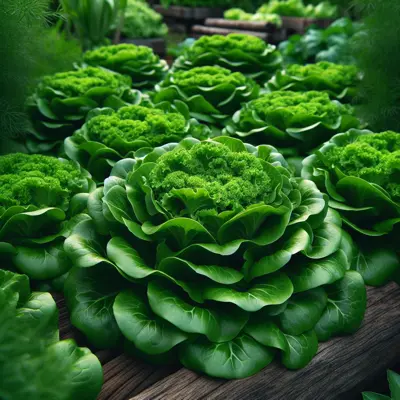
A legendary loose-leaf lettuce variety developed specifically for winter greenhouse growing but equally excellent in outdoor gardens. Known for its exceptional cold tolerance and ability to produce tender, dark green leaves even in challenging conditions. This reliable variety has been a favorite among both commercial and home growers for decades.
Harvest
45-50d
Days to harvest
Sun
Full sun to partial shade
Zones
2–11
USDA hardiness
Height
6-12 inches
Planting Timeline
Showing dates for Waldmann's Green in USDA Zone 7
All Zone 7 lettuce →Zone Map
Click a state to update dates
Waldmann's Green · Zones 2–11
Growing Details
Succession Planting
Direct sow Waldmann's Green every 14 days starting around March 1 in zone 7, and keep going through mid-May. Past that point, daytime highs pushing above 80°F will trigger bolting fast — this variety doesn't stall, it just turns bitter and throws up a seed stalk within a week or two of heat arriving. Pick back up around August 15 once nighttime temps drop reliably below 70°F, and run successions every 14 days through early October. The planting calendar shows harvest running to November in zone 7, which holds up if your fall sowings go in on schedule.
Each sowing at 4–6 inch spacing gives cut-and-come-again harvests for 2–3 weeks before quality drops off. If you're growing for full heads rather than baby leaf, use the 45–50 day maturity window and time your last fall sowing so harvest lands at least a week before your average first hard frost date.
Complete Growing Guide
Waldmann's Green thrives in cool-season conditions and performs exceptionally well in fall and winter sowings when temperatures hover between 50–65°F, making it ideal for extending your harvest into colder months when other lettuce varieties bolt prematurely. This cultivar's dark green leaves indicate high chlorophyll content, which develops best under cooler temperatures and moderate light. Unlike tender summer lettuces, Waldmann's Green actually improves in flavor after light frosts, becoming sweeter as the plant converts starches to sugars. Space plants 6–8 inches apart to ensure good air circulation and prevent fungal diseases like powdery mildew, which can stress the leaves in humid conditions. While generally pest-resistant, monitor for aphids early in the season. The key to success: harvest outer leaves regularly starting at 30 days to encourage continued tender leaf production and prevent the plant from maturing too quickly, even when conditions favor bolting.
Light: Full sun (6 or more hours of direct sunlight a day), Partial Shade (Direct sunlight only part of the day, 2-6 hours). Soil: High Organic Matter. Soil pH: Neutral (6.0-8.0). Drainage: Good Drainage, Moist. Height: 0 ft. 6 in. - 1 ft. 0 in.. Spread: 0 ft. 6 in. - 1 ft. 0 in.. Spacing: Less than 12 inches. Growth rate: Rapid. Maintenance: Medium. Propagation: Seed. Regions: Coastal, Mountains, Piedmont.
Harvesting
Waldmann's Green reaches peak readiness when the outer leaves develop their characteristic deep, rich green color and measure four to six inches long with a tender, crisp texture that snaps cleanly when bent. The leaves should feel substantial yet delicate, indicating optimal nutritional uptake without becoming tough or bitter. This variety responds exceptionally well to continuous harvesting, where you pinch off outer leaves while the plant remains in the ground, encouraging steady production over several weeks rather than harvesting the entire head at once. For best results, begin harvesting in the early morning when leaves are fully hydrated and crisp, typically around day 40-45, which ensures maximum texture and flavor before cooler temperatures cause any potential bitterness development.
Tiny seeds with a dandelion-like tuft (pappus) to aid in wind dispersal.
Color: Brown/Copper. Type: Achene. Length: < 1 inch. Width: < 1 inch.
Harvest time: Summer
Edibility: Leaves can be used raw or cooked in salads, sandwiches, and other dishes. Head lettuce can be stored for 2-3 weeks while leaf and butterhead store for 1-2 weeks.
Storage & Preservation
Fresh Waldmann's Green stores exceptionally well compared to most leaf lettuces. Immediately after harvest, rinse leaves in cold water and spin dry thoroughly. Wrap clean, dry leaves in paper towels and place in perforated plastic bags in the refrigerator's crisper drawer at 32-36°F with high humidity. Properly stored leaves maintain quality for 7-10 days.
For longer preservation, blanch leaves in boiling water for 45 seconds, shock in ice water, then freeze in airtight containers for up to 6 months—though texture will be suitable only for cooking. Dehydrating at 95°F creates lettuce powder excellent for seasoning and green smoothies. The mild flavor also makes it suitable for lacto-fermentation when mixed with stronger vegetables like cabbage in kimchi or sauerkraut recipes.
History & Origin
Waldmann's Green emerged from German horticultural traditions, reflecting the robust breeding work of European seed companies specializing in cold-hardy vegetables during the early-to-mid twentieth century. While specific breeder attribution remains obscure in widely available documentation, the variety's name and characteristics suggest origins within German-speaking regions known for intensive greenhouse cultivation. The variety became established as a commercial offering through seed catalogs and has maintained its reputation across both European and North American growing regions. Its documented success in winter greenhouse conditions indicates deliberate selection for cold tolerance, though the precise lineage and selection criteria have not been widely recorded in horticultural literature.
Origin: Mediterranean to Siberia
Advantages
- +Exceptional cold tolerance makes Waldmann's Green ideal for winter greenhouse production
- +Dark green loose leaves remain tender even in challenging growing conditions
- +Reliable 45-50 day maturity suits both commercial and home gardeners
- +Mild, sweet flavor with clean taste appeals to most palates
Considerations
- -Susceptible to downy mildew, particularly in cool, humid greenhouse environments
- -Prone to tip burn when calcium uptake or watering is inconsistent
- -Leafminer damage can reduce marketability of outer leaves significantly
Companion Plants
Radishes and carrots are the most practical companions for Waldmann's Green. Radishes germinate in 5–7 days and their quick canopy helps break soil surface crust that can slow lettuce establishment. Carrots share almost none of the same pest or disease pressure, and their roots push down 8–12 inches while lettuce stays in the top 4–6 inches, so the two crops don't fight over the same water and nutrients. Chives and garlic nearby have a reasonable track record for reducing aphid (Myzus persicae) pressure through scent — not a guarantee, but they earn their spot in the bed regardless.
Fennel produces allelopathic root exudates that suppress growth in neighboring plants, and lettuce is more sensitive to it than most vegetables, so keep at least 3–4 feet of separation or just plant fennel in its own corner. Sunflowers are a straightforward conflict: a mature plant can shade out 6–8 feet of bed and Waldmann's Green needs at least 4 hours of direct sun to size up properly. Broccoli brings overlapping soil nutrient demands and a dense root mass that edges out shallow-rooted lettuce at close spacing — fine in separate beds, awkward as direct neighbors.
Plant Together
Chives
Repels aphids and other soft-bodied insects that damage lettuce
Carrots
Deep roots don't compete with shallow lettuce roots, helps break up soil
Radishes
Quick growth helps break up soil, acts as trap crop for flea beetles
Marigolds
Repels nematodes and aphids, attracts beneficial insects
Nasturtiums
Acts as trap crop for aphids and cucumber beetles, edible companion
Garlic
Natural fungicide properties, repels aphids and slugs
Dill
Attracts beneficial insects like ladybugs and parasitic wasps
Spinach
Similar growing requirements, efficient use of garden space
Keep Apart
Sunflowers
Allelopathic compounds inhibit lettuce germination and growth
Broccoli
Heavy feeder that competes for nutrients, can shade out lettuce
Fennel
Inhibits growth of most garden plants through allelopathy
Nutrition Facts
Per 100g serving. % Daily Value based on 2,000 calorie diet. Source: USDA FoodData Central (FDC #2346388)
Pests & Disease Resistance
Resistance
Excellent cold tolerance, good disease resistance
Common Pests
Aphids, leafminers, cutworms, slugs
Diseases
Downy mildew, lettuce drop, tip burn
Troubleshooting Waldmann's Green
What you'll see, why it happens, and what to do about it.
Seedlings collapse at the soil line within the first week or two after planting — stems look pinched or water-soaked at the base
Likely Causes
- Damping off — a complex of soil-borne fungi (Pythium spp., Rhizoctonia solani) that thrive in cold, wet, poorly drained soil
- Replanting lettuce in the same bed for 3 or more consecutive years without rotation, allowing pathogen load to build up
What to Do
- 1.Hold off on watering until the top inch of soil is dry — damping off almost always gets a boost from overwatering
- 2.If you've grown lettuce in that bed for 3+ years straight, move it; a one-year break is the minimum, two is better
- 3.Start fresh seed in sterile potting mix rather than reusing old trays or soil that had diseased plants in it
White to gray fuzzy coating on the undersides of leaves, with pale yellow patches on the upper surface — usually shows up in cool, wet weather
Likely Causes
- Downy mildew (Bremia lactucae) — a water mold that spreads by airborne spores and needs leaf wetness to infect
- Planting too close together (under 4 inches) so foliage stays damp overnight
What to Do
- 1.Space plants at least 6 inches apart to open up airflow between heads
- 2.Water at the base, not overhead, and water in the morning so leaves dry before nightfall
- 3.Strip and trash (not compost) any badly infected outer leaves to slow spread
Papery brown edges on the innermost leaves — outer leaves look completely fine
Likely Causes
- Tip burn — a calcium distribution problem caused by inconsistent watering or low transpiration on tightly packed inner leaves, not a pathogen
- Boom-and-bust soil moisture: letting lettuce dry out then soaking it disrupts calcium uptake at the growing point
What to Do
- 1.Keep soil moisture steady — 1 inch of water per week, spread evenly; a 2-inch straw mulch helps buffer swings between rain and dry spells
- 2.Tip burn accelerates above 80°F, so time your plantings to finish before heat sets in
- 3.Affected inner leaves are still edible — pull them off before washing and move on
Pale, winding tunnels visible through the leaf surface, sometimes with small dark specks inside the trail
Likely Causes
- Leafminers (Liriomyza spp.) — larvae tunnel between leaf surfaces after adults lay eggs directly into the leaf tissue
- Low parasitic wasp populations, which are the primary natural check on Liriomyza in a garden setting
What to Do
- 1.Pinch out and trash any leaf showing an active tunnel before the larva finishes feeding and drops to pupate in the soil
- 2.Cover transplants with row cover immediately after planting to exclude egg-laying adults during the most vulnerable window
- 3.Skip broad-spectrum insecticides — they wipe out the parasitic wasps that do most of the real Liriomyza control
Frequently Asked Questions
How long does Waldmann's Green lettuce take to grow?▼
Can you grow Waldmann's Green lettuce in winter?▼
Is Waldmann's Green good for container growing?▼
What does Waldmann's Green lettuce taste like?▼
When should I plant Waldmann's Green lettuce?▼
Can Waldmann's Green be grown as microgreens?▼
Zone-by-Zone Planting Calendar
| Zone | Indoor Start | Transplant | Direct Sow | Harvest |
|---|---|---|---|---|
| Zone 3 | — | — | May – June | June – October |
| Zone 4 | — | — | April – June | June – October |
| Zone 5 | — | — | April – May | June – November |
| Zone 6 | — | — | April – May | May – November |
| Zone 7 | — | — | March – May | May – November |
| Zone 8 | — | — | March – April | April – December |
| Zone 9 | — | — | February – March | March – December |
| Zone 10 | — | — | January – March | March – December |
| Zone 1 | — | — | June – July | July – September |
| Zone 2 | — | — | May – July | July – September |
| Zone 11 | — | — | January – February | February – December |
| Zone 12 | — | — | January – February | February – December |
| Zone 13 | — | — | January – February | February – December |
Growing Guides from Wind River Greens
Sources & References
External authority sources used in compiling this guide.
See the Methodology page for how this data is sourced, what's AI-assisted, and known limitations.