French Breakfast Radish
Raphanus sativus
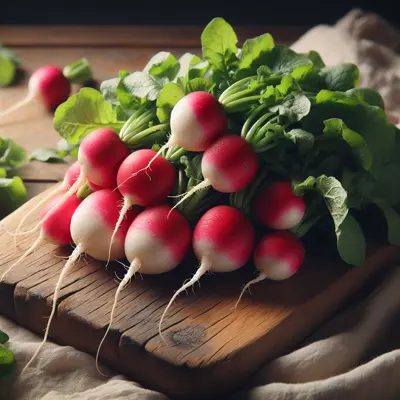
A well-maintained strain of this market staple. Longer than Nelson, with more white on the tip. Large healthy tops. After trying many strains we found this to be the best. NOTE: For longer, straighter roots, sow 15-20% more seeds per row 1/2 to 1 cm deeper, and do not irrigate unless absolutely necessary.
Harvest
21d
Days to harvest
Sun
Full sun to partial shade
Zones
2–11
USDA hardiness
Height
0-3 feet
Planting Timeline
Showing dates for French Breakfast Radish in USDA Zone 7
All Zone 7 root-vegetable →Zone Map
Click a state to update dates
French Breakfast Radish · Zones 2–11
Growing Details
Succession Planting
French Breakfast is one of the few crops where succession planting is essentially required — you get a 21-day window per sowing, and then it's done. In zone 7, direct sow every 10–14 days starting March 1 and keep going through early May. Then pause. Once daytime highs push consistently past 80°F, radishes bolt fast and the roots go woody and sharp before they size up. Pick back up with a fall run starting around August 20, sowing every 10–14 days through late September; a final planting in early October is worth trying if your first frost holds off past mid-November.
Each sowing takes up almost no space — 1–2 inch spacing means a short row produces a real harvest. The practical move is tucking a new row into any gap left by a pulled crop rather than reserving a dedicated bed. NC State Extension's rotation guidance applies even within a season: don't run back-to-back radish sowings in the exact same 12-inch strip all year, since club root pressure can build quickly in poorly drained soil even without a multi-year gap.
Complete Growing Guide
Start your French Breakfast radishes by preparing a sunny spot with loose, well-draining soil. Work compost or aged manure into heavy clay soils to prevent stunted, forked roots — these elongated radishes need room to develop their characteristic torpedo shape. Avoid fresh manure, which can cause excessive leaf growth at the expense of root development.
Direct sow seeds ½ inch deep in rows spaced 6 inches apart, starting 4-6 weeks before your last frost date. Unlike many vegetables, radishes perform poorly when transplanted, so always sow directly in the garden. In zones 3-5, begin sowing in early April; zones 6-7 can start in mid-March; zones 8-10 should wait until October for best results as hot weather makes radishes woody and overly peppery.
Thin seedlings to 1-2 inches apart once they develop their first true leaves — overcrowding creates small, misshapen roots. Keep soil consistently moist but not waterlogged; irregular watering causes cracking and pithy texture. A light mulch of straw helps maintain even moisture and prevents soil crusting that can impede germination.
Skip heavy nitrogen fertilizers which promote leafy growth over root development. A balanced 10-10-10 fertilizer worked into the soil before planting provides adequate nutrition for the short growing cycle. These rapid-maturing radishes rarely need additional feeding.
Succession plant every 2 weeks through early summer, then resume in late summer for fall harvests. Stop summer sowings when daytime temperatures consistently exceed 75°F — hot weather triggers premature bolting and bitter, woody roots. Fall-grown radishes often have superior flavor and less pest pressure.
Watch for flea beetles, which create tiny holes in leaves. Row covers during the first 2-3 weeks protect young plants when they're most vulnerable. Remove covers once plants are established, as radishes grow so quickly that minor pest damage rarely affects root quality.
Harvesting
Harvest French Breakfast radishes when they reach 3-4 inches long and about ¾ inch in diameter, typically 25-28 days from sowing. The classic red-and-white coloration should be vibrant, with the white tip making up roughly one-third of the root's length. Test ripeness by gently brushing soil away from the top — mature radishes will show their full shoulder above the soil line.
Pull in the early morning when roots are most crisp and full of moisture. Grasp the leaves close to the root and pull straight up with a gentle twisting motion. Well-grown radishes should come up easily without breaking. If they resist, the soil may be too dry — water the bed the evening before harvesting.
Don't delay harvest hoping for larger size — oversized French Breakfast radishes quickly become pithy and lose their mild, sweet flavor. Check your planting weekly once they approach maturity, as the window between perfect ripeness and over-maturity is only 3-5 days.
Storage & Preservation
Remove greens immediately after harvest, leaving about ½ inch of stem to prevent moisture loss. Store unwashed radishes in perforated plastic bags in the refrigerator crisper drawer, where they'll maintain quality for 2-3 weeks at 32-40°F with high humidity.
For longer storage, French Breakfast radishes excel at quick pickling — their firm texture holds up beautifully to vinegar brines. Slice them into rounds or keep whole for refrigerator pickles that last 2-3 months. The mild flavor makes them perfect for Japanese-style quick pickles with rice vinegar and a touch of sugar.
While not typically preserved long-term like storage radishes, you can freeze grated French Breakfast radishes for up to 6 months — though they lose crispness and work best in cooked dishes. Dehydrating isn't recommended as these radishes lack the density needed for successful drying.
History & Origin
French Breakfast radishes trace their origins to 19th-century Parisian markets, where they became a staple of classic French petit déjeuner (breakfast) service. Market gardeners in the suburbs of Paris developed this elongated variety specifically for the demanding restaurant trade, prizing its elegant appearance, mild flavor, and reliable uniformity.
The variety gained popularity throughout France during the 1800s as urban gardening expanded around major cities. French immigrants brought seeds to North America in the late 1800s, where it quickly found favor among market gardeners serving French communities in Louisiana, Quebec, and New England.
Unlike the round radishes common in American gardens, French Breakfast represented a sophisticated European approach to radish breeding — emphasizing visual appeal and delicate flavor over simple speed of growth. Its striking red-and-white coloration made it a favorite garnish in upscale restaurants, earning it the nickname 'flamingo radish' among some American growers. Today, it remains virtually unchanged from those original Parisian market varieties, maintaining its status as a true heirloom with over 150 years of documented cultivation.
Advantages
- +Exceptional cold tolerance allows planting 4-6 weeks before last frost when many vegetables can't be sown
- +Rapid 25-28 day maturity provides quick gratification and multiple harvests per season
- +Striking red-and-white coloration creates visual interest in both garden beds and culinary presentations
- +Mild, sweet flavor appeals to those who find standard radishes too peppery or sharp
- +Elongated shape makes slicing easier and provides attractive oval rounds for garnishing
- +Rarely affected by diseases due to quick growth cycle that outpaces most pathogen development
- +Excellent succession planting variety that maintains consistent quality across multiple sowings
Considerations
- -Very short harvest window of 3-5 days before becoming pithy and losing quality
- -Hot weather above 75°F causes rapid bolting and bitter, woody texture
- -Elongated roots require deeper, looser soil preparation than round radish varieties
- -Flea beetles can damage young seedlings before they become established
- -Lower storage life than winter radish varieties, lasting only 2-3 weeks refrigerated
Companion Plants
Carrots and lettuce are practical neighbors for a radish bed. Carrots share a fine root zone without competing for the same nutrients, and lettuce fills the shallow canopy above while radishes work below. Chives pull weight on aphid pressure through sulfur compounds that disrupt their host-finding, and nasturtiums act as a trap crop — aphids pile onto them first, leaving the radish tops alone. Peas fix nitrogen at their roots, which matters for a fast-turnover bed where you're sowing every 10–14 days and asking a lot of the same strip of soil.
Other brassicas are a different story. Cabbage, broccoli, kale — anything in the Brassicaceae family shares club root (Plasmodiophora brassicae) and cabbage root maggot as common threats, and NC State Extension's IPM guidance is straightforward on this: planting related crops in the same spot more than once every 3 years builds up exactly those soil-borne problems. Hyssop is also a consistent poor match, most likely due to allelopathic root exudates that interfere with germination in nearby crops — and at 4–7 days to germination, radishes don't need the extra interference.
Plant Together
Carrots
Radishes break up soil for carrots and mature quickly, allowing carrots more space
Lettuce
Radishes mature quickly and can be harvested before competing with slower-growing lettuce
Spinach
Compatible growth rates and root depths, radishes help loosen soil for spinach
Chives
Repel aphids and flea beetles that commonly attack radishes
Nasturtiums
Act as trap crop for flea beetles and aphids, protecting radish leaves
Cucumber
Radishes repel cucumber beetles and striped cucumber beetles
Peas
Peas fix nitrogen in soil while radishes help break up compacted earth
Marigolds
Repel nematodes and other soil pests that can damage radish roots
Keep Apart
Brassicas
Same family as radishes, compete for nutrients and attract same pests like flea beetles
Grapes
Radishes can stunt grape vine growth and interfere with root development
Hyssop
Inhibits growth of radishes through allelopathic compounds
Nutrition Facts
Per 100g serving. % Daily Value based on 2,000 calorie diet. Source: USDA FoodData Central (FDC #169276)
Pests & Disease Resistance
Resistance
Generally disease-free due to rapid growth cycle
Common Pests
Flea beetles, cabbage root maggot, aphids
Diseases
Club root, black rot, white rust (rare due to quick maturity)
Troubleshooting French Breakfast Radish
What you'll see, why it happens, and what to do about it.
Tiny, irregular shot-holes peppering the leaves of seedlings shortly after germination (days 4–10)
Likely Causes
- Flea beetles (Phyllotreta spp.) — adults chew small pits that punch through the leaf as it expands
- Seedlings are most vulnerable before the first true leaves fully harden off
What to Do
- 1.Lay row cover directly over the bed at sowing time — flea beetles can't damage what they can't land on
- 2.If cover isn't an option, dust with kaolin clay at germination and reapply after rain
- 3.French Breakfast finishes in 21 days, so even moderate flea beetle pressure rarely kills the crop — assess before reaching for any spray
Roots are stunted, forked, or bizarrely swollen, with little or no edible development by day 21
Likely Causes
- Club root (Plasmodiophora brassicae) — a soil-borne pathogen that persists for years and worsens in acidic soil below pH 6.0
- Cabbage root maggot (Delia radicum) tunneling into the developing root
What to Do
- 1.Test soil pH and lime to 6.5–7.0 if needed — club root thrives below that range and raising pH is the most reliable long-term control
- 2.Per NC State Extension IPM guidance, rotate brassica-family crops (radish is Brassicaceae) out of any affected bed for at least 3 years
- 3.For root maggot, lay row cover at sowing; once the larvae are inside the root, that planting is done
Radishes split lengthwise or crack open before or just after pulling
Likely Causes
- Uneven watering — a dry spell followed by a heavy rain or irrigation surge causes rapid cell expansion
- Leaving roots in the ground past 21–25 days; French Breakfast gets pithy and prone to cracking fast after maturity
What to Do
- 1.Water consistently at about ½ inch per week — a drip line or soaker hose on a timer solves most cracking problems
- 2.Pull radishes as soon as they reach finger-size; check the bed every 2–3 days once you hit day 18
Frequently Asked Questions
How long do French Breakfast radishes take to grow?▼
Can you grow French Breakfast radishes in containers?▼
What do French Breakfast radishes taste like?▼
When should I plant French Breakfast radishes?▼
Why are my French Breakfast radishes not forming roots?▼
French Breakfast vs Cherry Belle radishes - what's the difference?▼
Zone-by-Zone Planting Calendar
| Zone | Indoor Start | Transplant | Direct Sow | Harvest |
|---|---|---|---|---|
| Zone 3 | — | — | May – June | May – October |
| Zone 4 | — | — | April – June | May – October |
| Zone 5 | — | — | April – May | May – November |
| Zone 6 | — | — | April – May | April – November |
| Zone 7 | — | — | March – May | April – November |
| Zone 8 | — | — | March – April | March – December |
| Zone 9 | — | — | February – March | February – December |
| Zone 10 | — | — | January – March | February – December |
| Zone 1 | — | — | June – July | June – September |
| Zone 2 | — | — | May – July | June – September |
| Zone 11 | — | — | January – February | January – December |
| Zone 12 | — | — | January – February | January – December |
| Zone 13 | — | — | January – February | January – December |
Growing Guides from Wind River Greens
Sources & References
External authority sources used in compiling this guide.
See the Methodology page for how this data is sourced, what's AI-assisted, and known limitations.