Fenugreek Microgreens
Trigonella foenum-graecum
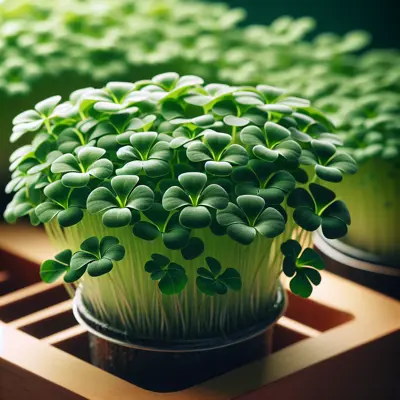
Rich, herbal, slightly bitter flavor. One tablespoon of seed yields approx. 1 1/2 cups of sprouts. All of Johnny's high-germination sprouting seeds have tested negative for the presence of E. coli 0157 and Salmonella.
Harvest
7-14d
Days to harvest
Sun
Full sun
Zones
5–9
USDA hardiness
Height
15-24 inches
Planting Timeline
Showing dates for Fenugreek Microgreens in USDA Zone 7
All Zone 7 microgreen →Zone Map
Click a state to update dates
Fenugreek Microgreens · Zones 5–9
Growing Details
Succession Planting
Fenugreek microgreens turn around in 7 to 14 days, so the math on succession is simple: start a fresh tray every 5 to 7 days to keep a steady weekly cut coming off the rack. There's no heat threshold or day-length trigger to plan around — this is a year-round indoor crop. The only real reason to skip a cycle is if tray space is tight or humidity is creeping up and you haven't dealt with it yet.
Complete Growing Guide
Light: Full sun (6 or more hours of direct sunlight a day). Soil: Loam (Silt). Soil pH: Acid (<6.0), Neutral (6.0-8.0). Drainage: Good Drainage, Occasionally Dry. Height: 1 ft. 3 in. - 2 ft. 0 in.. Spread: 1 ft. 0 in. - 0 ft. 4 in.. Spacing: 12 inches-3 feet. Growth rate: Rapid. Maintenance: Medium. Propagation: Seed. Regions: Coastal, Mountains, Piedmont.
Harvesting
The fruits are pods up to 4" in length. They are long, thin and pointed. Each contains 10 to 20 seeds. They have a strong, spicy odor.
Garden value: Edible
Harvest time: Fall, Summer
Edibility: The green parts of the plant are used as an herb or spice.
Storage & Preservation
Fresh fenugreek microgreens are highly perishable and best used within 3-5 days of harvest. Store them immediately in the refrigerator between 35-40°F in a breathable container—a partially opened plastic bag or container with small ventilation holes works well. Avoid airtight storage which causes condensation and rapid spoilage.
Gently pat harvested microgreens dry with paper towels before storage, removing any excess moisture that encourages bacterial growth. Never wash before storing, as this dramatically shortens shelf life.
For preservation, dehydrating works exceptionally well with fenugreek microgreens. Their robust flavor concentrates beautifully when dried at 95-105°F until crispy, creating an intensely aromatic seasoning that keeps for months. Freeze-drying preserves both color and nutrition better than air-drying, though few home gardeners have access to this equipment. Freezing fresh microgreens works for cooked applications but destroys their crisp texture for raw uses.
History & Origin
Origin: South-Eastern Europe and Western Asia
Advantages
- +Edible: The green parts of the plant are used as an herb or spice.
- +Fast-growing
Companion Plants
In a microgreens setup, "companions" mostly means what you grow on the same rack or in the same batch rotation. Lettuce, spinach, and pea shoots are natural neighbors — they share fenugreek's moderate watering cadence and fit comfortably inside the same 7–14 day harvest window. Radish and arugula microgreens work fine in adjacent trays too. Keep mustard microgreens physically separated; mustard releases glucosinolate breakdown compounds that can suppress germination in neighboring trays. Fennel is allelopathic enough that most growers just give it its own corner and leave it there.
Plant Together
Lettuce
Similar growing conditions and harvest timing, efficient space utilization
Radish Microgreens
Natural pest deterrent properties help protect fenugreek from soil-borne insects
Pea Shoots
Both legumes benefit from similar nitrogen-rich growing medium and moisture levels
Cilantro Microgreens
Attracts beneficial insects and has natural antifungal properties
Spinach Microgreens
Compatible growth rates and similar light requirements for indoor growing
Arugula Microgreens
Natural pest repellent properties help deter aphids and flea beetles
Broccoli Microgreens
Similar germination time and growing conditions, good companion for succession planting
Sunflower Microgreens
Fast-growing companion that can provide beneficial shade and wind protection
Keep Apart
Mustard Microgreens
Contains compounds that may inhibit germination and growth of legume family plants
Onion Family Plants
Allelopathic compounds can stunt growth and affect flavor development of fenugreek
Fennel
Strong allelopathic effects inhibit germination and growth of most microgreens including fenugreek
Nutrition Facts
Per 100g serving. % Daily Value based on 2,000 calorie diet. Source: USDA FoodData Central (FDC #167782)
Pests & Disease Resistance
Resistance
Good natural resistance to most diseases
Common Pests
Aphids, minimal pest pressure
Diseases
Powdery mildew in humid conditions, damping off if overwatered
Troubleshooting Fenugreek Microgreens
What you'll see, why it happens, and what to do about it.
Seedlings collapsing at the soil line within the first 3–5 days after sowing
Likely Causes
- Damping off (Pythium or Rhizoctonia spp.) — fungal rot triggered by overwatering and poor airflow
- Tray or growing medium not sanitized between batches
What to Do
- 1.Back off watering immediately — fenugreek microgreens want moisture, not saturation; let the top of the medium dry slightly between waterings
- 2.Run a small fan nearby to keep air moving across the tray surface
- 3.Sanitize trays between grows with a dilute hydrogen peroxide rinse (3% solution, let sit 5 minutes, then rinse)
White powdery coating on cotyledons or first true leaves, usually after day 8
Likely Causes
- Powdery mildew (Erysiphe spp.) — shows up when humidity stays high and airflow is low, especially in enclosed indoor spaces
What to Do
- 1.Harvest immediately — at the microgreen stage you're likely at 10–14 days anyway, so don't wait it out
- 2.Space future trays at least 2 inches apart and run a fan; powdery mildew spreads tray-to-tray faster than most growers expect
- 3.If it keeps recurring, drop ambient humidity below 60% during the grow cycle
Seeds fail to germinate or germination is patchy after 5+ days
Likely Causes
- Seeds sown dry — fenugreek benefits from a 6–8 hour pre-soak before broadcasting
- Growing medium too cold — germination stalls below 60°F
- Old seed stock with low viability
What to Do
- 1.Pre-soak seeds in room-temperature water for 6–8 hours before sowing; you'll typically see sprouts within 2–3 days instead of 5
- 2.Keep trays in a spot that holds at least 65–70°F — a heat mat set to 70°F works well if your space runs cool
- 3.Test old seed on a damp paper towel first: if fewer than 7 out of 10 germinate in 4 days, get fresh stock
Frequently Asked Questions
How long do fenugreek microgreens take to grow?▼
Do I need to soak fenugreek seeds before planting microgreens?▼
What do fenugreek microgreens taste like?▼
Can you grow fenugreek microgreens without soil?▼
Why are my fenugreek microgreens growing slowly?▼
Are fenugreek microgreens good for beginners?▼
Zone-by-Zone Planting Calendar
| Zone | Indoor Start | Transplant | Direct Sow | Harvest |
|---|---|---|---|---|
| Zone 3 | January – December | — | — | January – December |
| Zone 4 | January – December | — | — | January – December |
| Zone 5 | January – December | — | — | January – December |
| Zone 6 | January – December | — | — | January – December |
| Zone 7 | January – December | — | — | January – December |
| Zone 8 | January – December | — | — | January – December |
| Zone 9 | January – December | — | — | January – December |
| Zone 10 | January – December | — | — | January – December |
| Zone 1 | January – December | — | — | January – December |
| Zone 2 | January – December | — | — | January – December |
| Zone 11 | January – December | — | — | January – December |
| Zone 12 | January – December | — | — | January – December |
| Zone 13 | January – December | — | — | January – December |
Growing Guides from Wind River Greens
Sources & References
External authority sources used in compiling this guide.
- ExtensionNC State Extension
- USDAUSDA FoodData Central
See the Methodology page for how this data is sourced, what's AI-assisted, and known limitations.