Hale's Best Cantaloupe
Cucumis melo var. cantaloupensis 'Hale's Best'
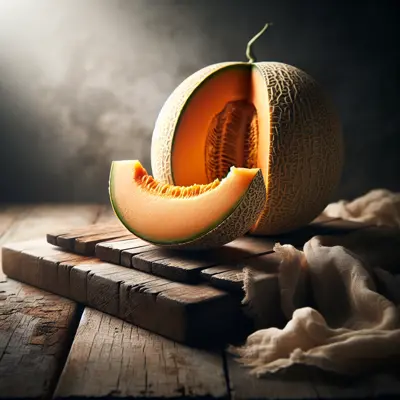
A time-tested heirloom cantaloupe that has been America's favorite since the 1920s, prized for its exceptional sweetness and aromatic fragrance. The heavily netted fruits develop deep orange flesh that practically melts in your mouth with perfect melon flavor. This reliable variety thrives in hot climates and consistently produces premium-quality melons that rival anything from the grocery store.
Harvest
85-90d
Days to harvest
Sun
Full sun
Zones
2–11
USDA hardiness
Height
6-9 feet
Planting Timeline
Showing dates for Hale's Best Cantaloupe in USDA Zone 7
All Zone 7 melon →Zone Map
Click a state to update dates
Hale's Best Cantaloupe · Zones 2–11
Growing Details
Succession Planting
Hale's Best runs 85–90 days to maturity, which limits how many rounds you can fit into a single season. Two successions is realistic in zone 7: start the first batch indoors in late March for a May transplant, then direct sow a second round in late May or the first week of June. That second planting will push harvest into late September, which works fine in most years before frost arrives.
A third sowing after mid-June isn't worth it. Fruit that's sizing up in September heat won't accumulate sugar the way a mid-August cantaloupe does — the nights aren't cooling fast enough to drive that process. Pull that bed after the second succession and get a fall brassica crop started instead.
Complete Growing Guide
Light: Full sun (6 or more hours of direct sunlight a day). Soil: Clay, High Organic Matter, Loam (Silt). Soil pH: Acid (<6.0), Neutral (6.0-8.0). Drainage: Good Drainage, Moist. Height: 6 ft. 0 in. - 9 ft. 0 in.. Spread: 1 ft. 0 in. - 3 ft. 0 in.. Spacing: 12 inches-3 feet. Growth rate: Medium. Maintenance: Medium. Propagation: Seed. Regions: Coastal, Mountains, Piedmont.
Harvesting
Musky-scented, spherical to oblong berry with a rind (pepo), often furrowed with yellow, white or green flesh and many seeds. The rind may be green, yellow, tan, beige or white and the surface may be smooth, rough, warty, scaly, or netted. Seeds white, about 1/2 inch long, narrow. Seeds ripen in August and September.
Color: Gold/Yellow, Green, White. Type: Berry. Length: < 1 inch. Width: < 1 inch.
Garden value: Edible, Showy
Harvest time: Fall
Edibility: Eaten fresh, wrapped in prosciutto, in salads, or as a dessert. Watery, but delicate, flavor. Avoid the seeds as the sprouting seed produces a toxic substance in its embryo.
Storage & Preservation
Freshly harvested Hale's Best melons should rest at room temperature for 2-3 days to achieve optimal texture — the flesh will soften while maintaining peak flavor. Once fully ripe, refrigerate whole melons for up to one week at 36-40°F with moderate humidity. Cut melons deteriorate quickly, lasting only 3-4 days refrigerated in airtight containers.
For preservation, cube ripe flesh and freeze on baking sheets before transferring to freezer bags — frozen melon works excellently in smoothies and maintains quality for 10-12 months. Dehydrate thin slices at 135°F for 8-12 hours to create concentrated melon leather with intense flavor. The high sugar content makes Hale's Best exceptional for jam and preserve-making — the natural pectin content helps achieve proper gel without excessive added pectin. Avoid canning fresh melon pieces as the texture becomes unpalatable, but pickled rind makes an excellent traditional preserve.
History & Origin
Origin: Africa, Arabian Peninsula, India, Australia
Advantages
- +Attracts: Bees, Pollinators
- +Edible: Eaten fresh, wrapped in prosciutto, in salads, or as a dessert. Watery, but delicate, flavor. Avoid the seeds as the sprouting seed produces a toxic substance in its embryo.
Companion Plants
Beans are the most practical companion for Hale's Best. Bush or pole beans fix atmospheric nitrogen, which cantaloupes pull from the soil as vines extend and fruit starts sizing up — you're essentially getting a slow side-dress without the bag. French marigolds (Tagetes patula specifically) do real work here: NC State Extension calls them out for suppressing root-knot nematodes in cucurbit beds, and their volatile compounds appear to disrupt the host-finding behavior of aphids and thrips that colonize melon foliage. Nasturtiums function as a trap crop — aphids locate them before they locate your melons, giving you a visible early-warning system and a sacrificial plant you can yank and bag when it gets overrun.
Sunflowers on the north side of the bed provide a modest windbreak and give cucumber beetles an alternate landing zone, which buys your transplants a few extra days to establish before beetle pressure peaks. Radishes scattered at the perimeter are credited with deterring cucumber beetles, though in our zone 7 Georgia garden, where striped cucumber beetle populations can be heavy by late May, row cover at transplant time does more reliable work than any repellent planting.
Cucumbers belong in a separate bed entirely. They share the same pest load — cucumber beetles move bacterial wilt between the two crops freely — and combining them concentrates your disease risk rather than spreading it. Potatoes carry several soil-borne pathogens that linger, and no cucurbit should follow or precede potatoes in the same bed for at least 2 seasons.
Plant Together
Beans
Fix nitrogen in soil and don't compete heavily for ground space
Basil
Repels aphids, thrips, and mosquitoes while potentially improving melon flavor
Marigold
Deters cucumber beetles, aphids, and nematodes that attack melon roots
Nasturtium
Acts as trap crop for cucumber beetles and squash bugs, repels aphids
Radish
Repels cucumber beetles and squash vine borers, breaks up soil for melon roots
Sunflower
Provides natural trellis support and attracts beneficial pollinators
Corn
Offers natural windbreak and shade protection during hot afternoons
Oregano
Repels cucumber beetles and provides ground cover to retain soil moisture
Keep Apart
Cucumber
Competes for same nutrients and attracts shared pests like cucumber beetles
Potato
May stunt melon growth and both crops are susceptible to similar fungal diseases
Aromatic herbs (strong)
Strong-scented herbs like sage can inhibit melon germination and growth
Nutrition Facts
Per 100g serving. % Daily Value based on 2,000 calorie diet. Source: USDA FoodData Central (FDC #169092)
Pests & Disease Resistance
Resistance
Moderate resistance to powdery mildew, some tolerance to fusarium wilt
Common Pests
Aphids, cucumber beetles, squash vine borers, thrips
Diseases
Powdery mildew, downy mildew, bacterial wilt, alternaria leaf spot
Troubleshooting Hale's Best Cantaloupe
What you'll see, why it happens, and what to do about it.
Seedlings or young transplants wilting suddenly and collapsing, even with adequate soil moisture
Likely Causes
- Bacterial wilt (Erwinia tracheiphila) — transmitted by cucumber beetles feeding on stems and leaves
- Heavy cucumber beetle pressure at the cotyledon stage before plants are established
What to Do
- 1.Cover young plants with row cover or wire/cloth cone protectors immediately after transplanting — remove once vines start to run and need pollination
- 2.Scout daily for striped or spotted cucumber beetles; if pressure is high, NC State Extension recommends a foliar insecticide applied at the cotyledon stage to retard feeding
- 3.Pull and discard any wilted plants — bacterial wilt spreads fast and infected plants won't recover
White powdery coating on upper leaf surfaces, usually appearing mid-to-late summer after fruit set
Likely Causes
- Powdery mildew — a fungal pathogen that thrives in warm, dry days with cool nights, common in cucurbits late in the season
- Crowded vines with poor airflow between plants
What to Do
- 1.Give each plant a full 3–4 feet of lateral space and don't let vines pile on top of each other
- 2.Apply a sulfur-based fungicide or diluted neem oil at first sign — once it covers more than 30% of the canopy, you're mostly managing decline, not reversing it
- 3.Strip the worst-affected leaves and trash them, not the compost pile
Yellow angular patches on leaf tops with grayish-purple fuzzy growth on the undersides, spreading fast across the planting
Likely Causes
- Downy mildew (Pseudoperonospora cubensis) — a water mold that moves rapidly in humid conditions, particularly during stretches of afternoon thunderstorms
- NC State Extension notes downy mildew appears at different times and locations each year, so early monitoring is the only real advantage you have
What to Do
- 1.Remove heavily infected leaves immediately to slow spread and open up airflow
- 2.Switch to drip irrigation if you're overhead watering — wet foliage for even a few hours each evening accelerates this pathogen significantly
- 3.Rotate this bed out of cucurbits (melons, cucumbers, squash) for at least 2 seasons
Sunken, dry, tan-to-brown rotted spot on the blossom end of developing fruit
Likely Causes
- Blossom-end rot — calcium deficiency in the developing fruit, typically driven by inconsistent soil moisture rather than a lack of calcium in the soil itself
- Overfertilization with high-nitrogen fertilizers, hard rain followed by dry spells, or soil pH outside the 6.5–6.8 range (per NC State Extension)
What to Do
- 1.Mulch 3–4 inches deep with straw to buffer soil moisture between rain events
- 2.Avoid cultivating within 12 inches of the plant crown — severed feeder roots are one of the main reasons calcium uptake breaks down mid-season
- 3.Get a soil test and lime if needed to reach pH 6.5–6.8; pull back on nitrogen-heavy fertilizer once fruit has set
Frequently Asked Questions
How long does Hale's Best cantaloupe take to grow?▼
Can you grow Hale's Best cantaloupe in containers?▼
Is Hale's Best cantaloupe good for beginners?▼
When should I plant Hale's Best cantaloupe seeds?▼
What does Hale's Best cantaloupe taste like?▼
How do I know when Hale's Best cantaloupe is ripe?▼
Zone-by-Zone Planting Calendar
| Zone | Indoor Start | Transplant | Direct Sow | Harvest |
|---|---|---|---|---|
| Zone 3 | May – May | June – July | June – August | September – October |
| Zone 4 | April – May | June – June | June – July | September – October |
| Zone 5 | April – April | May – June | May – July | September – October |
| Zone 6 | April – April | May – June | May – July | August – October |
| Zone 7 | March – April | May – May | May – June | August – September |
| Zone 8 | March – March | April – May | April – June | July – September |
| Zone 9 | February – February | March – April | March – May | June – August |
| Zone 10 | January – February | March – March | March – April | June – July |
| Zone 1 | June – June | July – August | July – September | October – August |
| Zone 2 | May – June | July – July | July – August | October – September |
| Zone 11 | January – January | February – February | February – March | May – June |
| Zone 12 | January – January | February – February | February – March | May – June |
| Zone 13 | January – January | February – February | February – March | May – June |
Growing Guides from Wind River Greens
Sources & References
External authority sources used in compiling this guide.
See the Methodology page for how this data is sourced, what's AI-assisted, and known limitations.
More Melons
Charleston Gray Watermelon
Ali Baba Watermelon
Cantaloup Charentais
Watermelon Charleston Gray
Cantaloupe Iroquois
Sugar Baby Watermelon
Tiger Baby Watermelon
Early Dew Honeydew