Tatsoi
Brassica rapa var. narinosa
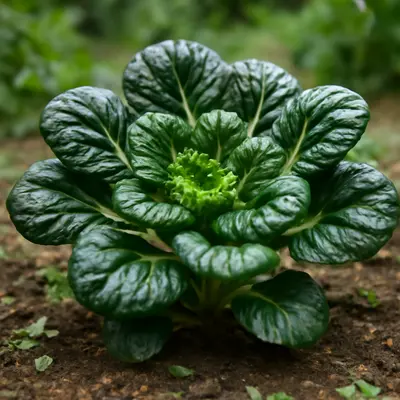
Tatsoi is a compact, dark green Asian leafy green with distinctive spoon-shaped leaves that form a rosette cluster. This heirloom variety reaches full maturity in just 25 days, making it ideal for quick succession plantings. Its defining characteristic is the tender, crunchy stems with a mild, slightly sweet flavor and juicy texture that adds dimension to salads and stir-fries. The whole plant—leaves and stems—is edible and versatile, offering both nutritional value and culinary appeal for gardeners seeking fast-growing greens.
Harvest
25d
Days to harvest
Sun
Full sun to part shade
Zones
5–9
USDA hardiness
Height
3 feet
Planting Timeline
Showing dates for Tatsoi in USDA Zone 7
All Zone 7 lettuce →Zone Map
Click a state to update dates
Tatsoi · Zones 5–9
Growing Details
Succession Planting
Tatsoi is ready to cut in about 25 days, which makes succession planting straightforward and genuinely worth the effort. Direct sow every 14 days starting in early March through mid-May in zone 7; that gets you harvests running from early April into early June before heat becomes a problem. Tatsoi bolts quickly once daytime highs are consistently above 80°F, so don't push the late-spring sowings past what your forecast allows.
Pick back up with another round of sowings in late August through early October for a fall run — the flavor tightens and sweetens in cool weather, and light frost down to around 28°F won't kill it. That fall window often produces the best tatsoi of the year.
Complete Growing Guide
Round, gently cupped green leaves with light green and white stems. Mild flavor. Crunchy, juicy stems. Fastest tatsoi to bolt. According to Johnny's Selected Seeds, Tatsoi is 25 baby; 45 full size to maturity, annual, open pollinated. Notable features: Organic Seeds, Plants, and Supplies, Cold Tolerant, Hydroponic Performer.
Light: Full sun (6 or more hours of direct sunlight a day), Partial Shade (Direct sunlight only part of the day, 2-6 hours). Soil: Clay, Loam (Silt), Sand. Soil pH: Acid (<6.0), Neutral (6.0-8.0). Drainage: Good Drainage, Moist. Height: 0 ft. 10 in. - 2 ft. 0 in. Spread: 1 ft. 0 in. - 2 ft. 0 in. Spacing: 12 inches-3 feet. Growth rate: Medium. Maintenance: Medium. Propagation: Seed, Stem Cutting. Regions: Coastal, Mountains, Piedmont.
Harvesting
Tatsoi reaches harvest at 25 baby; 45 full size from sowing per Johnny's Selected Seeds. As an annual, harvest continues until frost ends the season.
The fruits dry and split when ripe.
Color: Brown/Copper, Green. Type: Siliqua. Length: > 3 inches.
Garden value: Edible
Harvest time: Fall, Summer
Bloom time: Spring, Summer
Edibility: The foliage is edible raw or cooked but when cooked can emit an unpleasant odor.
Storage & Preservation
Harvest tatsoi at 25 days and refrigerate immediately in a perforated plastic bag at 32–40°F with 95% humidity; it will keep fresh for 5–7 days, though quality declines noticeably after day 4. For longer storage, blanch whole rosettes for 2–3 minutes, cool in ice water, and freeze in airtight containers for up to 8 months—this preserves texture better than raw freezing. Fermentation works well: pack loosely in a jar with 3% salt brine and let sit 1–2 weeks at room temperature for a tangy condiment. Light pickling in vinegar, salt, and sugar also suits tatsoi's delicate spoon-shaped leaves. Because tatsoi's stems are tender and hollow, avoid rough handling during harvest and storage; bruising accelerates deterioration and promotes rot, particularly near the base.
History & Origin
Tatsoi is open-pollinated, meaning seed saved from healthy plants will produce true-to-type offspring. Listed in the Johnny's Selected Seeds catalog.
Brassica is a genus of plants in the cabbage and mustard family (Brassicaceae). The members of the genus are informally known as cruciferous vegetables, cabbages, mustard plants, or simply brassicas. Crops from this genus are sometimes called cole crops—derived from the Latin caulis, denoting the stem or stalk of a plant.
Advantages
- +Matures in just 25 days, making it ideal for quick succession planting
- +Mild, delicate flavor appeals to diverse palates and cuisines
- +Crunchy, juicy stems provide excellent textural contrast in salads
- +Easy difficulty level makes it perfect for beginner gardeners
Considerations
- -Fastest to bolt among tatsoi varieties, limiting harvest window
- -Requires consistent moisture and cool temperatures to prevent premature bolting
- -Susceptible to cabbage worms and flea beetles common to brassicas
Companion Plants
Radishes are worth planting alongside tatsoi for a concrete reason: they mature in 25–30 days, roughly the same window, and flea beetles (Phyllotreta spp.) tend to hit radish foliage preferentially — pull them out at harvest and you've removed a good chunk of the pest load at the same time. Chives work differently; their sulfur compounds disrupt the host-finding behavior of aphids, Myzus persicae being the main brassica offender, well enough that a border row is worth the 6 inches of bed space. Nasturtiums attract aphids away from the main planting, and French marigolds (Tagetes patula) suppress soil nematodes over time through root exudates — neither is magic, but both pull their weight in a tight polyculture bed.
Carrots and spinach are easy neighbors because tatsoi is shallow-rooted while carrots go down 8–12 inches — no real competition for water or nutrients at the same depth. Spinach has similar moisture demands and a compatible harvest schedule, so they can share a bed without either suffering.
Broccoli is the one to keep on the other side of the garden entirely. Both are brassicas, which means they share every pest and pathogen — flea beetles, cabbage loopers (Trichoplusia ni), and downy mildew all move freely between them. Planting them adjacent concentrates pressure instead of spreading it. Tomatoes and strawberries are less about chemistry and more about mismatch: both have aggressive root systems, different water schedules, and neither does tatsoi any favors in a 25-day sprint to harvest.
Plant Together
Radishes
Break up soil for shallow tatsoi roots and deter flea beetles
Carrots
Different root depths prevent competition and carrots loosen soil
Chives
Repel aphids and other soft-bodied insects that attack brassicas
Lettuce
Similar growing conditions and shallow roots, efficient space usage
Spinach
Compatible cool-season crops with similar water and nutrient needs
Marigolds
Deter flea beetles and cabbage worms that commonly attack tatsoi
Nasturtiums
Act as trap crops for aphids and flea beetles
Dill
Attracts beneficial insects that prey on cabbage pests
Keep Apart
Broccoli
Competes for same nutrients and attracts similar pests like cabbage worms
Strawberries
Root systems compete and strawberries may inhibit brassica growth
Tomatoes
Different watering needs and tomatoes may stunt brassica growth
Nutrition Facts
Per 100g serving. % Daily Value based on 2,000 calorie diet. Source: USDA FoodData Central (FDC #2346388)
Pests & Disease Resistance
Common Pests
Flea beetles, cabbage loopers, aphids
Diseases
Downy mildew, powdery mildew, leaf spot
Troubleshooting Tatsoi
What you'll see, why it happens, and what to do about it.
Tiny, irregular holes punched through leaves on young plants, often appearing within the first 2–3 weeks after direct sow
Likely Causes
- Flea beetles (Phyllotreta spp.) — they overwinter in soil and leaf litter and hit seedlings hard when plants are small and vulnerable
- Seedlings stressed by inconsistent moisture, which slows the plant from outgrowing the damage
What to Do
- 1.Cover rows immediately after sowing with floating row cover (Reemay or similar); flea beetles can't find what they can't land on
- 2.Keep soil consistently moist — tatsoi at 6–8 inch spacing that's growing fast will outpace light flea beetle pressure
- 3.If pressure is severe, spinosad-based sprays are OMRI-listed and effective; apply in early morning before pollinators are active
Gray-purple fuzzy coating on the underside of leaves, with yellowing patches on the upper surface — usually shows up in cool, wet stretches
Likely Causes
- Downy mildew (Peronospora brassicae) — a water mold, not a true fungus, that spreads fast when nights drop below 60°F and humidity is high
- Poor airflow from crowded spacing or a dense canopy trapping moisture overnight
What to Do
- 1.Pull and trash affected leaves immediately — don't compost them
- 2.Thin plants to the full 6–8 inch spacing if you've been crowding them; airflow matters more than you'd think with this crop
- 3.Rotate tatsoi and other brassicas out of the same bed for at least one season — Peronospora spores persist in soil debris
Frequently Asked Questions
How long does Tatsoi take to harvest?▼
Is Tatsoi a good choice for beginner gardeners?▼
Can you grow Tatsoi in containers?▼
What does Tatsoi taste like?▼
When should I plant Tatsoi?▼
Why does Tatsoi bolt quickly?▼
Zone-by-Zone Planting Calendar
| Zone | Indoor Start | Transplant | Direct Sow | Harvest |
|---|---|---|---|---|
| Zone 1 | — | — | June – July | June – September |
| Zone 2 | — | — | May – July | June – September |
| Zone 11 | — | — | January – February | January – December |
| Zone 12 | — | — | January – February | January – December |
| Zone 13 | — | — | January – February | January – December |
| Zone 3 | — | — | May – June | May – October |
| Zone 4 | — | — | April – June | May – October |
| Zone 5 | — | — | April – May | May – November |
| Zone 6 | — | — | April – May | April – November |
| Zone 7 | — | — | March – May | April – November |
| Zone 8 | — | — | March – April | March – December |
| Zone 9 | — | — | February – March | February – December |
| Zone 10 | — | — | January – March | February – December |
Growing Guides from Wind River Greens
Sources & References
External authority sources used in compiling this guide.
- BreederJohnny's Selected Seeds
- USDAUSDA FoodData Central
See the Methodology page for how this data is sourced, what's AI-assisted, and known limitations.