Purple Podded Pole Bean
Phaseolus vulgaris 'Purple Podded Pole'
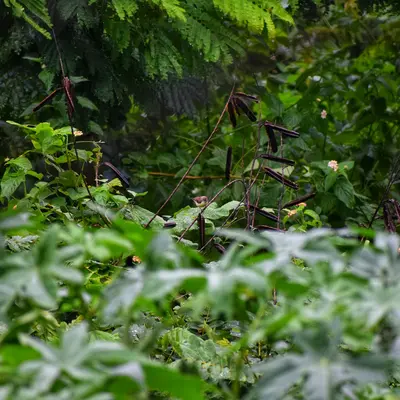
An eye-catching heirloom climbing bean that produces abundant clusters of deep purple pods on vigorous 8-foot vines. The stunning purple pods make this variety a garden showstopper while providing excellent eating quality and productivity. This dual-purpose beauty serves as both an edible crop and an attractive garden accent that climbs any support structure.
Harvest
60-65d
Days to harvest
Sun
Full sun
Zones
2–11
USDA hardiness
Difficulty
Easy to Moderate
Planting Timeline
Showing dates for Purple Podded Pole Bean in USDA Zone 7
All Zone 7 bean →Zone Map
Click a state to update dates
Purple Podded Pole Bean · Zones 2–11
Growing Details
Succession Planting
Direct sow every 12–14 days from April 1 through late June in zone 7, once soil temperature holds above 60°F at planting depth. Below that threshold, germination stalls and seed rot is common — it's not worth pushing it. Stop sowing by late June; pods set poorly once sustained daytime highs exceed 90°F. That schedule gives you 3–4 staggered plantings and a harvest window running July through early September before heat and pest pressure stack up.
Complete Growing Guide
Purple Podded Pole Bean thrives best when direct sown into warm soil after all danger of frost has passed. Wait until soil temperature reaches at least 60°F, ideally 65–70°F, which typically occurs one to two weeks after your last spring frost date. Unlike bush beans, pole varieties benefit from a longer growing season and won't germinate reliably in cold soil. Sow seeds one inch deep, spacing them about four to six inches apart around your support structure. Thin seedlings to eight inches apart once they've developed their first true leaves, as the vigorous eight-foot vines need adequate room for air circulation and growth.
Prepare your soil thoroughly before planting by working in compost or well-rotted manure to improve drainage and nutrient content. Purple Podded Pole Beans prefer slightly acidic to neutral soil with good organic matter. Construct or install your trellis, pole teepee, or string support system before sowing, as planting after the fact risks disturbing emerging seedlings. The vines will eagerly climb any sturdy structure, but ensure it can handle the weight of mature plants laden with pods.
Water deeply and consistently, providing about one inch per week through drip irrigation or soaking rather than overhead watering, which promotes disease. During flowering and pod development, maintain even moisture without allowing the soil to become waterlogged. Feed with a balanced fertilizer when vines begin flowering, then switch to lower-nitrogen formulations to encourage pod production rather than excessive foliage. Purple Podded Pole Beans generally don't require heavy feeding if your soil has adequate organic matter.
These beans are particularly susceptible to Mexican bean beetles and their larvae, so scout plants regularly starting at bloom time and handpick beetles and egg clusters. Spider mites thrive in hot, dry conditions, making consistent watering essential for prevention. Watch for yellowing leaves and webbing, especially during drought stress. Powdery mildew and rust can develop in humid conditions; improve air circulation around your support structure and remove lower leaves if disease appears. Bean mosaic virus, transmitted by aphids, causes mottled leaves and reduced productivity—control aphids promptly with insecticidal soap if infestations develop.
The single most critical mistake gardeners make with Purple Podded Pole Beans is harvesting too late. These stunning purple pods become tough and stringy as they mature, losing the tender eating quality that makes them worthwhile. Pick pods when they're still young and firm, just as they reach full color—typically every two to three days once production begins. Frequent harvesting also encourages continued flowering and extends your 60–65-day harvest window well into fall, rewarding your attention with weeks of abundant purple-hued clusters.
Harvesting
Harvest Purple Podded Pole Beans when the pods reach 5-6 inches long and maintain a deep, vibrant purple color with a slight give when gently squeezed—this indicates peak tenderness before the beans inside mature and enlarge the pods. Unlike single-harvest varieties, these beans produce continuously throughout the season, so pick every 2-3 days to encourage more flowering and prevent mature pods from signaling the plant to stop producing. The key timing strategy is to begin harvesting in early morning when pods are crisp and full of moisture, as this delivers superior texture and flavor; waiting until afternoon allows pods to lose their turgidity and become stringier. Regular harvesting extends your productive window well into the season.
The boat-shaped seed pods are bilaterally symmetrical and can be green, yellow, white, or purple at maturity. There is a wide variety of color and shape choices among cultivars.
Color: Gold/Yellow, Green, Purple/Lavender, White. Type: Legume. Length: > 3 inches. Width: < 1 inch.
Garden value: Edible, Good Dried
Harvest time: Fall, Summer
Storage & Preservation
Fresh Purple Podded Pole Beans maintain best quality when stored unwashed in perforated plastic bags in your refrigerator crisper drawer, where they'll stay fresh for 7-10 days. Keep them at 40-45°F with high humidity—too cold and they'll develop pitting and off-flavors.
For freezing, blanch whole pods in boiling water for 2-3 minutes, then immediately plunge into ice water. Drain thoroughly and freeze in portions you'll use at one time. Properly blanched and frozen beans maintain quality for 8-10 months.
These beans excel for drying into shell beans—allow pods to mature on the vine until they rattle when shaken, then harvest and finish drying indoors. Store dried beans in airtight containers for up to 2 years. The striking purple pods also make excellent additions to fresh flower arrangements, maintaining their color for 5-7 days in water.
History & Origin
The Purple Podded Pole Bean belongs to the ancient lineage of Phaseolus vulgaris, domesticated in Mesoamerica thousands of years ago, though documentation of this specific purple-podded cultivar remains sparse in horticultural records. Like many heirloom pole beans circulating among gardeners and seed savers, its exact origin and breeder are largely undocumented, suggesting it emerged through traditional selection within farming communities rather than formal breeding programs. The variety likely represents a natural color variant that skilled cultivators maintained and propagated across generations, eventually entering the wider heirloom seed network where it has been preserved primarily through home gardening and seed-saving traditions rather than institutional breeding work.
Origin: Tropical America
Advantages
- +Striking purple pods serve as both food and ornamental garden feature
- +Vigorous 8-foot vines maximize vertical space and climbing structure usage
- +Rich, meaty flavor with tender texture makes excellent eating quality
- +Abundant pod clusters provide excellent productivity throughout growing season
- +Quick 60-65 day maturity allows multiple plantings in longer seasons
Considerations
- -Susceptible to multiple serious diseases including bean mosaic virus and anthracnose
- -Vulnerable to bean beetles, aphids, spider mites, and bean weevils
- -Purple pod color fades significantly when cooked, reducing visual appeal
- -Requires sturdy support structure and regular maintenance for vigorous vines
Companion Plants
Corn is a natural structural partner — beans fix nitrogen at their roots through Rhizobium bacteria while corn grows tall enough to serve as a trellis, no hardware required. Radishes and carrots pull their weight without competing, since their taproots run 6–12 inches down and don't tangle with bean roots at all. Marigolds and nasturtiums belong nearby too: marigolds push back on bean beetles with scent compounds, and nasturtiums draw aphids onto themselves and off your crop. Onions and garlic are the ones to keep out — their sulfur compounds suppress the same Rhizobium bacteria that make beans worth growing in nitrogen-depleted soil.
Plant Together
Summer Squash
Part of Three Sisters planting, large leaves suppress weeds and retain moisture
Marigolds
Repel Mexican bean beetles and other harmful insects
Nasturtiums
Act as trap crop for aphids and cucumber beetles
Carrots
Different root depths avoid competition, beans provide nitrogen for carrots
Radishes
Break up soil for bean roots, mature quickly before beans need space
Corn
Provides natural trellis support, beans fix nitrogen for corn
Catnip
Repels flea beetles and ants that can damage bean plants
Rosemary
Deters Mexican bean beetles and carrot rust flies
Keep Apart
Onions
Can inhibit bean growth and nitrogen fixation by root bacteria
Garlic
Allelopathic compounds can stunt bean growth and development
Sunflowers
Compete for nutrients and can release growth-inhibiting chemicals
Nutrition Facts
Per 100g serving. % Daily Value based on 2,000 calorie diet. Source: USDA FoodData Central (FDC #2346400)
Pests & Disease Resistance
Resistance
Good natural resistance to common bean diseases
Common Pests
Bean beetles, aphids, spider mites, bean weevils
Diseases
Bean mosaic virus, rust, bacterial blight, anthracnose
Troubleshooting Purple Podded Pole Bean
What you'll see, why it happens, and what to do about it.
Leaves have ragged chunks missing, with olive-green square-shaped insects clustered on the plant — noticed around week 7
Likely Causes
- Stink bugs (family Pentatomidae) — recognizable by their shield shape and foul odor when disturbed
- Mexican bean beetle (Epilachna varivestis) — chews leaf tissue from the underside, leaving a lacy pattern
What to Do
- 1.Hand-pick stink bugs in the early morning when they're sluggish and drop them into soapy water
- 2.Check the undersides of leaves for bean beetle egg clusters (yellow, oval, in tight groups) and crush them on sight
- 3.If pressure is heavy, apply spinosad — it's OMRI-listed and effective on both — and reapply after rain
Orange or rust-colored powdery pustules on the undersides of leaves, upper surface showing pale yellow spots
Likely Causes
- Bean rust (Uromyces appendiculatus) — a fungal disease that spreads fast in humid conditions above 60°F
- Overhead watering or dense planting that keeps foliage wet for extended periods
What to Do
- 1.Switch to drip irrigation or a soaker hose — wet leaves are the main driver here
- 2.Strip and bag (don't compost) affected leaves as soon as you spot them
- 3.Rotate this bed out of beans for at least 2 seasons; NC State Extension notes that bean rust overwinters on plant debris
Dark, water-soaked spots on pods and leaves that enlarge and turn brown or black, sometimes with a pink spore mass in the center
Likely Causes
- Anthracnose (Colletotrichum lindemuthianum) — seed-borne and soil-borne fungus, worst in cool wet weather
- Planting in the same bed 5+ consecutive years without rotation
What to Do
- 1.Pull and discard infected plants entirely — this one moves fast once established
- 2.Start with certified disease-free seed each year; don't save seed from an infected crop
- 3.Rotate beans out of the affected bed for 2-3 years, per NC State Extension's IPM guidance on breaking soilborne disease cycles
Frequently Asked Questions
How long does Purple Podded Pole Bean take to grow?▼
Can you grow Purple Podded Pole Beans in containers?▼
What do Purple Podded Pole Beans taste like?▼
When should I plant Purple Podded Pole Bean seeds?▼
Are Purple Podded Pole Beans good for beginners?▼
Do Purple Podded Pole Bean pods stay purple when cooked?▼
Zone-by-Zone Planting Calendar
| Zone | Indoor Start | Transplant | Direct Sow | Harvest |
|---|---|---|---|---|
| Zone 3 | — | — | June – July | September – October |
| Zone 4 | — | — | June – July | August – October |
| Zone 5 | — | — | May – June | August – October |
| Zone 6 | — | — | May – June | August – September |
| Zone 7 | — | — | April – June | July – September |
| Zone 8 | — | — | April – May | July – August |
| Zone 9 | — | — | March – April | June – July |
| Zone 10 | — | — | February – April | May – July |
| Zone 1 | — | — | July – August | October – August |
| Zone 2 | — | — | June – August | September – September |
| Zone 11 | — | — | January – March | April – June |
| Zone 12 | — | — | January – March | April – June |
| Zone 13 | — | — | January – March | April – June |
Growing Guides from Wind River Greens
Sources & References
External authority sources used in compiling this guide.
See the Methodology page for how this data is sourced, what's AI-assisted, and known limitations.