Golden Delicious Apple
Malus domestica 'Golden Delicious'
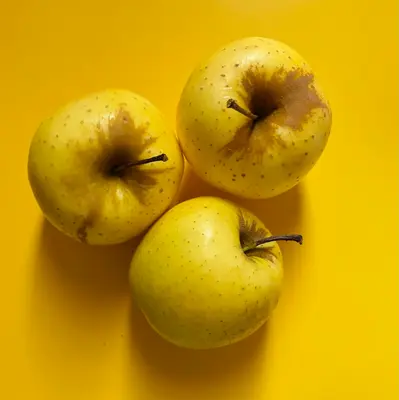
One of America's most beloved apple varieties, originating from West Virginia in the early 1900s. This self-pollinating tree produces sweet, crisp apples with distinctive golden-yellow skin that's perfect for fresh eating, baking, and sauce making. Known for its reliable production and excellent storage qualities, making it a top choice for home orchards.
Harvest
120-140d
Days to harvest
Sun
Full sun to partial shade
Zones
4–9
USDA hardiness
Height
15-30 feet
Planting Timeline
Showing dates for Golden Delicious Apple in USDA Zone 7
All Zone 7 fruit-tree →Zone Map
Click a state to update dates
Golden Delicious Apple · Zones 4–9
Growing Details
Complete Growing Guide
Golden Delicious apples require full sun exposure—at least six to eight hours daily—and well-draining soil to thrive, as they're particularly susceptible to root rot in waterlogged conditions. Plant in early spring or fall when dormant, spacing trees 15-20 feet apart to ensure adequate air circulation, which helps prevent fungal diseases like powdery mildew and apple scab, both common problems for this variety. While self-fertile, Golden Delicious produces larger yields with cross-pollination from compatible varieties like Gala or Fuji. Monitor closely for codling moths and apple maggots, which aggressively target this cultivar's sweet fruit. The trees can become biennial bearers—producing heavily one year, lightly the next—so thin developing fruit when they're marble-sized to encourage consistent annual production and larger individual apples. Prune annually in late winter to maintain an open canopy structure.
Light: Full sun (6 or more hours of direct sunlight a day), Partial Shade (Direct sunlight only part of the day, 2-6 hours). Soil: Clay, Loam (Silt), Sand. Soil pH: Alkaline (>8.0), Neutral (6.0-8.0). Drainage: Good Drainage, Moist, Occasionally Dry. Height: 15 ft. 0 in. - 30 ft. 0 in.. Spread: 15 ft. 0 in. - 30 ft. 0 in.. Spacing: 24-60 feet. Growth rate: Medium. Maintenance: High. Propagation: Grafting, Seed. Regions: Coastal, Mountains, Piedmont.
Harvesting
Golden Delicious apples reach peak harvest readiness when the skin transitions from green to a rich golden-yellow color, typically occurring in mid to late fall depending on your climate zone. Gently cup each apple in your hand—mature fruit will detach with minimal pressure when twisted slightly upward, whereas unripe apples resist picking. Size should be medium to large, around 3 inches in diameter. These trees produce fruit continuously throughout the season rather than all at once, so plan multiple harvests over 2-3 weeks for optimal flavor development. A crucial timing tip: wait until at least 120 days from bloom to first harvest, as premature picking results in mealy texture and reduced sweetness that storage cannot improve.
Large, round, firm fruits that often have a waxy coating. Some varieties ripen late summer and some in the fall.
Color: Gold/Yellow, Green, Red/Burgundy. Type: Pome. Length: > 3 inches. Width: > 3 inches.
Garden value: Edible
Harvest time: Fall, Summer
Edibility: Fruits can be eaten raw and cooked in a variety of dishes.
Storage & Preservation
Store Golden Delicious in your refrigerator's crisper drawer at 32-35°F with high humidity for optimal longevity—they'll keep 3-5 months under ideal conditions. Never store damaged fruit, as one bad apple truly spoils the bunch. For short-term storage (2-3 weeks), keep them in a cool basement or garage in perforated plastic bags.
For preservation, Golden Delicious excels at multiple methods. Freeze peeled, sliced apples tossed with lemon juice and a pinch of ascorbic acid—they maintain texture better than many varieties. Dehydrate at 135°F for 8-12 hours to make excellent apple chips. Their firm flesh and balanced sweetness make superior applesauce that requires minimal added sugar. Can apple slices in light syrup or apple juice for year-round baking. The variety's natural sugars also make it ideal for apple cider vinegar production through natural fermentation.
History & Origin
Originating in West Virginia during the early 1900s, the Golden Delicious apple emerged from chance seedling discovery rather than deliberate breeding efforts. A farmer named Anderson Mullins found the tree growing on his property near Clay, West Virginia, around 1905, though documentation of its exact parentage remains unclear. The variety was subsequently propagated and commercialized, becoming one of America's most widely planted apple cultivars by the mid-twentieth century. Its exact genetic lineage is not definitively documented, but horticultural records suggest it may descend from earlier American or European apple stock cultivated in the region. The cultivar's reliable characteristics and commercial success transformed it into a fundamental variety in American orcharding.
Origin: Central Asia to Afghanistan
Advantages
- +Self-pollinating variety eliminates need for separate pollinator trees
- +Versatile fruit excellent for fresh eating, baking, and sauce making
- +Exceptional storage qualities allow fruit to last months in cool conditions
- +Reliable heavy producer with consistent annual yields
- +Sweet, crisp flavor with mild tartness appeals to most palates
Considerations
- -Highly susceptible to apple scab in humid climates requiring fungicide sprays
- -Prone to powdery mildew and fire blight limiting organic growing options
- -Codling moth and apple maggot infestations common without consistent pest management
- -Requires 120-140 frost-free days limiting cultivation in shorter growing seasons
Companion Plants
Chives planted around the drip line pull reasonable weight — alliums have a documented mild deterrent effect on aphids, and they don't compete meaningfully with deep tree roots during the 120-140 day fruit development window. Comfrey is probably the most practical choice here: its roots mine calcium and potassium from 6 feet down, and the cut leaves break down quickly into a surface mulch that actually feeds the soil. Clover as a ground cover keeps the zone between trees from compacting and fixes nitrogen without any additional inputs.
Grass is the companion to actually manage. Solid turf right up to the trunk pulls water and fertility away from young trees at the exact time they need it most — you'll see it in stunted first- and second-year growth. Keep at least a 3-4 foot mulched ring clear of the base. Black walnut (Juglans nigra) is a harder problem: it produces juglone throughout its root zone, and apples are genuinely sensitive to it — plan on keeping them well separated, 50 feet or more between the two.
Plant Together
Chives
Repels aphids, Japanese beetles, and improves tree health
Marigolds
Deters nematodes and aphids while attracting beneficial insects
Nasturtiums
Acts as trap crop for aphids and attracts predatory insects
Comfrey
Deep roots bring nutrients to surface and provides potassium-rich mulch
Lavender
Repels moths and attracts pollinators, improves overall orchard health
Tansy
Deters ants, mice, and flying insects that can harm apple trees
Dill
Attracts beneficial wasps and ladybugs that control apple pests
Clover
Fixes nitrogen in soil and provides ground cover to retain moisture
Keep Apart
Black Walnut
Releases juglone which is toxic to apple trees and inhibits growth
Grass
Competes directly for water and nutrients, especially harmful to young trees
Fennel
Inhibits growth through allelopathic compounds that stunt apple tree development
Nutrition Facts
Per 100g serving. % Daily Value based on 2,000 calorie diet. Source: USDA FoodData Central (FDC #168171)
Pests & Disease Resistance
Resistance
Moderate resistance to apple scab, susceptible to fire blight
Common Pests
Codling moth, apple maggot, aphids, scale insects
Diseases
Apple scab, fire blight, powdery mildew, cedar apple rust
Troubleshooting Golden Delicious Apple
What you'll see, why it happens, and what to do about it.
Small, brown-ringed holes through the fruit skin, with a winding tunnel of brown frass leading to the core — discovered at harvest or when cutting fruit open
Likely Causes
- Codling moth (Cydia pomonella) — larvae bore in shortly after petal fall and feed straight to the core
- Apple maggot (Rhagoletis pomonella) — lays eggs under the skin in midsummer, leaving a network of brown tunnels through the flesh
What to Do
- 1.Hang codling moth pheromone traps by petal fall to time your spray window; two traps per tree is standard
- 2.Apply kaolin clay (Surround WP) as a physical barrier starting at petal fall and reapply after every rain
- 3.Clean up all dropped fruit immediately — larvae overwinter in the soil under fallen apples and will be back next year
New shoots and blossoms suddenly wilting and turning dark brown or black, as if scorched — appearing in spring when temperatures swing between 60°F and 75°F with wet weather
Likely Causes
- Fire blight (Erwinia amylovora) — a bacterial disease that spreads rapidly through open blossoms and fresh pruning cuts during warm, wet springs
- Golden Delicious has moderate susceptibility to fire blight, more so than varieties bred for resistance like 'Enterprise' or 'Liberty'
What to Do
- 1.Prune out infected wood at least 8-12 inches below the visible margin of discoloration; sterilize your pruners between every cut with 70% isopropyl alcohol
- 2.Dispose of pruned material off-site — don't leave it near the tree or compost it
- 3.Hold off on high-nitrogen fertilizers in spring; the soft flush of new growth they push is exactly what fire blight colonizes first
Frequently Asked Questions
How long does Golden Delicious apple take to produce fruit?▼
Can you grow Golden Delicious apple trees in containers?▼
Is Golden Delicious apple good for beginners?▼
What does Golden Delicious apple taste like compared to Red Delicious?▼
When should I plant Golden Delicious apple trees?▼
Do Golden Delicious apples need full sun to grow well?▼
Zone-by-Zone Planting Calendar
Growing Guides from Wind River Greens
Sources & References
External authority sources used in compiling this guide.
See the Methodology page for how this data is sourced, what's AI-assisted, and known limitations.