Shishito 'Japanese Shishito'
Capsicum annuum 'Shishito'
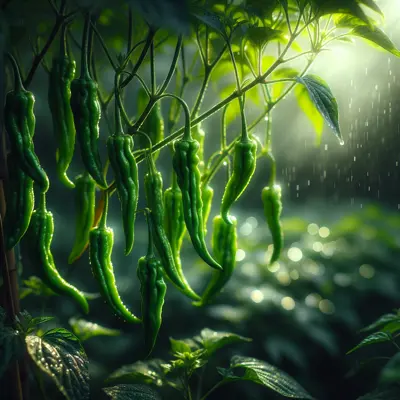
The darling of modern cuisine and gastropubs, these slender Japanese peppers offer addictive mild flavor with the thrilling surprise that about 1 in 10 packs a spicy punch. Perfect for blistering in a hot pan with just salt and olive oil, shishitos have become the go-to appetizer pepper for home cooks wanting to recreate restaurant favorites. Their prolific production and easy growing habit make them ideal for gardeners seeking something trendy yet reliable.
Harvest
60-70d
Days to harvest
Sun
Full sun
Zones
4–11
USDA hardiness
Height
1-3 feet
Planting Timeline
Showing dates for Shishito 'Japanese Shishito' in USDA Zone 7
All Zone 7 pepper →Zone Map
Click a state to update dates
Shishito 'Japanese Shishito' · Zones 4–11
Growing Details
Succession Planting
Shishitos keep producing on the same plant all season — you don't need to succession sow them the way you would lettuce or radishes. Start seeds indoors around late February to early March in zone 7, transplant out in late April to early May after nights stay reliably above 50°F, and that one planting will carry you through harvest from July into September.
If you want a backup tray as insurance against a cold snap that stunts your first transplants, start a second round in late March and get them in the ground by mid-May. Past that point, don't bother — plants started after May won't have enough season ahead of them before the first fall frost arrives around late October.
Complete Growing Guide
Shishito peppers thrive in warm conditions and need consistent heat to reach their 60-70 day maturity, so wait until soil temperatures are reliably above 70°F before transplanting outdoors. These plants are vigorous growers that prefer full sun and well-draining soil rich in organic matter, requiring regular watering during fruiting to maintain consistent moisture and prevent blossom-end rot. Unlike many pepper varieties, Shishitos are notably prolific and rarely require aggressive pruning, though they may stretch in insufficient light—ensure at least 6-8 hours of direct sun daily. They show good disease resistance overall but can suffer from spider mites in hot, dry conditions, making regular misting or overhead watering beneficial. One key practice: pinch off the first flowers to encourage bushier, more productive plants rather than early fruiting. This cultivar's reliability and heavy yield make them forgiving for beginners while still delivering the excitement of occasional hot peppers within an otherwise mild harvest.
Light: Full sun (6 or more hours of direct sunlight a day). Soil: Clay, High Organic Matter, Loam (Silt), Sand. Soil pH: Acid (<6.0), Alkaline (>8.0), Neutral (6.0-8.0). Drainage: Good Drainage. Height: 1 ft. 0 in. - 3 ft. 8 in.. Spread: 0 ft. 6 in. - 1 ft. 0 in.. Spacing: 12 inches-3 feet. Growth rate: Medium. Maintenance: Low. Propagation: Seed. Regions: Coastal, Mountains, Piedmont.
Harvesting
Harvest shishito peppers when they reach 3–4 inches long and transition from green to a deeper jade or light red color, depending on your preference for mild or slightly spicier fruit. The skin should feel tender but firm when gently squeezed. These peppers are prolific producers that benefit from continuous harvesting; pick mature peppers regularly to encourage ongoing flowering and fruiting throughout the season rather than waiting for a single large harvest. For optimal flavor development and heat variation, begin picking when peppers first blush toward red, as this stage intensifies the occasional spicy surprise while maintaining the cultivar's characteristic sweetness.
Fruits are a non-pulpy berry and vary considerably across cultivars. Some are long, thin, bright red, and spicy; others are thick, large, and sweet-tasting; others still are small and in ornamental shapes and colors, grown as decoration.
Color: Black, Gold/Yellow, Green, Orange, Red/Burgundy. Type: Berry. Length: 1-3 inches. Width: < 1 inch.
Garden value: Edible, Good Dried, Showy
Harvest time: Summer
Edibility: Fruits edible, but spiciness is unpredictable in intensity.
Storage & Preservation
Freshly harvested Shishito peppers store best in the refrigerator's crisper drawer at 45–50°F with moderate humidity, ideally in a perforated plastic bag to maintain moisture while allowing air circulation. They'll keep for up to two weeks this way, though they're best used within the first week for optimal texture and flavor. For longer preservation, freezing works exceptionally well—simply wash, dry, and freeze whole peppers on a baking sheet before transferring to freezer bags; they're perfect for cooking applications like pan-blistering and won't work well fresh but thaw beautifully for cooked dishes. Drying is another solid option, producing chewy pepper strips useful for snacking or grinding into powder. Shishito peppers also ferment wonderfully; pack them with salt in a jar, weigh them down, and let them sit at room temperature for several weeks to develop complex flavor. A particularly useful tip: since you'll harvest these over several weeks, freeze batches as they ripen rather than storing all at once, capturing peak flavor at multiple stages throughout your harvest window.
History & Origin
Shishito peppers originate from Japan, where they have been cultivated as a traditional variety for centuries, though detailed documentation of their specific breeding history remains limited. The variety emerged within Japan's rich pepper-growing heritage, becoming a staple in Japanese cuisine long before gaining international recognition. While the exact year of formal development is unclear, shishitos were introduced to Western markets in the early 2000s by specialty seed companies and Japanese food importers seeking to meet growing demand for authentic Japanese ingredients. Their rise in popularity corresponds with the global expansion of Japanese gastropub culture, transforming them from a regional specialty into a widely recognized culinary ingredient. The variety's characteristics—prolific production, mild flavor with occasional heat variance, and suitability for quick-cooking preparations—reflect generations of Japanese agricultural selection and adaptation to regional growing conditions.
Origin: Tropical North and South America
Advantages
- +Mostly mild flavor with thrilling occasional heat surprises keeps diners engaged
- +Prolific production means abundant harvests from relatively few plants
- +Ready to harvest in just 60-70 days from transplant
- +Perfect for trendy pan-blistering preparation with minimal seasoning needed
- +Easy growing habit makes them ideal for novice gardeners
Considerations
- -Susceptible to multiple pests including aphids, spider mites, and pepper weevils
- -Vulnerable to bacterial spot, anthracnose, and pepper mottle virus infections
- -Unpredictable heat variability may disappoint guests expecting consistent mild flavor
Companion Plants
Basil and marigolds are the two worth planting closest to shishitos. Basil's volatile compounds may help confuse aphids — the research is genuinely mixed on this, but you get basil either way, so it's a free bet. French marigolds (Tagetes patula specifically) are less about above-ground pests and more about what's happening underground: their roots exude a compound that suppresses root-knot nematodes, which punch well above their weight in sandy southeastern soils. Nasturtiums pull double duty as an aphid trap crop — a colony will establish on them first, which at least gives you a visible early warning before the aphids find your peppers. Carrots are a quiet but solid neighbor; at 18 inches of spacing, their root depth doesn't compete with pepper roots at all.
Fennel needs to stay at least 10 feet away — its root exudates are allelopathic and will stunt peppers and most other vegetables nearby. Brassicas are a different problem: they're not toxic to peppers, but they're heavy nitrogen feeders, and in our zone 7 Georgia garden their spring timing drops them directly into the same beds and the same nutrient window as shishito transplants going in April through May. Black walnut is the most serious exclusion — juglone, the toxic compound in its roots and decomposing leaves, is potent enough to kill nightshades outright, and the affected zone extends well past the canopy edge.
Plant Together
Basil
Repels aphids, spider mites, and thrips while potentially improving pepper flavor
Marigolds
Deters nematodes, aphids, and whiteflies with natural compounds
Tomatoes
Similar growing requirements and can share space efficiently
Oregano
Repels cucumber beetles and provides ground cover to retain soil moisture
Chives
Deters aphids and improves overall plant health as a companion
Carrots
Loosens soil around pepper roots and doesn't compete for nutrients
Nasturtiums
Acts as trap crop for aphids and cucumber beetles
Parsley
Attracts beneficial insects like hoverflies that prey on pepper pests
Keep Apart
Fennel
Releases allelopathic compounds that inhibit pepper growth and development
Brassicas
Heavy nitrogen feeders that compete with peppers and may stunt growth
Black Walnut
Produces juglone toxin that causes wilting and death in pepper plants
Nutrition Facts
Per 100g serving. % Daily Value based on 2,000 calorie diet. Source: USDA FoodData Central (FDC #169394)
Pests & Disease Resistance
Resistance
Good resistance to common pepper diseases
Common Pests
Aphids, spider mites, pepper weevil
Diseases
Bacterial spot, anthracnose, pepper mottle virus
Troubleshooting Shishito 'Japanese Shishito'
What you'll see, why it happens, and what to do about it.
Sunken, dark, leathery patches on the side or bottom of the fruit — not rot from the outside in, but a flat dead spot
Likely Causes
- Blossom end rot — localized calcium deficiency in the developing fruit, often triggered by inconsistent watering
- High ammonium-nitrogen fertilizer load, which interferes with calcium uptake
- Low soil calcium levels
What to Do
- 1.Water consistently — 1 inch per week, no big dry spells followed by a flood; that's usually the actual culprit
- 2.Get a soil test before you dump lime on it; if calcium is adequate, the fix is moisture management, not amendments
- 3.Back off on high-nitrogen synthetic fertilizers mid-season; switch to a balanced or low-N feed once plants are setting fruit
Small, water-soaked spots on leaves and fruit that turn brown with yellow halos — showing up during stretches of wet weather
Likely Causes
- Bacterial spot (Xanthomonas campestris pv. vesicatoria) — spreads fast in warm, wet conditions above 75°F
- Overhead irrigation or rain splash moving the bacteria from soil to foliage
What to Do
- 1.Switch to drip irrigation if you're overhead watering; keeping foliage dry cuts transmission significantly
- 2.Apply copper-based bactericide at first sign — it won't cure infected tissue but slows spread to healthy leaves
- 3.Pull and bag (don't compost) any heavily infected plants; rotate nightshades out of that bed for at least 2 seasons per NC State Extension's rotation guidance
Leaves curling, stippled with tiny pale dots, with fine webbing on the undersides — plants look dusty and stressed in midsummer
Likely Causes
- Two-spotted spider mites (Tetranychus urticae) — population explosions happen fast in hot, dry conditions above 85°F
- Dust on foliage, which suppresses natural predators and speeds mite reproduction
What to Do
- 1.Spray plants — undersides of leaves especially — with a strong stream of water every 2-3 days to knock mites off and disrupt colonies
- 2.Apply insecticidal soap or neem oil in the early morning when temps are below 80°F; avoid midday application on hot days or you'll scorch the foliage
- 3.Keep plants mulched and soil moisture steady; drought stress makes shishitos more susceptible and gives mites exactly the conditions they want
Frequently Asked Questions
How long do shishito peppers take to grow from seed?▼
Can you grow shishito peppers in containers?▼
Are shishito peppers good for beginners?▼
What do shishito peppers taste like?▼
When should I plant shishito peppers?▼
Shishito vs poblano peppers - what's the difference?▼
Zone-by-Zone Planting Calendar
| Zone | Indoor Start | Transplant | Direct Sow | Harvest |
|---|---|---|---|---|
| Zone 3 | April – April | June – July | — | August – October |
| Zone 4 | March – April | June – June | — | August – October |
| Zone 5 | March – March | May – June | — | August – October |
| Zone 6 | March – March | May – June | — | July – September |
| Zone 7 | February – March | April – May | — | July – September |
| Zone 8 | February – February | April – May | — | June – August |
| Zone 9 | January – January | March – April | — | May – July |
| Zone 10 | January – January | February – March | — | May – July |
| Zone 1 | May – May | July – August | — | September – August |
| Zone 2 | April – May | June – July | — | September – September |
| Zone 11 | January – January | January – February | — | April – June |
| Zone 12 | January – January | January – February | — | April – June |
| Zone 13 | January – January | January – February | — | April – June |
Growing Guides from Wind River Greens
Sources & References
External authority sources used in compiling this guide.
See the Methodology page for how this data is sourced, what's AI-assisted, and known limitations.
More Peppers
Carolina Reaper
Sweet Pepper 'Carmen'
Ghost Pepper 'Bhut Jolokia'
Scotch Bonnet 'Scotch Bonnet Orange'
Chocolate Habanero
Sweet Italian Pepper 'Marconi Rosso'
Purple Beauty Bell Pepper
Mad Hatter