Kohlrabi 'Early White Vienna'
Brassica oleracea var. gongylodes 'Early White Vienna'
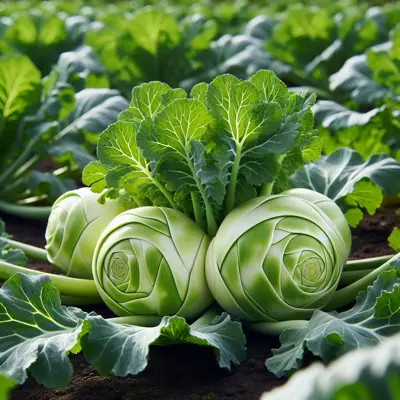
This unique vegetable produces crisp, sweet bulbs that taste like a cross between cabbage and turnip, with a delightful apple-like crunch. The pale green bulbs are best harvested young and tender, offering a refreshing addition to salads or excellent roasted as a side dish. Easy to grow and fast-maturing, this heirloom variety is perfect for gardeners wanting to try something new and delicious.
Harvest
55-65d
Days to harvest
Sun
Full sun to partial shade
Zones
6–9
USDA hardiness
Height
10-24 inches
Planting Timeline
Showing dates for Kohlrabi 'Early White Vienna' in USDA Zone 7
All Zone 7 brassica →Zone Map
Click a state to update dates
Kohlrabi 'Early White Vienna' · Zones 6–9
Growing Details
Succession Planting
Direct sow or transplant every 2-3 weeks starting March 1 in zone 7, continuing through late April. Stop spring successions when daytime highs are consistently hitting 80°F — heat doesn't kill kohlrabi outright, but it pushes bulbs to turn pithy before you get to them. Pick back up with fall plantings: start seeds indoors in late July or direct sow in August, timing so the 55-65 day maturity window lands before your first frost. UGA Extension recommends preparing soil in August for cool-season brassica crops and starting transplants in a half-shaded spot for September setting — that timing works well for a fall kohlrabi run.
Two or three successions in spring and two in fall is usually enough for a family or a small CSA share. A single sowing gives you a pile of kohlrabi on the same day; staggered plantings give you something worth harvesting every other week.
Complete Growing Guide
Early White Vienna matures faster than many kohlrabi varieties, reaching harvest in just 55–65 days, so plan succession plantings every two weeks for continuous supply rather than relying on a single sowing. This cultivar performs best in cool-season conditions with consistent moisture and slightly acidic soil; erratic watering causes woody, fibrous bulbs, so water deeply and regularly. The variety is prone to bolting if exposed to prolonged heat above 75°F or if seedlings experience transplant shock, so start seeds directly in the garden or use gentle hardening-off practices. Watch for cabbage worms and flea beetles typical of Brassicas, but Early White Vienna's rapid maturity often allows harvest before pest pressure becomes severe. A practical advantage: harvest bulbs when they reach 1.5–2.5 inches in diameter rather than waiting for larger sizes; picking early ensures the crisp, tender texture this variety is prized for and prevents the stringiness that develops in overmatured specimens.
Light: Full sun (6 or more hours of direct sunlight a day), Partial Shade (Direct sunlight only part of the day, 2-6 hours). Soil: Clay, Loam (Silt), Sand. Soil pH: Acid (<6.0), Neutral (6.0-8.0). Drainage: Good Drainage, Moist. Height: 0 ft. 10 in. - 2 ft. 0 in.. Spread: 1 ft. 0 in. - 2 ft. 0 in.. Spacing: 12 inches-3 feet. Growth rate: Medium. Maintenance: Medium. Propagation: Seed, Stem Cutting. Regions: Coastal, Mountains, Piedmont.
Harvesting
Harvest 'Early White Vienna' kohlrabi when the pale green bulbs reach 1.5 to 2.5 inches in diameter, at which point they feel firm to gentle pressure and the skin remains smooth and unblemished. At this young stage, the flesh inside will be tender and sweet with that signature apple-like crunch; larger specimens become woody and less palatable. For continuous harvests throughout the season, pick bulbs selectively as they mature rather than harvesting all at once, allowing smaller ones to develop further. A crucial timing tip: check your kohlrabi every few days once they approach maturity, as this fast-growing variety can quickly outgrow its peak eating window, especially during warm weather when growth accelerates.
The fruits dry and split when ripe.
Color: Brown/Copper, Green. Type: Siliqua. Length: > 3 inches.
Garden value: Edible
Harvest time: Fall, Summer
Edibility: The foliage is edible raw or cooked but when cooked can emit an unpleasant odor.
Storage & Preservation
Fresh kohlrabi bulbs store best in the refrigerator crisper drawer, wrapped in perforated plastic bags to maintain humidity while allowing air circulation. Remove all leaves before storing, as they draw moisture from the bulb. Properly stored bulbs stay crisp for 3-4 weeks at 32-35°F.
For longer preservation, kohlrabi excels when pickled – slice thinly and quick-pickle in vinegar brine with spices for a tangy winter treat. Blanched and frozen kohlrabi cubes work well in soups and stews, though they lose their raw crunch. Ferment julienned kohlrabi like sauerkraut for a probiotic-rich condiment. The young, tender leaves can be dehydrated for use as seasoning or added fresh to salads within 2-3 days of harvest.
History & Origin
The 'Early White Vienna' kohlrabi emerged from the broader kohlrabi breeding tradition in Central Europe, particularly Austria and Germany, where kohlrabi cultivation became widespread during the 19th century. This variety belongs to the early-maturing class of kohlrabi selections developed to meet market demand for quick-cropping vegetables suited to shorter growing seasons. While specific breeder attribution and exact introduction date remain undocumented in readily available horticultural records, 'Early White Vienna' represents a refinement of earlier kohlrabi varieties, likely standardized and commercialized by European seed companies in the late 1800s. The "Vienna" designation reflects the variety's probable origins or popularity in the Vienna region, a major seed distribution hub. This heirloom has since become a widely recognized standard for home and market gardeners seeking dependable, early-maturing kohlrabi.
Origin: W. Europe
Advantages
- +Fast-maturing in just 55-65 days makes succession planting feasible
- +Crisp, sweet bulbs with unique apple-turnip flavor appeal to adventurous cooks
- +Easy difficulty level suits beginners and experienced gardeners alike
- +Best harvested young, encouraging frequent harvesting for peak tenderness
Considerations
- -Vulnerable to multiple brassica pests including cabbage worms and flea beetles
- -Susceptible to clubroot and downy mildew in cool, wet conditions
Companion Plants
Onions and chives are the most practical companions here. Their sulfur compounds interfere with the scent trails that aphids and imported cabbageworm moths (Pieris rapae) use to locate host plants, and they stay shallow-rooted enough that they're not pulling from the same soil column as kohlrabi's developing bulb. Radishes are worth tucking in between rows too — they finish in 25-30 days and free up their space right around the time kohlrabi needs its full 6-8 inches, and a sacrificial row of radishes can draw flea beetles away from seedlings you actually care about.
Tomatoes don't play well with brassicas — they're heavy nitrogen feeders and there's documented allelopathic interference from nightshade root exudates that stunts brassica growth. Pole beans are a subtler problem: the nitrogen fixation sounds like a benefit, but excess available nitrogen late in the season pushes kohlrabi toward leaves at the expense of the bulb swelling you're actually after. Keep both on the far end of the garden.
Plant Together
Onions
Repel cabbage worms, aphids, and flea beetles that commonly attack brassicas
Lettuce
Shallow roots don't compete, can be harvested before kohlrabi matures, provides living mulch
Radishes
Break up soil for kohlrabi's shallow roots, mature quickly, may trap flea beetles
Spinach
Cool season companion with similar growing requirements, doesn't compete for space
Dill
Attracts beneficial insects like parasitic wasps that control cabbage worms and aphids
Nasturtiums
Act as trap crop for aphids and flea beetles, edible flowers add garden diversity
Carrots
Deep taproot doesn't compete with shallow kohlrabi roots, helps break up soil
Chives
Repel aphids and cabbage worms, improve flavor of nearby brassicas
Keep Apart
Tomatoes
Compete for nutrients and may stunt kohlrabi growth, different watering needs
Pole Beans
May inhibit kohlrabi growth through nitrogen competition and shading
Strawberries
Both are heavy feeders that compete for nutrients, different soil pH preferences
Nutrition Facts
Per 100g serving. % Daily Value based on 2,000 calorie diet. Source: USDA FoodData Central (FDC #168424)
Pests & Disease Resistance
Resistance
Good general disease tolerance, resistant to clubroot
Common Pests
Cabbage worms, flea beetles, aphids, root maggots
Diseases
Clubroot, black rot, downy mildew, powdery mildew
Troubleshooting Kohlrabi 'Early White Vienna'
What you'll see, why it happens, and what to do about it.
Bulb is small, woody, or pithy at harvest — outer skin tough despite reaching day 55-65
Likely Causes
- Harvested too late — 'Early White Vienna' peaks at 2-3 inches in diameter; anything over 3 inches gets fibrous fast
- Inconsistent moisture causing stress during bulb development
- Planting into soil with pH below 6.0, locking out calcium and sulfur
What to Do
- 1.Pull bulbs when they're golf-ball to tennis-ball size — don't wait for the calendar, watch the plant
- 2.Keep soil consistently moist at 1 inch per week; drought stress is the fastest route to a woody bulb
- 3.Test soil pH and lime to 6.0-7.5 before next planting
Tiny round holes peppered across young leaves, especially on seedlings in the first 2-3 weeks after transplant
Likely Causes
- Flea beetles (Phyllotreta spp.) — most aggressive on tender transplants and newly germinated seedlings
- Transplant shock slowing plant growth so it can't outpace the feeding damage
What to Do
- 1.Cover seedlings with row cover immediately after transplanting and leave it on for the first 3-4 weeks
- 2.If flea beetles are already present, apply kaolin clay to leaf surfaces as a physical deterrent
- 3.Plants at 4-6 true leaves can usually tolerate light pressure without intervention — focus protection on the youngest seedlings
Yellowing leaves with V-shaped brown lesions starting at the leaf margins, sometimes with darkened veins visible inside the cut stem
Likely Causes
- Black rot (Xanthomonas campestris pv. campestris) — a bacterial disease that enters through leaf margins and moves through vascular tissue
- Overhead irrigation or prolonged wet weather keeping foliage wet long enough for bacterial entry
What to Do
- 1.Remove and bag affected leaves immediately — trash them, don't compost
- 2.Switch to drip irrigation or water at the base to keep foliage dry
- 3.Rotate out of all brassicas (broccoli, cabbage, kale, kohlrabi) in that bed for at least 2 seasons; Xanthomonas campestris persists in crop debris
Frequently Asked Questions
How long does kohlrabi Early White Vienna take to grow?▼
Can you grow kohlrabi Early White Vienna in containers?▼
What does kohlrabi Early White Vienna taste like?▼
When should I plant kohlrabi Early White Vienna?▼
Is kohlrabi Early White Vienna good for beginners?▼
How do you know when kohlrabi Early White Vienna is ready to harvest?▼
Zone-by-Zone Planting Calendar
| Zone | Indoor Start | Transplant | Direct Sow | Harvest |
|---|---|---|---|---|
| Zone 1 | April – May | June – July | June – July | August – September |
| Zone 2 | April – May | June – July | May – July | July – September |
| Zone 11 | January – January | January – February | January – February | February – December |
| Zone 12 | January – January | January – February | January – February | February – December |
| Zone 13 | January – January | January – February | January – February | February – December |
| Zone 3 | March – April | May – June | May – June | July – October |
| Zone 4 | March – April | May – June | April – June | June – October |
| Zone 5 | February – March | April – May | April – May | June – November |
| Zone 6 | February – March | April – May | April – May | June – November |
| Zone 7 | February – March | April – May | March – May | May – November |
| Zone 8 | January – February | March – April | March – April | May – December |
| Zone 9 | January – January | February – March | February – March | April – December |
| Zone 10 | January – January | February – March | January – March | March – December |
Growing Guides from Wind River Greens
Sources & References
External authority sources used in compiling this guide.
See the Methodology page for how this data is sourced, what's AI-assisted, and known limitations.