Ritro
Echinops ritro
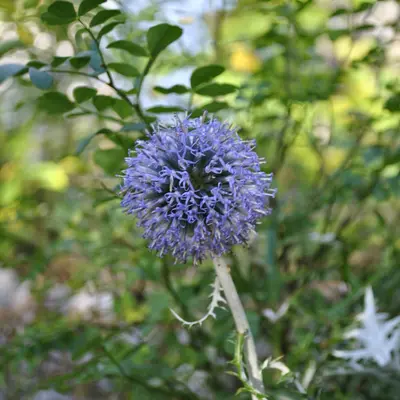
1-3" wide globes take on a steel-blue hue as they mature. Dries well. Globes add texture and color to fresh and dried arrangements. Spines are minimal compared to similar types, but gloves are recommended for harvesting as the leaves and stems are a bit prickly. Begins blooming mid-summer in the second year after planting. Tolerant of hot, dry growing conditions, once established. Also commonly known as southern globethistle. Perennial in zones 3-8.
Harvest
365d
Days to harvest
Sun
Full sun
Zones
3–8
USDA hardiness
Height
3-4 feet
Planting Timeline
Showing dates for Ritro in USDA Zone 7
All Zone 7 flower →Zone Map
Click a state to update dates
Ritro · Zones 3–8
Growing Details
Complete Growing Guide
Light: Full sun (6 or more hours of direct sunlight a day). Soil: Clay, Loam (Silt), Sand, Shallow Rocky. Soil pH: Acid (<6.0). Drainage: Good Drainage, Occasionally Dry. Height: 3 ft. 0 in. - 4 ft. 0 in.. Spread: 2 ft. 0 in. - 2 ft. 6 in.. Spacing: 3 feet-6 feet. Growth rate: Medium. Maintenance: Low. Propagation: Division, Root Cutting. Regions: Coastal, Mountains, Piedmont.
Harvesting
Spherical seedheads are attractive.
Type: Capsule.
Garden value: Showy
Harvest time: Fall
Storage & Preservation
Fresh-cut Ritro stems last 2-3 weeks in a vase with clean, cool water changed every 2-3 days. Store at room temperature away from direct sun and ripening fruit (ethylene accelerates petal drop). Mist foliage lightly if indoor air is very dry.
For drying—the primary preservation method for Ritro—hang bundles of 5-8 stems upside-down in a warm (65-75°F), dark, well-ventilated space away from humidity. Drying takes 2-3 weeks. Store dried bundles in sealed containers in a cool, dry location; they remain vibrant for 12+ months.
Alternatively, preserve individual globes in silica gel for intensely colored specimens, though this requires more labor. Simply bury dried globes in food-grade silica gel in an airtight container; results emerge in 1-2 weeks with perfect color and structure.
Ritro is not edible and has no culinary preservation methods. Its primary value is ornamental—fresh or dried arrangement use.
History & Origin
Origin: Europe to Mongolia and Turkey
Advantages
- +Steel-blue globe flowers dry exceptionally well for long-lasting arrangements
- +Tolerates hot, dry conditions once established, requiring minimal watering
- +Minimal spines compared to similar globe thistle varieties
- +Easy to grow perennial succeeding in zones 3-8
- +Mid-summer blooms provide unique texture and color to gardens
Considerations
- -Doesn't bloom until second year after planting
- -Prickly leaves and stems require gloves during harvesting
- -May self-seed aggressively in ideal growing conditions
Companion Plants
Ritro's best companions share its preference for lean, dry, well-drained soil — lavender, yarrow, Russian sage, and catmint all fit that profile without crowding the 18–24 inch spacing Ritro needs, and their overlapping bloom windows keep pollinators moving through the bed from June into September. Avoid anything that demands regular irrigation: high-water plants like astilbe will pressure you to water more than Ritro tolerates, and that extra soil moisture is exactly how crown rot gets started. Black walnut is a hard no — juglone disrupts root function in Echinops at concentrations found within a standard 50-foot drip zone.
Plant Together
Lavender
Attracts beneficial pollinators and repels pests with similar growing requirements
Echinacea
Shares similar drought tolerance and attracts butterflies and beneficial insects
Salvia
Complementary bloom times and both attract pollinators while deterring garden pests
Sedum
Similar low-maintenance requirements and provides late season pollinator support
Ornamental Grasses
Provides structural contrast and wind protection while sharing drought tolerance
Yarrow
Attracts beneficial predatory insects and improves soil structure with deep roots
Russian Sage
Similar water and soil requirements with complementary silvery foliage
Catmint
Repels rodents and insects while attracting beneficial pollinators
Keep Apart
Black Walnut
Produces juglone toxin that inhibits growth of many flowering plants
Dense Shade Trees
Blocks essential sunlight needed for proper flowering and growth
High-Water Plants
Creates overly moist conditions that can lead to root rot in drought-tolerant Globe Thistle
Troubleshooting Ritro
What you'll see, why it happens, and what to do about it.
Crown rotting at soil level during the first winter, plant fails to return in spring
Likely Causes
- Crown rot (Phytophthora or Pythium spp.) from waterlogged soil — Echinops ritro's biggest enemy is wet feet, especially in heavy clay
- Planting too deep, burying the crown more than an inch below grade
What to Do
- 1.Amend the bed with coarse grit or pea gravel before planting — aim for soil that drains within 30 minutes of a soaking
- 2.Plant the crown right at soil level, not below it
- 3.If your soil is genuinely clay-heavy, raise the bed 4–6 inches or move the plant to a slope where water naturally sheds away
Powdery white coating on leaves by midsummer, especially on older foliage
Likely Causes
- Powdery mildew (Erysiphe cichoracearum) — common in humid summers, made worse by crowding that restricts airflow
- Plants spaced closer than 18 inches, or sited near a fence or wall that traps moisture
What to Do
- 1.Cut affected stems back by one-third — it won't kill the plant and gives you a cleaner look for the rest of the season
- 2.Space plants at least 18–24 inches apart and don't site them against solid structures that block airflow
- 3.A preventive spray of diluted neem oil (2 tsp per quart of water) every 10–14 days can slow spread if you catch it early
Frequently Asked Questions
How long does Ritro take to grow and when will it bloom?▼
Is Ritro a good choice for beginner gardeners?▼
Can I grow Ritro in containers or pots?▼
What is the difference between Ritro and other Eryngium varieties like Sea Holly?▼
How do I dry Ritro flowers for arrangements?▼
Does Ritro need fertilizer or special soil preparation?▼
Zone-by-Zone Planting Calendar
| Zone | Indoor Start | Transplant | Direct Sow | Harvest |
|---|---|---|---|---|
| Zone 1 | May – June | July – August | July – September | — |
| Zone 2 | April – May | June – July | June – August | — |
| Zone 11 | January – January | January – February | January – March | — |
| Zone 12 | January – January | January – February | January – March | — |
| Zone 13 | January – January | January – February | January – March | — |
| Zone 3 | April – May | June – July | June – August | — |
| Zone 4 | March – April | June – June | June – July | — |
| Zone 5 | March – April | May – June | May – July | — |
| Zone 6 | March – April | May – June | May – July | — |
| Zone 7 | February – March | April – May | April – June | — |
| Zone 8 | February – March | April – May | April – June | — |
| Zone 9 | January – February | March – April | March – May | — |
| Zone 10 | January – January | February – March | February – April | — |
Growing Guides from Wind River Greens
Sources & References
External authority sources used in compiling this guide.
- ExtensionNC State Extension
- BreederJohnny's Selected Seeds
See the Methodology page for how this data is sourced, what's AI-assisted, and known limitations.