Virgo
Tanacetum parthenium
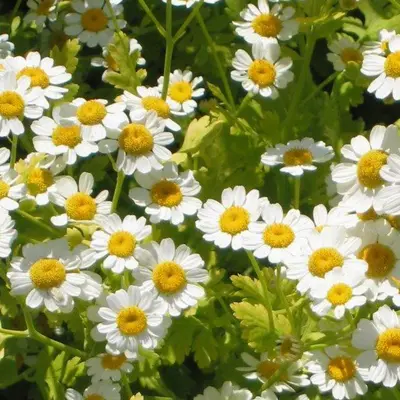
Productive, uniform, and upright plants produce 1/2", round flowers. Before fully developed, blooms have ivory centers which turn pure white at maturity.
Harvest
100-110d
Days to harvest
Sun
Full sun to partial shade
Zones
5–8
USDA hardiness
Height
1-3 feet
Planting Timeline
Showing dates for Virgo in USDA Zone 7
All Zone 7 flower →Zone Map
Click a state to update dates
Virgo · Zones 5–8
Growing Details
Complete Growing Guide
Productive, uniform, and upright plants produce 1/2", round flowers. Before fully developed, blooms have ivory centers which turn pure white at maturity. According to Johnny's Selected Seeds, Virgo is 100 - 110 days to maturity, tender perennial, open pollinated. Notable features: Use for Cut Flowers and Bouquets, Ideal for Drying and Crafts.
Light: Full sun (6 or more hours of direct sunlight a day), Partial Shade (Direct sunlight only part of the day, 2-6 hours). Soil: High Organic Matter, Loam (Silt), Sand. Soil pH: Acid (<6.0), Alkaline (>8.0), Neutral (6.0-8.0). Drainage: Good Drainage, Moist. Height: 1 ft. 0 in. - 3 ft. 0 in.. Spread: 1 ft. 0 in. - 2 ft. 0 in.. Spacing: Less than 12 inches, 12 inches-3 feet. Growth rate: Rapid. Maintenance: Low, Medium. Propagation: Division, Seed. Regions: Coastal, Piedmont.
Harvesting
Virgo reaches harvest at 100 - 110 days from sowing per Johnny's Selected Seeds. Expect 1/2" at peak.
The center disk of the flower becomes a head of dry, brown seeds. The seeds are ribbed and measure 1-2 mm long. The plant is self-seeding and can be aggressive.
Color: Brown/Copper. Length: < 1 inch. Width: < 1 inch.
Harvest time: Fall
Edibility: Edible leaves can make tea.
Storage & Preservation
Fresh cut Virgo flowers last 5–7 days indoors in a clean vase filled with cool water and a floral preservative (or a homemade substitute of 1 tablespoon sugar and a few drops of bleach per quart). Change water every 2–3 days and recut stems at an angle to maintain water absorption. Store arrangements away from direct sunlight, ripening fruit, and heating vents, which accelerate wilting.
For preservation, air-dry blooms by hanging small bunches upside down in a warm, dark, well-ventilated space for 10–14 days until completely crisp—these dried flowers hold color well and work beautifully in arrangements or crafts. Alternatively, press individual flowers between absorbent paper under a heavy weight for 2–3 weeks to preserve flat blooms for botanical pressing or decorative projects. Silica gel drying is also effective for maintaining shape and color if you prefer three-dimensional specimens.
History & Origin
Virgo is open-pollinated, meaning seed saved from healthy plants will produce true-to-type offspring. Listed in the Johnny's Selected Seeds catalog.
Origin: Southeastern Europe to Central Asia and West Himalaya
Advantages
- +Uniform plant height and structure simplifies garden design and spacing
- +Productive flowering ensures abundant blooms throughout the growing season
- +Ivory-to-white color transition provides extended visual interest in arrangements
- +Compact 1/2 inch flowers ideal for mixed bouquets and tight plantings
- +Easy cultivation makes Virgo suitable for novice and experienced gardeners
Considerations
- -Extended 100-110 day cycle requires long growing season in cool climates
- -Small flower size may limit visual impact in large landscape applications
- -Tanacetum parthenium prone to powdery mildew in humid conditions
Companion Plants
Marigolds, sweet alyssum, and calendula are the most useful neighbors for feverfew. Marigolds (Tagetes spp.) repel aphids and whiteflies through root and foliar compounds, which reduces pest pressure without extra effort on your part. Sweet alyssum, planted 6-8 inches away, draws in hoverflies and parasitic wasps — the insects that keep aphid populations from tipping into real damage. Calendula pulls a similar trick and doubles as a trap crop, attracting aphids to itself and away from the feverfew.
Black walnut and sunflowers are the two to keep well clear of. Black walnut roots secrete juglone into the surrounding soil — a compound that interferes with plant respiration — and feverfew's relatively shallow root system puts it directly in the affected zone. Sunflowers release allelopathic compounds that can slow germination and stunt nearby seedlings, so don't count on them as a backdrop just because they're tall and cheerful.
Plant Together
Marigolds
Repel nematodes and aphids while attracting beneficial insects
Sweet Alyssum
Attracts beneficial insects like lacewings and provides ground cover
Nasturtiums
Act as trap crops for aphids and cucumber beetles
Zinnia
Attracts pollinators and beneficial predatory insects
Cosmos
Attracts beneficial insects and provides structural support
Lavender
Repels moths, fleas, and mosquitoes with aromatic oils
Petunias
Repel aphids, tomato hornworms, and squash bugs
Calendula
Attracts beneficial insects and repels various garden pests
Keep Apart
Black Walnut
Produces juglone toxin that inhibits growth of many flowering plants
Eucalyptus
Allelopathic compounds suppress growth of nearby plants
Sunflowers
Compete heavily for nutrients and water, may stunt smaller flowers
Troubleshooting Virgo
What you'll see, why it happens, and what to do about it.
Powdery white coating on leaves, usually appearing mid-summer when nights cool down and humidity climbs
Likely Causes
- Powdery mildew (Erysiphe cichoracearum) — common on Tanacetum in crowded beds with poor airflow
- Plants spaced closer than 12 inches, trapping moisture around foliage
What to Do
- 1.Cut back affected stems by about a third and throw the clippings in the trash, not the compost
- 2.Thin plants to at least 12 inches apart if you haven't already — airflow does more than any spray
- 3.Apply a diluted neem oil solution (2 tbsp per gallon of water) weekly until symptoms stop spreading
Stems flopping over and falling open at the center, especially on plants taller than 2 feet
Likely Causes
- Overly rich soil or excess nitrogen pushing soft, fast growth that can't support itself
- Insufficient light — fewer than 4 hours of direct sun produces weak, leggy stems
What to Do
- 1.Install wire hoops or a single bamboo stake per clump before plants exceed 18 inches tall — retrofitting support after a collapse rarely works cleanly
- 2.Back off compost amendments; feverfew performs fine in moderately lean soil
- 3.Site next year's plants where they'll get 6+ hours of direct sun
Leaves and stems covered in small, sticky clusters of insects, new growth curling or distorted
Likely Causes
- Aphid colonies (commonly Myzus persicae or Macrosiphoniella tanacetaria) — feverfew's aromatic foliage doesn't deter every species
- Absence of predatory insects, often from nearby pesticide use
What to Do
- 1.Knock aphids off with a firm spray of water from a garden hose — do this three mornings in a row
- 2.Plant sweet alyssum or calendula within 2-3 feet to draw in parasitic wasps and hoverflies
- 3.If the infestation is heavy, spot-treat with insecticidal soap, keeping it off open flowers
Frequently Asked Questions
How long does Virgo take to grow from seed to first bloom?▼
Is Virgo good for beginner gardeners?▼
Can you grow Virgo in containers?▼
When should I plant Virgo seeds?▼
What's the difference between Virgo and other heirloom flower varieties?▼
Do I need to deadhead Virgo to keep it blooming?▼
Zone-by-Zone Planting Calendar
| Zone | Indoor Start | Transplant | Direct Sow | Harvest |
|---|---|---|---|---|
| Zone 1 | May – June | July – August | July – September | — |
| Zone 2 | April – May | June – July | June – August | — |
| Zone 11 | January – January | January – February | January – March | — |
| Zone 12 | January – January | January – February | January – March | — |
| Zone 13 | January – January | January – February | January – March | — |
| Zone 3 | April – May | June – July | June – August | — |
| Zone 4 | March – April | June – June | June – July | — |
| Zone 5 | March – April | May – June | May – July | — |
| Zone 6 | March – April | May – June | May – July | — |
| Zone 7 | February – March | April – May | April – June | — |
| Zone 8 | February – March | April – May | April – June | — |
| Zone 9 | January – February | March – April | March – May | — |
| Zone 10 | January – January | February – March | February – April | — |
Growing Guides from Wind River Greens
Sources & References
External authority sources used in compiling this guide.
- ExtensionNC State Extension
- BreederJohnny's Selected Seeds
See the Methodology page for how this data is sourced, what's AI-assisted, and known limitations.