Ocean Pearls
Agrostemma githago
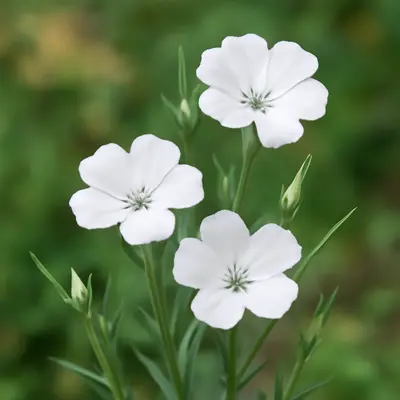
1-2" blooms grow in sprays on willowy gray stems. Prefers cool growing conditions. FleuroSelect Gold Award Winner.
Harvest
70-85d
Days to harvest
Sun
Full sun to partial shade
Zones
1–11
USDA hardiness
Height
2-3 feet
Planting Timeline
Showing dates for Ocean Pearls in USDA Zone 7
All Zone 7 flower →Zone Map
Click a state to update dates
Ocean Pearls · Zones 1–11
Growing Details
Succession Planting
Direct sow every 3 weeks from April through early June in zone 7, stopping once daytime highs are consistently above 85°F — heat pushes these plants to set seed and finish fast. A mid-April sowing and a follow-up around May 5 will typically give you two overlapping flushes of bloom that carry through early summer without a visible gap. Ocean Pearls also tolerates a fall sowing in mild climates: direct sow in September for germination before first frost, let it overwinter as a small rosette, and it'll bloom the following spring — often earlier and with more vigor than the spring-sown round.
Complete Growing Guide
Light: Full sun (6 or more hours of direct sunlight a day), Partial Shade (Direct sunlight only part of the day, 2-6 hours). Soil: Loam (Silt), Sand. Soil pH: Acid (<6.0), Neutral (6.0-8.0). Drainage: Good Drainage, Moist, Occasionally Dry. Height: 2 ft. 0 in. - 3 ft. 0 in.. Spread: 1 ft. 0 in. - 1 ft. 6 in.. Spacing: 12 inches-3 feet. Growth rate: Rapid. Maintenance: Medium. Propagation: Seed. Regions: Coastal, Mountains, Piedmont.
Harvesting
Fruit is a capsule with numerous black, pitted seeds.
Color: Black. Type: Capsule.
Harvest time: Fall
Storage & Preservation
Freshly harvested Ocean Pearls stems last 7-10 days in a clean vase with cool water changed every 2-3 days. Keep vases out of direct sunlight and away from heat sources and ethylene-producing fruit. Add commercial flower food or a homemade solution (1 tablespoon sugar + a few drops of bleach per quart of water).
For preservation, air-drying is ideal for this variety's architectural qualities. Hang small bunches upside down in a warm, dark, well-ventilated space for 2-3 weeks. Dried Ocean Pearls stems retain their gray color and delicate form, making them valuable for dried arrangements lasting months.
Alternatively, press individual flower sprays between newspaper under a heavy book for 2-3 weeks to preserve them flat for framed botanical displays. Freezing is not recommended, as the delicate flowers become mushy upon thawing.
History & Origin
Ocean Pearls is open-pollinated, meaning seed saved from healthy plants will produce true-to-type offspring. Listed in the Johnny's Selected Seeds catalog.
Origin: Europe
Advantages
- +Attracts: Bees, Hummingbirds
- +Fast-growing
Considerations
- -Toxic (Flowers, Leaves, Sap/Juice, Seeds, Stems): Medium severity
Companion Plants
Marigolds and nasturtiums are the most practical companions here. Tagetes patula specifically emits thiophenes from its roots that suppress soil nematodes, and the scent profile above ground confuses aphids mid-flight. Nasturtiums pull double duty as a trap crop, drawing aphids onto themselves and away from slender-stemmed neighbors. Sweet alyssum is worth tucking in at the border — its tiny clustered flowers attract Braconid wasps and hoverflies that prey on soft-bodied pests, and at 4–6 inches tall it won't shade anything out. Yarrow works on the same beneficial-insect logic and handles similar moisture conditions without complaint.
The harmful companions — black walnut, eucalyptus, and fennel — each interfere through the soil rather than above it. Black walnut produces juglone, a compound that disrupts root respiration in a wide range of plants. Eucalyptus leaches allelopathic oils that persist long after the tree itself is gone. Fennel is slower-acting but secretes root compounds that suppress neighbors, and it's aggressive enough to physically crowd out a delicate annual like this one before the chemical effects even kick in.
Plant Together
Marigolds
Repel nematodes and aphids while attracting beneficial insects
Lavender
Deters pests with aromatic oils and attracts pollinators
Sweet Alyssum
Attracts beneficial insects like hover flies and provides ground cover
Nasturtiums
Act as trap crop for aphids and cucumber beetles
Petunias
Repel aphids, tomato hornworms, and other garden pests
Catnip
Strong insect repellent properties, particularly against mosquitoes
Yarrow
Attracts beneficial insects and improves soil health
Chives
Repel aphids and other soft-bodied insects with sulfur compounds
Keep Apart
Black Walnut
Produces juglone toxin that inhibits growth of many plants
Eucalyptus
Allelopathic oils suppress growth of nearby plants
Fennel
Inhibits growth of most garden plants through allelopathic compounds
Troubleshooting Ocean Pearls
What you'll see, why it happens, and what to do about it.
Seedlings collapse at soil level, stems pinched and brown at the base, around days 10–20 after germination
Likely Causes
- Damping off (Pythium or Rhizoctonia spp.) — fungal rot favored by wet, poorly drained soil and low airflow
- Overwatering or dense sowing that keeps the soil surface constantly moist
What to Do
- 1.Thin seedlings to at least 6 inches apart as soon as they're big enough to grip — crowding is the main accelerant
- 2.Water in the morning so the surface dries by evening, and ease off frequency if nights are cool
- 3.If starting indoors, use a sterile seed-starting mix and run a fan on low to keep air moving across the tray
Leaves develop pale, papery patches or fine webbing on the undersides during hot, dry stretches
Likely Causes
- Two-spotted spider mite (Tetranychus urticae) — populations explode in temperatures above 85°F with low humidity
- Drought-stressed plants that haven't been irrigated consistently, making them easier targets
What to Do
- 1.Blast the undersides of leaves with a firm stream of water every 2–3 days to knock mite numbers down mechanically
- 2.Keep plants consistently watered — mites colonize stressed plants faster than healthy ones
- 3.For heavy infestations, apply insecticidal soap or neem oil in the evening, coating leaf undersides thoroughly
Stems elongating and flopping over, few flowers forming, plant looks drawn and leggy by day 50
Likely Causes
- Insufficient light — Ocean Pearls needs 6+ hours of direct sun to bloom reliably; shade slows flowering significantly
- Inadequate thinning that forces plants to stretch toward available light rather than put energy into buds
What to Do
- 1.Thin to 12–18 inches apart early — corn cockle doesn't self-correct once it's crowded and leaning
- 2.Choose a site with unobstructed sun from mid-morning through afternoon, or move containers accordingly
- 3.Stake flopped stems with a bamboo cane and soft tie; the plant can still recover and set blooms
Frequently Asked Questions
How long does Ocean Pearls take to grow from seed to harvest?▼
Can you grow Ocean Pearls in containers?▼
Is Ocean Pearls good for beginners?▼
What makes Ocean Pearls different from other ornamental flowers?▼
When should I plant Ocean Pearls seeds?▼
How much sun does Ocean Pearls need?▼
Zone-by-Zone Planting Calendar
| Zone | Indoor Start | Transplant | Direct Sow | Harvest |
|---|---|---|---|---|
| Zone 3 | April – May | June – July | June – August | — |
| Zone 4 | March – April | June – June | June – July | — |
| Zone 5 | March – April | May – June | May – July | — |
| Zone 6 | March – April | May – June | May – July | — |
| Zone 7 | February – March | April – May | April – June | — |
| Zone 8 | February – March | April – May | April – June | — |
| Zone 9 | January – February | March – April | March – May | — |
| Zone 10 | January – January | February – March | February – April | — |
| Zone 1 | May – June | July – August | July – September | — |
| Zone 2 | April – May | June – July | June – August | — |
| Zone 11 | January – January | January – February | January – March | — |
| Zone 12 | January – January | January – February | January – March | — |
| Zone 13 | January – January | January – February | January – March | — |
Growing Guides from Wind River Greens
Sources & References
External authority sources used in compiling this guide.
- ExtensionNC State Extension
- BreederJohnny's Selected Seeds
See the Methodology page for how this data is sourced, what's AI-assisted, and known limitations.