Cayenne 'Long Red Cayenne'
Capsicum annuum 'Long Red Cayenne'
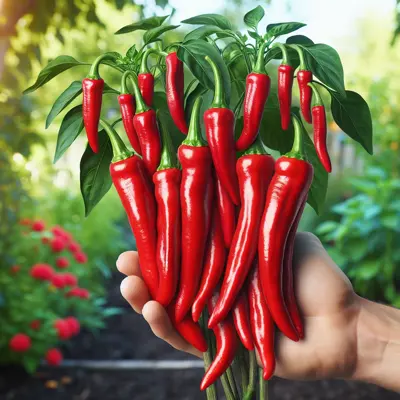
The classic hot pepper that's been setting kitchens on fire since the 1800s, Long Red Cayenne is the go-to variety for homemade hot sauce and dried pepper flakes. These slender, curved peppers pack substantial heat while remaining incredibly useful in the kitchen, drying beautifully and grinding into the perfect pizza-shaking spice. Extremely productive and reliable, it's an essential variety for any serious pepper grower.
Harvest
75-85d
Days to harvest
Sun
Full sun
Zones
4–11
USDA hardiness
Height
1-3 feet
Planting Timeline
Showing dates for Cayenne 'Long Red Cayenne' in USDA Zone 7
All Zone 7 pepper →Zone Map
Click a state to update dates
Cayenne 'Long Red Cayenne' · Zones 4–11
Growing Details
Succession Planting
Long Red Cayenne keeps producing from a single transplant all season — you don't succession-plant it the way you would lettuce or radishes. Set transplants out in zone 7 between late April and mid-May, after nighttime temps hold reliably above 55°F, and those same plants will carry you through July, August, and into September as fruits ripen from green to red.
If you want a staggered harvest of green-stage versus fully red fruit, pick some cayennes early at 70–75 days and let others hang on the plant another week or two to color up — no second sowing needed. The UGA Vegetable Garden Calendar recommends getting mulch down around peppers before dry spells hit, ideally by blooming time, which in zone 7 usually falls in early June. Do that, and one planting will cover the whole season without gaps.
Complete Growing Guide
Long Red Cayenne's 75-85 day maturity means direct seeding after last frost works well in warm climates, though transplants are safer in regions with short seasons. This cultivar thrives in consistently warm soil above 70°F and demands full sun with well-draining soil rich in potassium to maximize heat production and fruit set. Unlike milder pepper varieties, Long Red Cayenne tends toward leggy growth when seedlings receive insufficient light, so provide 14-16 hours under grow lights or a very sunny south-facing window. The slender fruit structure makes plants prone to heavy-bearing stress, so stake or cage them once flowers appear. Watch for spider mites in hot, dry conditions and ensure consistent watering during fruit development to prevent blossom-end rot. A practical tip: harvest peppers at the red stage rather than green to unlock full heat potential and better drying quality for your hot sauce or flake production.
Light: Full sun (6 or more hours of direct sunlight a day). Soil: Clay, High Organic Matter, Loam (Silt), Sand. Soil pH: Acid (<6.0), Alkaline (>8.0), Neutral (6.0-8.0). Drainage: Good Drainage. Height: 1 ft. 0 in. - 3 ft. 8 in.. Spread: 0 ft. 6 in. - 1 ft. 0 in.. Spacing: 12 inches-3 feet. Growth rate: Medium. Maintenance: Low. Propagation: Seed. Regions: Coastal, Mountains, Piedmont.
Harvesting
Long Red Cayenne peppers reach peak harvest readiness when they transition from green to a deep crimson red, typically 75–85 days after transplanting, and should feel firm yet slightly yielding to gentle pressure. The characteristic slender, curved shape becomes more pronounced as they mature, with mature peppers measuring 4–6 inches long. These peppers are ideal for continuous harvesting throughout the season—picking ripe fruits encourages additional flower and pod production on this highly productive variety. For optimal heat and flavor development, allow peppers to fully ripen on the plant before harvest rather than picking them early, since Cayennes develop their distinctive earthy undertones and maximum Scoville intensity only when completely red.
Fruits are a non-pulpy berry and vary considerably across cultivars. Some are long, thin, bright red, and spicy; others are thick, large, and sweet-tasting; others still are small and in ornamental shapes and colors, grown as decoration.
Color: Black, Gold/Yellow, Green, Orange, Red/Burgundy. Type: Berry. Length: 1-3 inches. Width: < 1 inch.
Garden value: Edible, Good Dried, Showy
Harvest time: Summer
Edibility: Fruits edible, but spiciness is unpredictable in intensity.
Storage & Preservation
Store fresh Long Red Cayennes at 50–55°F with 85–90% humidity in a breathable container, such as a paper bag in the crisper drawer. At room temperature (68–72°F), they'll keep 1–2 weeks; refrigerated, expect 3–4 weeks before they begin to shrivel and lose potency. For longer storage, drying is ideal—these peppers are naturally suited to it. Hang whole peppers in bundles in a warm, airy space (70–80°F, low humidity) for 2–3 weeks until completely brittle, then grind into flakes or powder. Freezing works well for hot sauce production; simply dice and freeze on a tray before transferring to bags. For pickling, use standard canning protocols with vinegar-based brines. Fermented hot sauce is another excellent route—mash fresh peppers with salt (roughly 5% by weight), pack into jars, and let sit 2–4 weeks before blending and straining. These peppers' thin walls actually dry faster than larger varieties, making them exceptionally efficient for creating concentrated flakes.
History & Origin
The Long Red Cayenne pepper traces its lineage to the cayenne peppers that originated in Central and South America, particularly in the region around present-day French Guiana, from which the variety derives its name. European colonizers encountered these hot peppers and gradually distributed cayenne varieties across the globe during the 16th and 17th centuries. The specific Long Red Cayenne cultivar became standardized as a distinct variety during the 19th century, becoming widely documented in seed catalogs by the 1800s. While precise breeder attribution remains unclear, this variety represents the culmination of centuries of cultivation and selection for the characteristic long, slender pod shape and reliable productivity that made it invaluable for drying and processing into spice blends and hot sauces.
Origin: Tropical North and South America
Advantages
- +Classic variety with proven track record since the 1800s for reliability
- +Produces abundant slender peppers ideal for drying and grinding into flakes
- +Clean sharp heat (30,000-50,000 Scoville) works perfectly for hot sauces
- +Matures quickly in 75-85 days with minimal growing difficulty required
- +Beautifully curved peppers dry evenly and retain excellent flavor intensity
Considerations
- -Vulnerable to multiple serious diseases including bacterial spot and anthracnose
- -Susceptible to common pests like aphids, spider mites, and pepper weevils
- -Pepper mosaic virus and phytophthora blight can devastate entire plantings quickly
- -Requires consistent disease management and monitoring throughout growing season
Companion Plants
Marigolds and nasturtiums are the two companions worth prioritizing in a cayenne bed. French marigolds (Tagetes patula) produce root exudates that suppress soil nematodes, and their scent disrupts several flying pests. Nasturtiums draw aphids — the same insects that vector pepper mosaic virus — away from your cayennes and onto themselves. They're also edible, so the trap crop pulls double duty at the dinner table. Basil fills the gaps well; its volatile oils may offer some pest-confusion effect, and it needs the same full-sun, warm-soil conditions as cayenne, so the timing lines up without extra effort. Onions and carrots root at different depths than pepper plants and won't compete for the same water and nutrients — they just share the bed cleanly.
Keep brassicas — cabbage, broccoli, kale — at least a full bed's width away. In our zone 7 Georgia summers, their aggressive calcium and nitrogen demand shows up fast as stunted, slow-to-set pepper plants. Fennel is allelopathic and will suppress nearly everything planted within a few feet, cayennes included. Black walnut roots and decomposing leaf litter release juglone, a compound toxic enough to stunt or kill Capsicum annuum outright — don't site your pepper bed anywhere near the canopy edge of a black walnut tree.
Plant Together
Basil
Repels aphids, spider mites, and thrips while potentially improving pepper flavor
Tomatoes
Share similar growing conditions and can help shade pepper plants from intense sun
Oregano
Deters pests like aphids and spider mites with its strong aromatic oils
Carrots
Help break up soil around pepper roots and don't compete for nutrients
Onions
Repel aphids, thrips, and other soft-bodied insects that damage peppers
Parsley
Attracts beneficial insects like parasitic wasps that control pepper pests
Nasturtiums
Act as trap crops for aphids and cucumber beetles while repelling squash bugs
Marigolds
Repel nematodes, aphids, and whiteflies while attracting beneficial insects
Keep Apart
Black Walnut
Produces juglone toxin that inhibits pepper growth and can cause wilting
Fennel
Releases allelopathic compounds that stunt growth of peppers and most vegetables
Brassicas
Compete heavily for nutrients and may inhibit pepper growth through root competition
Nutrition Facts
Per 100g serving. % Daily Value based on 2,000 calorie diet. Source: USDA FoodData Central (FDC #170932)
Pests & Disease Resistance
Resistance
Good general disease resistance, hardy variety
Common Pests
Aphids, spider mites, pepper weevil, hornworms
Diseases
Bacterial spot, anthracnose, pepper mosaic virus, phytophthora blight
Troubleshooting Cayenne 'Long Red Cayenne'
What you'll see, why it happens, and what to do about it.
Dark, water-soaked spots on leaves and fruit, sometimes with a yellow halo — showing up mid-season after warm, wet weather
Likely Causes
- Bacterial spot (Xanthomonas campestris pv. vesicatoria) — thrives in heat and humidity, spreads fast in rain splash
- Overhead irrigation wetting foliage repeatedly
What to Do
- 1.Remove and bag affected leaves — don't compost them
- 2.Switch to drip irrigation or water at the base only
- 3.Rotate nightshades (peppers, tomatoes, eggplant, potatoes) out of that bed for at least 2 seasons, as NC State Extension's organic gardening guidance recommends to break disease cycles
Sunken, tan or black patches on the bottom or side of ripening fruit — fruit otherwise looks healthy
Likely Causes
- Blossom end rot — a localized calcium deficiency in the developing fruit, often triggered by uneven watering
- High ammonium-nitrogen fertilizer loads, which NC State Extension notes can worsen calcium uptake problems
- Soil drying out completely between waterings during fruit set
What to Do
- 1.Water consistently — 1 to 1.5 inches per week — and mulch heavily to hold soil moisture between rains
- 2.Get a soil test before adding calcium amendments; if calcium is genuinely low, side-dress with gypsum or crushed oyster shell
- 3.Back off high-nitrogen synthetic fertilizers once plants are flowering
Leaves mottled yellow-green, crinkled, or stunted — whole plant looks off, not just one branch
Likely Causes
- Pepper mosaic virus (CMV or PepMV) — transmitted by aphids feeding on infected plants nearby
- Aphid pressure that went unnoticed for 2–3 weeks
What to Do
- 1.Pull and trash any plant showing mosaic symptoms — there's no cure once infected
- 2.Knock aphid colonies off healthy plants with a strong spray of water, then follow up with insecticidal soap every 5–7 days
- 3.Set out nasturtiums as a trap crop at the bed edges before aphid season starts in late spring
Frequently Asked Questions
How long does Long Red Cayenne take to grow from seed to harvest?▼
Can you grow Long Red Cayenne peppers in containers?▼
What does Long Red Cayenne taste like compared to other hot peppers?▼
Is Long Red Cayenne good for beginner pepper growers?▼
When should I plant Long Red Cayenne seeds?▼
Long Red Cayenne vs Jalapeño - what's the difference?▼
Zone-by-Zone Planting Calendar
| Zone | Indoor Start | Transplant | Direct Sow | Harvest |
|---|---|---|---|---|
| Zone 1 | May – May | July – August | — | October – August |
| Zone 2 | April – May | June – July | — | September – September |
| Zone 11 | January – January | January – February | — | April – June |
| Zone 12 | January – January | January – February | — | April – June |
| Zone 13 | January – January | January – February | — | April – June |
| Zone 3 | April – April | June – July | — | September – October |
| Zone 4 | March – April | June – June | — | August – October |
| Zone 5 | March – March | May – June | — | August – October |
| Zone 6 | March – March | May – June | — | August – October |
| Zone 7 | February – March | April – May | — | July – September |
| Zone 8 | February – February | April – May | — | July – September |
| Zone 9 | January – January | March – April | — | June – August |
| Zone 10 | January – January | February – March | — | May – July |
Growing Guides from Wind River Greens
Sources & References
External authority sources used in compiling this guide.
See the Methodology page for how this data is sourced, what's AI-assisted, and known limitations.
More Peppers
Carolina Reaper
Sweet Pepper 'Carmen'
Ghost Pepper 'Bhut Jolokia'
Scotch Bonnet 'Scotch Bonnet Orange'
Chocolate Habanero
Sweet Italian Pepper 'Marconi Rosso'
Purple Beauty Bell Pepper
Mad Hatter