Italian Red Torpedo Onion
Allium cepa 'Italian Red Torpedo'
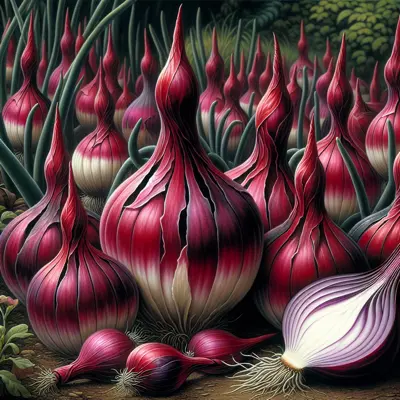
An elegant elongated onion with stunning deep red skin and crisp white flesh streaked with purple rings. This intermediate-day variety offers a perfect balance of sweet and sharp flavors that mellows beautifully when cooked. The distinctive torpedo shape and vibrant color make it a standout in both the garden and on the plate.
Harvest
95-110d
Days to harvest
Sun
Full sun
Zones
5–10
USDA hardiness
Height
12-18 inches
Planting Timeline
Showing dates for Italian Red Torpedo Onion in USDA Zone 7
All Zone 7 allium →Zone Map
Click a state to update dates
Italian Red Torpedo Onion · Zones 5–10
Growing Details
Succession Planting
Direct sow Italian Red Torpedo from March 1 through early May in zone 7, spacing sowings about 3 weeks apart if you want a staggered harvest window rather than everything coming in at once. Stop sowing once daytime highs are reliably above 80°F — onions started in heat struggle to size up before summer shuts them down. A March sowing should hit harvest around late June to July; a late April sowing will push into August, which is fine as long as you've got good drainage and the bulbs aren't sitting in wet soil.
Complete Growing Guide
This intermediate-day cultivar requires careful timing to prevent premature bolting—start seeds indoors 8–10 weeks before your last spring frost or direct sow in early summer for fall harvest, as Italian Red Torpedo is sensitive to day length and can bolt if exposed to long days during bulb formation. These onions thrive in well-draining, fertile soil with consistent moisture and full sun, though they're particularly prone to pink root rot in waterlogged conditions, making excellent drainage non-negotiable. The deep red skin, while visually striking, can mask early signs of disease, so inspect bulbs carefully during storage and remove any with soft spots immediately to prevent spread. Plant them slightly deeper than typical onions—about 1 inch—as the torpedo shape's pointed end is prone to surfacing and greening in sunlight. Space them 4–5 inches apart for maximum bulb development, and provide steady nitrogen early in the season, then switch to phosphorus-rich fertilizer once bulbing begins.
Light: Full sun (6 or more hours of direct sunlight a day). Soil: High Organic Matter, Loam (Silt), Sand. Soil pH: Alkaline (>8.0), Neutral (6.0-8.0). Drainage: Good Drainage, Moist. Height: 1 ft. 0 in. - 1 ft. 6 in.. Spread: 0 ft. 6 in. - 1 ft. 0 in.. Spacing: Less than 12 inches, 12 inches-3 feet. Maintenance: Medium. Regions: Coastal, Mountains, Piedmont.
Harvesting
Italian Red Torpedo onions reach peak harvest readiness when their distinctive elongated bulbs have developed deep crimson skin without blemishes, typically around 95-110 days from planting. The neck should feel papery and begin to yellow and soften slightly, signaling that the plant is redirecting energy from foliage to bulb maturation. For this variety, a single harvest approach works best—wait until most of the green tops naturally fall over before lifting bulbs carefully to avoid bruising the tender skin. A specific timing advantage: harvest on a dry, sunny day after a few rain-free days, as moisture on the bulb surface can promote rot during curing and storage, and the drier soil makes extraction easier without damaging the torpedo-shaped form.
Flowers wither and convert to bulblets
Type: Capsule.
Harvest time: Summer
Edibility: The bulb and tops are edible raw or cooked. However, the plant also has poisonous characteristics as noted in the "Poisonous to Humans" section of this record. Toxicity can depend on the age of the person or animal, the age of the plant, the part of the plant ingested, how much is ingested, whether the person or animal has sensitivities or allergies, whether it's eaten raw or cooked, and so forth. Consult with a medical professional for further details.
Storage & Preservation
After harvest, cure your Italian Red Torpedo onions in a warm, dry, well-ventilated area for 2-3 weeks until the necks are completely dry and papery. Lay them on screens or hang in braids, turning occasionally for even curing.
Properly cured onions store 4-6 months in a cool (32-40°F), dry location with good air circulation. Check stored onions monthly and remove any showing soft spots. Use thick-necked bulbs first as they don't store as long.
For preservation, these onions excel when pickled due to their attractive red color and firm texture. Slice and freeze in portions for cooked dishes – they'll lose crispness but retain flavor. Dehydrate sliced rings at 125°F for 8-12 hours to make flavorful onion powder. The beautiful red color also makes them perfect for quick-pickled red onions that keep refrigerated for up to a month.
History & Origin
The Italian Red Torpedo onion belongs to a long tradition of elongated red onion cultivation in Italy, particularly in the Piedmont region, where such varieties have been grown for centuries. However, detailed documentation of this specific variety's formal breeding history remains sparse in readily available horticultural records. It likely descends from heirloom Italian onion populations selectively bred for their distinctive torpedo shape and deep red coloring, representing the culmination of generations of farmer-led selection rather than a single documented breeder or introduction date. The variety embodies the broader European tradition of developing regionally adapted onion cultivars optimized for both culinary performance and visual appeal.
Origin: Central Asia and central Persia
Advantages
- +Stunning deep red skin and purple rings create visually striking garden displays
- +Excellent flavor transformation when cooked from medium-hot to sweet and mild
- +Distinctive torpedo shape and vibrant color make elegant plating presentations
- +Intermediate-day maturity at 95-110 days suits most temperate growing regions
Considerations
- -Susceptible to neck rot during storage if not properly cured and dried
- -Vulnerable to onion thrips and onion fly infestations requiring careful pest management
- -Requires moderate growing difficulty and attention to soil conditions for best results
Companion Plants
Carrots pair well here because their roots run 10-12 inches deep while Torpedo onions stay in the top 6 — they're not fighting over the same soil layer — and the sulfur compounds onions off-gas do seem to disorient carrot fly. Marigolds (Tagetes spp.) nearby provide modest interference against onion thrips. In our zone 7 Georgia garden, we also tuck Torpedos along the edges of brassica beds; the allium chemistry appears to slow cabbage looper pressure without taking up much real estate. Beans and peas are the ones to keep on the opposite end of the field — onions suppress the rhizobia those legumes depend on for nitrogen fixation, and you'll shortchange both crops. Sage competes for the same fast-draining soil and stunts allium growth when planted within about 12 inches.
Plant Together
Carrots
Onions repel carrot flies while carrots help break up soil for onion bulb development
Tomatoes
Onions deter aphids, spider mites, and tomato hornworms from tomato plants
Brassicas (Cabbage, Broccoli)
Onions repel cabbage worms, flea beetles, and other brassica pests
Lettuce
Onions provide pest protection without competing for nutrients, lettuce fits between onion rows
Peppers
Onions repel aphids and may improve pepper growth and flavor
Strawberries
Onions deter slugs, aphids, and other strawberry pests
Spinach
Compatible growth habits and onions provide pest protection for leafy greens
Marigolds
Both repel nematodes and various garden pests, creating enhanced protection
Keep Apart
Beans
Onions can inhibit bean growth and nitrogen fixation by rhizobia bacteria
Peas
Onions stunt pea growth and interfere with their nitrogen-fixing capabilities
Sage
Can inhibit onion growth through allelopathic compounds
Asparagus
Onions can stunt asparagus growth and reduce spear production
Nutrition Facts
Per 100g serving. % Daily Value based on 2,000 calorie diet. Source: USDA FoodData Central (FDC #170000)
Pests & Disease Resistance
Resistance
Moderate resistance to common onion diseases
Common Pests
Onion thrips, onion fly, wireworms
Diseases
Neck rot, downy mildew, bacterial soft rot
Troubleshooting Italian Red Torpedo Onion
What you'll see, why it happens, and what to do about it.
Leaf tips silvering or streaking, tiny dark specks visible on leaves around weeks 4-6
Likely Causes
- Onion thrips (Thrips tabaci) — they rasp the leaf surface and feed on the sap, leaving the silvery scarring
- Dry, hot conditions that stress the plant and favor thrips population explosions
What to Do
- 1.Spray with insecticidal soap or spinosad, getting into the tight leaf bases where thrips hide — repeat every 5-7 days for 2-3 rounds
- 2.Keep soil consistently moist at 1 inch per week; drought-stressed onions are more susceptible
- 3.Remove and trash heavily infested outer leaves to knock the population down fast
Seedlings collapsing at the soil line, or young transplants wilting and pulling up with a rotted, maggot-eaten base
Likely Causes
- Onion fly (Delia antiqua) — the larvae tunnel into the bulb base and roots in early spring
- Wireworms (Agriotes spp.) — click beetle larvae in the soil, especially in beds that were recently turned sod
What to Do
- 1.Cover newly sown or transplanted beds with floating row cover immediately — onion fly lays eggs at the soil surface and physical exclusion is the most reliable control
- 2.If wireworms are suspected, bait with a slice of raw potato buried 2 inches deep; check after 48 hours and destroy what you find
- 3.Rotate alliums out of that bed for at least 2 seasons
Pale gray-purple fuzzy growth on the outer leaves, leaves eventually collapsing, during cool wet stretches in April or May
Likely Causes
- Downy mildew (Peronospora destructor) — spreads fast in cool, humid conditions, especially when nights stay below 60°F and leaves stay wet
What to Do
- 1.Stop overhead irrigation immediately and switch to drip or ground-level watering
- 2.Apply a copper-based fungicide as soon as you see the first signs — it won't cure infected tissue but slows spread to healthy leaves
- 3.Check your spacing; Torpedos should be 4-5 inches apart, and anything tighter than that cuts airflow enough to make a real difference
Stored bulbs turning soft and slimy at the neck weeks after harvest, sometimes with a faint sour smell
Likely Causes
- Neck rot (Botrytis allii) — a fungal infection that enters through the cut neck at harvest and develops in storage
- Bacterial soft rot (Pectobacterium carotovorum) — often enters through mechanical damage or insect wounds before or at harvest
What to Do
- 1.Cure bulbs properly: lay them out in a single layer with good airflow for 2-3 weeks at 75-85°F before moving to storage — the neck needs to be fully dry
- 2.Trim tops to 1 inch above the bulb after curing, and pull any bulb where the neck feels soft before it contaminates the rest of the bin
- 3.Don't harvest after rain; wait at least 2-3 dry days so the outer skins have a chance to firm up
Frequently Asked Questions
How long does Italian Red Torpedo onion take to grow from seed?▼
Can you grow Italian Red Torpedo onions in containers?▼
What does Italian Red Torpedo onion taste like?▼
When should I plant Italian Red Torpedo onion seeds?▼
Is Italian Red Torpedo onion good for beginners?▼
Italian Red Torpedo vs regular red onions - what's the difference?▼
Zone-by-Zone Planting Calendar
| Zone | Indoor Start | Transplant | Direct Sow | Harvest |
|---|---|---|---|---|
| Zone 1 | — | — | June – July | September – September |
| Zone 2 | — | — | May – July | August – September |
| Zone 11 | — | — | January – February | March – December |
| Zone 12 | — | — | January – February | March – December |
| Zone 13 | — | — | January – February | March – December |
| Zone 3 | — | — | May – June | August – October |
| Zone 4 | — | — | April – June | August – October |
| Zone 5 | — | — | April – May | July – November |
| Zone 6 | — | — | April – May | July – November |
| Zone 7 | — | — | March – May | June – November |
| Zone 8 | — | — | March – April | June – December |
| Zone 9 | — | — | February – March | May – December |
| Zone 10 | — | — | January – March | April – December |
Growing Guides from Wind River Greens
Sources & References
External authority sources used in compiling this guide.
See the Methodology page for how this data is sourced, what's AI-assisted, and known limitations.