Paper Flower Double Mixture
Xeranthemum annuum
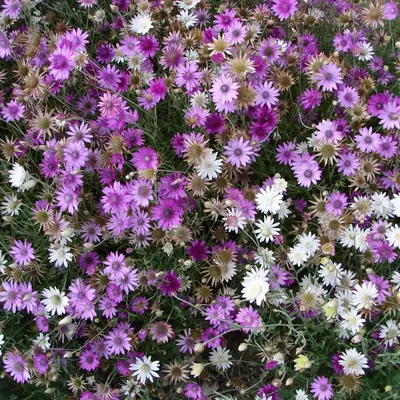
Adorable, 1-1 1/2" papery blooms with silvery gray foliage and stems add an airy element to bouquets. Suitable for fresh and dried use. Mix of silvery-white and lavender blooms supported by sturdy, yet thin and flexible stems. Plants are well-contained, upright, and densely branched. Also known as annual daisy everlasting, paper flower, or immortelle.
Harvest
80-90d
Days to harvest
Sun
Full sun
Zones
1–11
USDA hardiness
Height
18-24 inches
Planting Timeline
Showing dates for Paper Flower Double Mixture in USDA Zone 7
All Zone 7 flower →Zone Map
Click a state to update dates
Paper Flower Double Mixture · Zones 1–11
Growing Details
Succession Planting
Xeranthemum is a warm-season annual grown for a cut-and-dry harvest — once it's bloomed and you've pulled the flowers for drying, that plant is finished. You can stagger sowing to stretch the harvest window. Start a first indoor sow in late February, then direct-sow again in mid-May for a second flush before fall sets in. Stop direct sowing by early June; with 80–90 days to flower, anything started later won't finish before a hard frost ends it.
Two successions is enough. Xeranthemum blooms over a reasonably long window once it gets going, and dried flowers hold their color and shape for months — a single well-timed planting usually covers what most gardeners actually need from it.
Complete Growing Guide
Growing Paper Flower Double Mixture (Xeranthemum annuum) flower. Light: Full sun. Hardy in USDA zones 1 to 11. Days to maturity: 80. Difficulty: Easy.
Harvesting
Paper Flower Double Mixture reaches harvest at 80 - 90 days from sowing per Johnny's Selected Seeds. Expect 1-1 1/2" at peak. As an annual, harvest continues until frost ends the season.
This is an ornamental variety — not grown for harvest. Enjoy in the garden landscape.
Storage & Preservation
For fresh blooms, store upright in a vase with cool water at 65-72°F in a cool location away from direct sunlight and ripening fruit. Change water every 2-3 days; fresh blooms last 1-2 weeks. For dried preservation, hang bundles upside-down in a warm, dry, dark space (60-70°F, low humidity) for 1-2 weeks until papery and crisp. Alternatively, air-dry standing upright in a vase without water. Dried flowers remain vibrant and usable for 6-12 months when stored in a cool, dry location. For pressed flowers, place blooms between paper under weight for 2-3 weeks, then store flat in acid-free paper.
History & Origin
Xeranthemum annuum is a flowering plant species also known as annual everlasting or immortelle. It is native to eastern Europe and western Asia, and is cultivated as a garden flower. It has become naturalised in other parts of Europe.
Advantages
- +Versatile for both fresh and dried flower arrangements year-round
- +Silvery-gray foliage adds elegant, airy texture to any bouquet
- +Compact, upright growth habit requires minimal staking or support
- +Double mixture provides attractive color contrast of white and lavender
- +Sturdy yet flexible stems allow easy handling and arrangement
Considerations
- -80-90 day growing season requires early sowing for summer blooms
- -Papery blooms may shatter or bruise with rough handling
- -Prefers well-draining soil and struggles in heavy clay conditions
Companion Plants
Marigolds (especially Tagetes patula) and Nasturtiums are the most practical neighbors here — marigolds produce root secretions that deter thrips and whiteflies, while nasturtiums act as a trap crop that pulls aphids away from your Xeranthemum before they find it. Sweet Alyssum planted at the border starts drawing Syrphid flies and parasitic wasps within 2–3 weeks of flowering. Cosmos and Zinnia share similar 12–18 inch spacing without competing much at the root zone. Black Walnut is a hard no — juglone moves through soil water and will stunt or kill most annuals planted within range — and Fennel inhibits germination in a wide sweep of companions, Xeranthemum included.
Plant Together
Marigolds
Repel aphids, whiteflies, and nematodes while attracting beneficial insects
Nasturtiums
Act as trap crops for aphids and cucumber beetles, drawing pests away
Sweet Alyssum
Attracts beneficial insects like lacewings and parasitic wasps for natural pest control
Zinnia
Attracts butterflies and beneficial pollinators, creates colorful companion display
Cosmos
Attracts beneficial insects and provides structural support without competing for nutrients
Basil
Repels aphids, spider mites, and thrips while attracting pollinators
Lavender
Repels moths, fleas, and mosquitoes while attracting bees and butterflies
Celosia
Similar growing requirements and attracts beneficial insects without competition
Keep Apart
Black Walnut
Produces juglone toxin that inhibits growth and can kill sensitive plants
Fennel
Releases allelopathic compounds that inhibit germination and growth of nearby plants
Eucalyptus
Produces allelopathic oils that suppress growth of most other plants
Troubleshooting Paper Flower Double Mixture
What you'll see, why it happens, and what to do about it.
Seedlings collapse at soil level, stems pinched or rotted off near the base
Likely Causes
- Damping-off (Pythium or Rhizoctonia spp.) — fungal pathogens that thrive in cold, wet, poorly-drained seed-starting mix
- Overwatering before seedlings have developed a real root system
What to Do
- 1.Water from the bottom and let the top of the mix dry slightly between waterings
- 2.Improve air circulation with a small fan running a few hours a day
- 3.Start over with fresh, sterile seed-starting mix — don't reuse last year's trays without sterilizing them first
Pale, washed-out leaves and spindly stems on transplants or established plants getting full sun
Likely Causes
- Aphid colony (likely Myzus persicae or a related species) feeding on new growth — check the undersides of leaves
- Spider mites (Tetranychus urticae) in hot, dry spells — look for fine webbing on leaf undersides
What to Do
- 1.Knock aphids off with a firm stream of water from the hose; repeat every 2-3 days until the population collapses
- 2.For spider mites, spray the undersides of leaves with insecticidal soap — don't bother with the tops
- 3.Plant Sweet Alyssum nearby to draw in parasitic wasps that will work the aphids for you
Gray fuzzy coating on buds and upper leaves, flowers rotting before they open — especially after a stretch of humid, overcast weather
Likely Causes
- Botrytis cinerea (gray mold) — spreads fast in humidity above 90% and temps between 60–77°F
- Crowded planting at less than 12-inch spacing that traps moisture against the foliage
What to Do
- 1.Remove and bag all affected plant material immediately — don't compost it
- 2.Thin aggressively if you direct-sowed at close spacing; 12 inches is the floor, not a suggestion
- 3.Water at the base in the morning so foliage dries before nightfall — skip the overhead sprinkler
Stunted plants with yellow-mottled or distorted leaves, flowers small and misshapen
Likely Causes
- Aster yellows (Candidatus Phytoplasma asteris) — carried and deposited by leafhoppers, particularly Macrosteles quadrilineatus; infected plants don't recover
- Cucumber mosaic virus (CMV), also spread by aphids, produces similar distortion symptoms
What to Do
- 1.Pull and discard any plant showing these symptoms — there's no cure, and leaving it standing gives the pathogen more time to spread to neighboring plants
- 2.Control leafhopper and aphid populations with row cover early in the season, before Xeranthemum is tall enough to need pollinator access
- 3.Don't replant susceptible annuals in the same bed the following season without rotating to a different crop family
Frequently Asked Questions
How long do Paper Flower blooms last in a vase?▼
Can you grow Paper Flowers in containers?▼
Are Paper Flowers good for beginners?▼
When should I plant Paper Flower seeds?▼
What makes Paper Flowers suitable for dried arrangements?▼
Can Paper Flowers be used for both fresh and dried bouquets?▼
Zone-by-Zone Planting Calendar
| Zone | Indoor Start | Transplant | Direct Sow | Harvest |
|---|---|---|---|---|
| Zone 1 | May – June | July – August | July – September | — |
| Zone 2 | April – May | June – July | June – August | — |
| Zone 11 | January – January | January – February | January – March | — |
| Zone 12 | January – January | January – February | January – March | — |
| Zone 13 | January – January | January – February | January – March | — |
| Zone 3 | April – May | June – July | June – August | — |
| Zone 4 | March – April | June – June | June – July | — |
| Zone 5 | March – April | May – June | May – July | — |
| Zone 6 | March – April | May – June | May – July | — |
| Zone 7 | February – March | April – May | April – June | — |
| Zone 8 | February – March | April – May | April – June | — |
| Zone 9 | January – February | March – April | March – May | — |
| Zone 10 | January – January | February – March | February – April | — |
Growing Guides from Wind River Greens
Sources & References
External authority sources used in compiling this guide.
- BreederJohnny's Selected Seeds
See the Methodology page for how this data is sourced, what's AI-assisted, and known limitations.