Heirloom Black Cherry
Solanum lycopersicum 'Black Cherry'
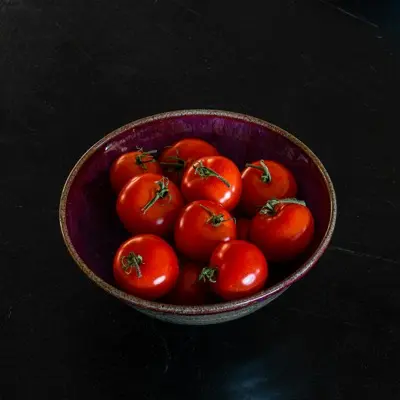
These stunning dark purple-black cherry tomatoes are like edible jewels with an incredibly rich, complex flavor that's both sweet and savory. Developed by Vince Sapp of Florida, they're prolific producers that keep delivering these gourmet treats all season long. Perfect for gardeners who want something truly special that will impress at farmers markets or dinner parties.
Harvest
65-75d
Days to harvest
Sun
Full sun
Zones
10–11
USDA hardiness
Height
1-10 feet
Planting Timeline
Showing dates for Heirloom Black Cherry in USDA Zone 7
All Zone 7 tomato →Zone Map
Click a state to update dates
Heirloom Black Cherry · Zones 10–11
Growing Details
Complete Growing Guide
Black Cherry tomatoes demand consistent warmth and patience—they need full sun and soil temperatures above 70°F to set fruit reliably, so delay planting until late spring when soil has truly warmed. These indeterminate vines grow vigorously and require sturdy support systems and regular pruning to prevent excessive foliage that shades fruit and reduces air circulation, making them prone to early blight and septoria leaf spot in humid conditions. Their thin skins make them susceptible to cracking after heavy rain, so mulch deeply and water evenly rather than erratically. Monitor closely for spider mites, which thrive in hot, dry conditions. A crucial tip: pinch off suckers aggressively and remove lower leaves by mid-summer to improve airflow around the base, dramatically reducing fungal disease pressure while directing energy toward fruit production during their long 65–75 day season.
Light: Full sun (6 or more hours of direct sunlight a day). Soil: Clay, High Organic Matter, Loam (Silt), Sand. Soil pH: Acid (<6.0), Neutral (6.0-8.0). Drainage: Good Drainage, Moist. Height: 1 ft. 0 in. - 10 ft. 0 in.. Spread: 1 ft. 0 in. - 4 ft. 0 in.. Spacing: 3 feet-6 feet. Growth rate: Rapid. Maintenance: High. Propagation: Seed. Regions: Coastal, Mountains, Piedmont.
Harvesting
Harvest Heirloom Black Cherry tomatoes when they reach their characteristic deep purple-black color with no green shoulders, a sign they've developed their complex flavor fully. The fruit should yield slightly to gentle pressure but remain firm, and they typically reach mature size at about one inch in diameter. This is a continuous-harvest variety that produces prolifically throughout the season, so pick ripe fruits every few days rather than waiting for a single large harvest to encourage ongoing production. Timing matters here—harvest in early morning when temperatures are coolest to maximize juice content and shelf life, and always twist gently or use pruners rather than pulling to avoid damaging the delicate stems and reducing future yields.
The fruits are smooth, shiny, glossy, and are classified as berries. The size, shape, and color will vary depending on the variety or cultivar. The color of the fruits may be red, yellow, orange, green, purple, or pink. The fruits may contain over 100 yellow to light brown seeds.
Color: Gold/Yellow, Green, Orange, Pink, Purple/Lavender, Red/Burgundy, Variegated. Type: Berry. Length: > 3 inches. Width: > 3 inches.
Garden value: Edible, Showy
Harvest time: Fall, Summer
Edibility: The fruits or berries of the tomato are edible. They may be eaten raw, cooked, dried, or processed. They are a rich source of Vitamin A, Vitamin C, folic acid, and antioxidants. Lycopene is an antioxidant that gives the tomato its rich red color. Many plants will drop fruit when ripe or the fruit will come off easily. Tomatoes will continue to ripen once picked. Store them at room temperature.
Storage & Preservation
Store freshly harvested Black Cherry tomatoes at room temperature away from direct sunlight until fully ripe; refrigeration below 55°F diminishes their complex flavor and can mealy the texture. Keep them in a single layer in a breathable container or paper bag to allow air circulation and prevent moisture buildup. Ripe fruit keeps about five to seven days at room temperature, or up to two weeks refrigerated if you're willing to sacrifice some taste complexity.
For preservation, freezing works well for roasting applications—simply halve and freeze on a tray before bagging. Their thin skins make them ideal candidates for quick-freezing without blanching. Drying intensifies their smoky character beautifully; halve lengthwise and dry at 200°F for eight to twelve hours. Canning as whole fruits requires pressure canning. Consider fermenting halved fruits with salt brine to preserve their bright acidity while developing additional depth—they'll keep refrigerated for months and add distinctive complexity to vinaigrettes and cocktails.
History & Origin
The Black Cherry tomato emerged from the heirloom cherry tomato breeding work conducted by Vince Sapp at the University of Florida during the 1990s. While detailed documentation of its exact parentage remains limited in public records, the variety represents part of the broader movement to develop improved cherry tomato cultivars that combined disease resistance and productivity with superior flavor characteristics. Sapp's work built upon earlier cherry tomato genetic material, selecting for the distinctive dark purple-black coloration and complex taste profile that distinguish this variety. The Black Cherry has since become a popular heirloom offering among specialty seed companies, valued by home gardeners and market growers for its consistent performance and exceptional culinary quality.
Origin: Peru
Advantages
- +Exceptional complex flavor with smoky undertones impresses at farmers markets
- +Prolific producer delivers continuous harvests throughout the entire growing season
- +Stunning dark purple-black color makes these jewel-like tomatoes visually stunning
- +Moderate difficulty makes them accessible for experienced home gardeners
Considerations
- -Susceptible to late blight and fusarium wilt in humid climates
- -Requires consistent watering and rich soil to achieve peak flavor
- -Multiple pest threats including hornworms and spider mites demand monitoring
Companion Plants
Basil sits 12 to 18 inches away on most of our beds, and the honest reason is that fresh cherry tomatoes and torn basil taste good together — the pest-deterrent claims are secondary. Marigolds (Tagetes patula) pull more actual weight: their roots release alpha-terthienyl, which suppresses root-knot nematodes in surrounding soil, and Black Cherry has zero nematode resistance built in. Carrots and chives work because they stay shallow — no real competition with tomato roots pushing 18 to 24 inches down. Fennel will stunt your plants through allelopathic root exudates, and brassicas nearby tend to draw cabbage loopers that will find your tomato foliage just as appealing.
Plant Together
Basil
Repels aphids, whiteflies, and hornworms while potentially enhancing tomato flavor
Marigolds
Deters nematodes, aphids, and whiteflies with natural compounds
Carrots
Helps break up soil for tomato roots and doesn't compete for nutrients
Parsley
Attracts beneficial insects like parasitic wasps that control tomato pests
Chives
Repels aphids and may help prevent fungal diseases
Nasturtiums
Acts as trap crop for aphids and cucumber beetles, draws pests away from tomatoes
Lettuce
Provides living mulch, conserves soil moisture, and can be harvested before tomatoes need full space
Peppers
Share similar growing requirements and don't compete significantly for resources
Keep Apart
Black Walnut
Produces juglone toxin that causes tomato wilt and stunted growth
Fennel
Releases allelopathic compounds that inhibit tomato growth and development
Brassicas
Can stunt tomato growth and attract pests that also affect tomatoes
Corn
Both are heavy feeders that compete for nutrients, and corn can harbor tomato fruitworm
Nutrition Facts
Per 100g serving. % Daily Value based on 2,000 calorie diet. Source: USDA FoodData Central (FDC #171719)
Pests & Disease Resistance
Resistance
Limited disease resistance typical of heirlooms
Common Pests
Tomato hornworm, aphids, whiteflies, spider mites
Diseases
Late blight, early blight, fusarium wilt, bacterial speck
Troubleshooting Heirloom Black Cherry
What you'll see, why it happens, and what to do about it.
Large patches of foliage turning gray-green and collapsing fast — sometimes overnight — with dark, water-soaked spots appearing on fruit
Likely Causes
- Late blight (Phytophthora infestans) — spreads rapidly in cool, wet weather, especially below 70°F with high humidity
- Overhead irrigation or rain keeping foliage wet for extended periods
What to Do
- 1.Pull and bag affected plants immediately — do not compost them; late blight can spread to neighboring beds within 24 hours
- 2.Switch to drip irrigation if you're overhead watering; keep foliage as dry as possible
- 3.NC State Extension's PDIC monitors late blight regionally — check their alerts and apply copper-based fungicide preventively once reports appear in your area
Plant wilts during the day even when soil is moist, doesn't recover overnight, and eventually dies — no obvious spots or rot above ground
Likely Causes
- Fusarium wilt (Fusarium oxysporum f. sp. lycopersici) — soilborne fungus that colonizes vascular tissue
- Southern bacterial wilt (Ralstonia solanacearum) — especially likely in warm, moist soils
- Root-knot nematodes damaging root uptake
What to Do
- 1.Cut the stem near the base and check the cross-section: a brown discolored vascular ring points to Fusarium; suspending the cut end in a clear glass of water and watching for milky bacterial ooze points to bacterial wilt
- 2.Remove and destroy the entire plant including roots — do not compost; NC State Extension advises keeping tomatoes out of that bed for 5 to 7 years
- 3.Black Cherry is an heirloom with no built-in wilt resistance — NC State Extension recommends grafting onto disease-resistant rootstock as a practical fix for beds with a known soilborne history
Frequently Asked Questions
How long does Heirloom Black Cherry tomato take to grow?▼
Can you grow Black Cherry tomatoes in containers?▼
What do Black Cherry tomatoes taste like?▼
Are Black Cherry tomatoes good for beginners?▼
When should I plant Black Cherry tomato seeds?▼
Black Cherry vs regular cherry tomatoes - what's the difference?▼
Zone-by-Zone Planting Calendar
| Zone | Indoor Start | Transplant | Direct Sow | Harvest |
|---|---|---|---|---|
| Zone 1 | May – May | July – August | — | September – August |
| Zone 2 | April – May | June – July | — | September – September |
| Zone 11 | January – January | January – February | — | April – June |
| Zone 12 | January – January | January – February | — | April – June |
| Zone 13 | January – January | January – February | — | April – June |
| Zone 3 | April – April | June – July | — | August – October |
| Zone 4 | March – April | June – June | — | August – October |
| Zone 5 | March – March | May – June | — | August – October |
| Zone 6 | March – March | May – June | — | July – September |
| Zone 7 | February – March | April – May | — | July – September |
| Zone 8 | February – February | April – May | — | June – August |
| Zone 9 | January – January | March – April | — | May – July |
| Zone 10 | January – January | February – March | — | May – July |
Growing Guides from Wind River Greens
Sources & References
External authority sources used in compiling this guide.
See the Methodology page for how this data is sourced, what's AI-assisted, and known limitations.