Perseo
Cichorium intybus
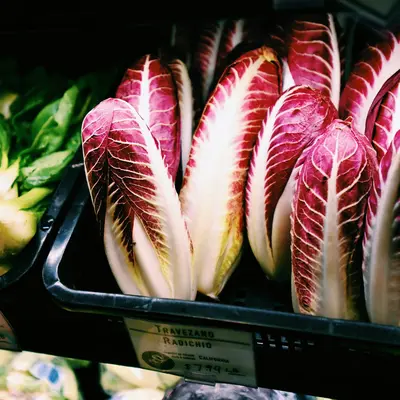
Smaller heads, 3-4", allow for planting at higher densities. Uniform size and maturity.
Harvest
55d
Days to harvest
Sun
Full sun
Zones
3–8
USDA hardiness
Height
3-4 feet
Planting Timeline
Showing dates for Perseo in USDA Zone 7
All Zone 7 lettuce →Zone Map
Click a state to update dates
Perseo · Zones 3–8
Growing Details
Succession Planting
Direct sow Perseo every 14–21 days starting around March 1 in zone 7, and keep going through early May. After that, heat pushing past 80°F will drive it toward bolting — chicory handles summer better than head lettuce, but a 55-day variety still loses quality fast once the heat settles in. Pick back up around August 15, sowing through late September for harvests that stretch into November. That June–July gap is real; don't fight it.
Complete Growing Guide
Smaller heads, 3-4", allow for planting at higher densities. Uniform size and maturity. According to Johnny's Selected Seeds, Perseo is 55 days to maturity, annual, open pollinated.
Light: Full sun (6 or more hours of direct sunlight a day). Soil: Clay, High Organic Matter, Loam (Silt), Sand, Shallow Rocky. Soil pH: Alkaline (>8.0), Neutral (6.0-8.0). Drainage: Good Drainage, Moist, Occasionally Dry. Height: 3 ft. 0 in. - 4 ft. 0 in.. Spread: 1 ft. 6 in. - 2 ft. 0 in.. Spacing: 12 inches-3 feet. Growth rate: Rapid. Maintenance: High, Medium. Propagation: Seed. Regions: Coastal, Mountains, Piedmont.
Harvesting
Perseo reaches harvest at 55 days from sowing per Johnny's Selected Seeds. Expect 3-4" at peak. As an annual, harvest continues until frost ends the season.
Brown oblong and 5-ribbed achene with blunt ends. The wider end has a bristles across the top.
Color: Brown/Copper, Cream/Tan. Type: Achene.
Edibility: Leaves can be used in salads or cooked to reduce bitter flavor. Roots can be dried and used as a coffee substitute.
Storage & Preservation
Perseo chicory heads store best at 32–36°F with 90–95% humidity in perforated plastic bags within a standard refrigerator crisper drawer, where they'll keep for up to three weeks. For longer storage, wrap individual heads loosely in damp paper towels before bagging. Fresh shelf life typically runs 14–21 days under ideal conditions, though outer leaves may yellow first. Perseo doesn't freeze or can particularly well due to its delicate leaf structure, but blanched heads can be frozen for soups and braises if used within three months. Light fermentation works reasonably—finely shredded heads salt-fermented at 60–65°F for 7–10 days develop pleasant tang and store for months in a cool cellar. A variety-specific note: Perseo's mild, slightly sweet flavor holds best when harvested in cool weather and chilled immediately; summer harvests tend toward bitterness that intensifies in storage.
History & Origin
Perseo is open-pollinated, meaning seed saved from healthy plants will produce true-to-type offspring. Listed in the Johnny's Selected Seeds catalog.
Origin: Europe
Advantages
- +Smaller 3-4 inch heads perfect for single servings and fresh markets
- +Higher planting density maximizes yield per square foot of garden space
- +Uniform maturity allows efficient succession planting and batch harvesting
- +Only 55 days to harvest enables multiple crops per growing season
- +Easy difficulty makes Perseo ideal for beginner and commercial growers
Considerations
- -Smaller head size means lower total weight per plant harvested
- -Limited storage life compared to larger heading chicory varieties
- -Requires consistent moisture to prevent premature bolting or bitter leaves
- -Susceptible to tip burn in high heat without proper air circulation
Companion Plants
Chives and garlic along the bed edge do real work — their sulfur compounds disrupt the host-finding behavior of aphids that would otherwise colonize Perseo's leaf bases. Marigolds (Tagetes patula specifically) attract thrips and whiteflies away from the chicory without competing for root space at 6–8 inch spacing. Radishes make a practical gap-filler between rows and can be pulled before the chicory needs the room at full size. Keep fennel at least a full bed's length away — its root exudates inhibit germination and slow establishment in salad crops, and parsley has a similar, if milder, suppressive effect that makes it a poor neighbor in tight quarters.
Plant Together
Chives
Repels aphids and improves lettuce flavor while providing natural pest deterrent
Carrots
Helps loosen soil for lettuce roots and doesn't compete for nutrients
Radishes
Acts as trap crop for flea beetles and helps break up soil
Marigolds
Repels aphids, whiteflies, and nematodes that commonly attack lettuce
Garlic
Natural fungicide properties help prevent lettuce diseases like downy mildew
Spinach
Similar growing requirements and can be interplanted for succession harvests
Dill
Attracts beneficial insects like ladybugs that eat aphids
Nasturtiums
Acts as trap crop for aphids and cucumber beetles
Keep Apart
Broccoli
Heavy feeder that competes for nutrients and can shade lettuce
Fennel
Releases allelopathic compounds that inhibit lettuce germination and growth
Parsley
Can attract carrot flies and competes for similar nutrients in the soil
Nutrition Facts
Per 100g serving. % Daily Value based on 2,000 calorie diet. Source: USDA FoodData Central (FDC #2346388)
Pests & Disease Resistance
Common Pests
Aphids, slugs, snails, flea beetles, cutworms
Diseases
Powdery mildew, Botrytis (gray mold), Sclerotinia (white mold), downy mildew
Troubleshooting Perseo
What you'll see, why it happens, and what to do about it.
Seedlings collapse at the soil line within the first 7–10 days after transplanting or germination — stems look pinched or water-soaked at the base
Likely Causes
- Damping off — a complex of soil-borne fungi including Pythium spp. and Rhizoctonia solani — triggered by overly wet, poorly drained soil
- Planting into a bed that has grown lettuce or chicory for 2+ consecutive seasons without rotation
What to Do
- 1.Pull the dead seedlings and check for fuzzy white or gray mold at the soil surface — if present, don't replant into that spot this season
- 2.Improve drainage before the next sowing: work in perlite or coarse compost, and water only when the top inch is dry
- 3.Rotate chicory out of that bed for at least one full season; NC State's IPM framework specifically flags repeated plantings in the same raised bed as a setup for repeat damping-off problems
White powdery coating on upper leaf surfaces, usually appearing on older leaves first as temperatures swing between cool nights and warm days
Likely Causes
- Powdery mildew (Erysiphe cichoracearum) — spreads via airborne spores, thrives when humidity is high but leaf surfaces stay dry
- Overcrowded planting that reduces airflow between plants
What to Do
- 1.Space plants at least 8 inches apart — crowding is the single biggest controllable factor here
- 2.Strip and bag affected leaves; don't compost them
- 3.Apply a dilute potassium bicarbonate spray (1 tablespoon per gallon) at first sign; repeat every 7 days
Outer leaves develop water-soaked patches that turn brown and slimy, often with a gray fuzzy coating — most common in cool, wet stretches of weather
Likely Causes
- Botrytis cinerea (gray mold) — favors temperatures between 60–77°F and high humidity, especially when dead or dying leaf tissue is left on the plant
- Leaves sitting against wet soil or in contact with neighboring plants
What to Do
- 1.Remove any dead or yellowing outer leaves promptly — Botrytis feeds on dying tissue before moving to healthy growth
- 2.Water at the base of the plant in the morning so foliage dries before nightfall
- 3.Harvest heads once they reach maturity; plants sitting at full size in wet weather are sitting targets for gray mold spread
Ragged holes in outer leaves overnight, with no insects visible during the day — silvery slime trails may be visible in the morning
Likely Causes
- Slugs or snails — peak activity during cool, moist nights, especially after rain or irrigation
- Heavy mulch or debris right against the plant crowns giving them daytime cover
What to Do
- 1.Set out a few slug traps — shallow containers of cheap beer, sunk to soil level — near the bed edge the evening after a rain
- 2.Pull mulch 2–3 inches back from the base of each plant so slugs lose their daytime hiding spots
- 3.Scatter iron phosphate bait (Sluggo is one common brand) around the bed perimeter; it won't harm ground beetles that eat slug eggs
Frequently Asked Questions
How long does Perseo lettuce take to grow?▼
Is Perseo lettuce good for beginners?▼
Can you grow Perseo lettuce in containers?▼
What does Perseo lettuce taste like?▼
When should I plant Perseo lettuce?▼
How close together can you plant Perseo lettuce?▼
Zone-by-Zone Planting Calendar
| Zone | Indoor Start | Transplant | Direct Sow | Harvest |
|---|---|---|---|---|
| Zone 3 | — | — | May – June | June – October |
| Zone 4 | — | — | April – June | June – October |
| Zone 5 | — | — | April – May | June – November |
| Zone 6 | — | — | April – May | May – November |
| Zone 7 | — | — | March – May | May – November |
| Zone 8 | — | — | March – April | April – December |
| Zone 9 | — | — | February – March | March – December |
| Zone 10 | — | — | January – March | March – December |
| Zone 1 | — | — | June – July | July – September |
| Zone 2 | — | — | May – July | July – September |
| Zone 11 | — | — | January – February | February – December |
| Zone 12 | — | — | January – February | February – December |
| Zone 13 | — | — | January – February | February – December |
Growing Guides from Wind River Greens
Sources & References
External authority sources used in compiling this guide.
- BreederJohnny's Selected Seeds
- USDAUSDA FoodData Central
See the Methodology page for how this data is sourced, what's AI-assisted, and known limitations.