Siberian Garlic
Allium sativum var. ophioscorodon 'Siberian'
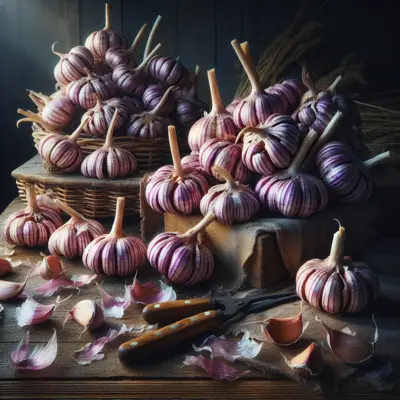
An extremely hardy hardneck garlic variety that survives brutal winters and produces beautiful purple-striped bulbs with complex, robust flavor. This reliable performer sends up dramatic curling scapes in summer and develops 8-12 cloves per bulb with excellent storage life. Siberian is perfect for northern gardeners who want dependable garlic with gourmet flavor and stunning appearance.
Harvest
240-270d
Days to harvest
Sun
Full sun
Zones
4–9
USDA hardiness
Height
12-18 inches
Planting Timeline
Showing dates for Siberian Garlic in USDA Zone 7
All Zone 7 allium →Zone Map
Click a state to update dates
Siberian Garlic · Zones 4–9
Growing Details
Complete Growing Guide
This extreme-hardy hardneck requires a longer growing season than softer varieties—plan for 240–270 days from planting through harvest, making fall planting essential in northern zones to ensure adequate cold vernalization before spring growth. Plant cloves 2 inches deep in well-draining soil with full sun exposure; Siberian's vigor means it tolerates poor soil better than many cultivars but still demands consistent moisture during spring growth. Watch for white rot in poorly drained sites and spider mites during hot, dry summers, though overall disease pressure remains low. The variety's strong tendency to bolt means removing scapes promptly in early summer redirects energy to bulb development; harvest when half the foliage yellows rather than waiting for full dormancy. For maximum storage life—a key Siberian strength—cure bulbs in a warm, airy location for three weeks before storing in cool conditions.
Light: Full sun (6 or more hours of direct sunlight a day). Soil: Clay, High Organic Matter, Loam (Silt), Sand. Soil pH: Neutral (6.0-8.0). Drainage: Good Drainage, Moist. Height: 1 ft. 0 in. - 1 ft. 6 in.. Spread: 0 ft. 8 in. - 1 ft. 0 in.. Spacing: Less than 12 inches, 12 inches-3 feet. Growth rate: Medium. Maintenance: Medium. Regions: Coastal, Mountains, Piedmont.
Harvesting
Harvest Siberian garlic when the lower leaves turn brown and papery while upper leaves remain green, typically in late July or early August after 240-270 days of growth. The bulbs should feel firm and full when gently squeezed, and the purple striping will deepen as they mature. Unlike continuous harvesting varieties, Siberian performs best with a single harvest window—pull the entire plant when ready rather than staggered picking. For precise timing in northern regions, monitor soil moisture; harvest when the top inch of soil begins drying out, as this signals the bulb has finished its final size increase and is ready to cure.
Capsule on top of the flowering stalk. Splits open when ripe.
Color: Cream/Tan. Type: Capsule.
Storage & Preservation
Cure freshly harvested Siberian garlic in a warm, dry, well-ventilated area for 2-3 weeks until outer skins become papery. Once cured, trim roots and cut stems to 1 inch, leaving the protective wrapper intact.
Store cured bulbs in mesh bags or braids in a cool (55-65°F), dry location with good air circulation. Properly cured Siberian garlic keeps 6-8 months under ideal conditions. Avoid refrigeration, which triggers sprouting, and don't store in plastic bags where moisture causes rot.
For preservation, roast whole bulbs and freeze in portions, or separate cloves and ferment in honey for a complex condiment. Dehydrated Siberian garlic creates an intensely flavored powder that stores for years. The scapes freeze beautifully for year-round use in stir-fries and pesto.
History & Origin
Documentation on the specific origin of Siberian Garlic is limited, though the variety name suggests development or selection in northern climates suited to harsh winters. As a hardneck variety within the Ophioscorodon group—characterized by their pronounced scapes and cold hardiness—Siberian likely represents either a traditional Russian or Eastern European cultivar preserved through heritage growing practices, or a selection made by seed companies or northern gardeners seeking cold-adapted garlic strains. The exact breeder, introduction year, and institution remain undocumented in widely available sources, leaving its lineage within the broader category of cold-hardy hardneck garlic rather than definitively traced to a specific breeding program or named originator.
Origin: Asia and Iran
Advantages
- +Extremely cold-hardy variety survives brutal winters in northern zones
- +Beautiful purple-striped bulbs add ornamental appeal to garden beds
- +Rich, complex flavor profile pleasing raw and when roasted
- +Produces dramatic curling scapes ideal for culinary use
- +8-12 large cloves per bulb with excellent long-term storage
Considerations
- -Susceptible to white rot and fusarium basal rot diseases
- -Requires 240-270 days for maturity, limiting shorter-season growing regions
- -Vulnerable to bulb mites and nematodes in affected soils
Companion Plants
Garlic pulls its weight near roses and tomatoes because the sulfur compounds it pushes through its roots genuinely suppress aphid pressure on neighboring plants — that's chemistry, not folklore. Carrots and lettuce are easy neighbors: shallow feeders that don't tangle with garlic's root zone and aren't bothered by its allelopathic output. Give beans, peas, and asparagus a wide berth. The sulfur chemistry that discourages aphids also disrupts the Rhizobium bacteria that legumes depend on for nitrogen fixation, and asparagus shares enough of the same deep soil layer that both crops lose out.
Plant Together
Cabbage
Garlic deters cabbage worms, aphids, and flea beetles that commonly attack brassicas
Carrots
Garlic repels carrot flies while carrots help break up soil for garlic bulb development
Lettuce
Garlic provides natural pest protection while lettuce acts as living mulch without competing for nutrients
Peppers
Garlic repels aphids and spider mites while potentially enhancing pepper flavor and growth
Roses
Garlic deters aphids, Japanese beetles, and may help prevent black spot and other fungal diseases
Spinach
Garlic protects against leaf miners and aphids while spinach provides ground cover
Strawberries
Garlic repels slugs, aphids, and nematodes that commonly damage strawberry plants
Tomatoes
Garlic repels aphids, spider mites, and other tomato pests while improving flavor
Keep Apart
Beans
Garlic can inhibit nitrogen fixation by bean root nodules and stunt overall growth
Peas
Allelopathic compounds in garlic can reduce pea germination and growth rates
Asparagus
Garlic can inhibit asparagus spear development and reduce overall yield
Nutrition Facts
Per 100g serving. % Daily Value based on 2,000 calorie diet. Source: USDA FoodData Central (FDC #1104647)
Pests & Disease Resistance
Resistance
Excellent cold hardiness, good disease resistance
Common Pests
Bulb mites, nematodes, aphids
Diseases
White rot, fusarium basal rot, rust
Troubleshooting Siberian Garlic
What you'll see, why it happens, and what to do about it.
Bulbs are small or malformed at harvest, with stunted, yellowing foliage in spring
Likely Causes
- Bulb mites (Rhizoglyphus robini) feeding on roots and basal plate underground
- Planting cloves too shallow — less than 2 inches deep — leaving them vulnerable to frost heave and pest entry
What to Do
- 1.At harvest, inspect the basal plate; if you see white, powdery mite clusters, destroy those bulbs — don't save them for seed stock
- 2.Next fall, plant cloves 2-3 inches deep, pointy end up, and rotate out of any bed that had alliums in the past 3 years
- 3.Source clean seed garlic from a reputable supplier rather than saving from a potentially infested batch
White, fluffy mold at the base of the plant, bulb rotting from the bottom up — often noticed when you pull the plant and the basal plate crumbles
Likely Causes
- White rot (Sclerotium cepivorum) — a soil-borne fungus that produces sclerotia persisting in soil for 20+ years
- Heavy, poorly drained soil holding moisture around the bulb through cool spring weather
What to Do
- 1.Pull and bag infected plants immediately — do not compost them, ever
- 2.Avoid replanting any allium in that bed for at least 8 years; white rot sclerotia are not eliminated by a standard 3-year rotation
- 3.Before next fall's planting, work compost into heavy clay to improve drainage, or raise the bed 4-6 inches
Frequently Asked Questions
How long does Siberian garlic take to grow?▼
Can you grow Siberian garlic in containers?▼
Is Siberian garlic good for beginners?▼
What does Siberian garlic taste like?▼
When should I plant Siberian garlic?▼
Do I need to remove Siberian garlic scapes?▼
Zone-by-Zone Planting Calendar
| Zone | Indoor Start | Transplant | Direct Sow | Harvest |
|---|---|---|---|---|
| Zone 1 | — | — | June – July | December – September |
| Zone 2 | — | — | May – July | December – September |
| Zone 11 | — | — | January – February | September – December |
| Zone 12 | — | — | January – February | September – December |
| Zone 13 | — | — | January – February | September – December |
| Zone 3 | — | — | May – June | December – October |
| Zone 4 | — | — | April – June | December – October |
| Zone 5 | — | — | April – May | December – November |
| Zone 6 | — | — | April – May | December – November |
| Zone 7 | — | — | March – May | December – November |
| Zone 8 | — | — | March – April | November – December |
| Zone 9 | — | — | February – March | October – December |
| Zone 10 | — | — | January – March | October – December |
Growing Guides from Wind River Greens
Sources & References
External authority sources used in compiling this guide.
See the Methodology page for how this data is sourced, what's AI-assisted, and known limitations.