Japanese Bunching Onions
Allium fistulosum
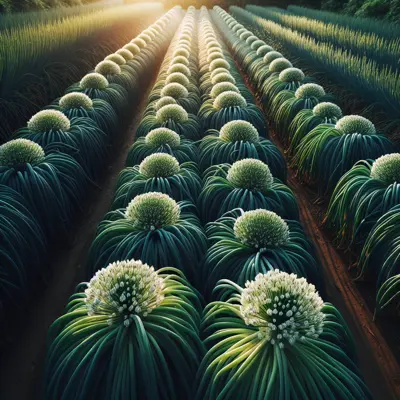
Japanese bunching onions are delicate, slender green onions that mature in approximately 65 days. Unlike bulbing onions, they form elongated white shanks with tender green tops, making them ideal for both raw and cooked applications. These heirloom varieties are prized for their mild, sweet onion flavor and exceptionally crisp texture. They're a staple in Japanese cuisine, perfect for garnishing dishes, stir-fries, and salads. Their easy growing requirements and continuous harvest potential make them a favorite among home gardeners seeking fresh, flavorful alliums.
Harvest
65d
Days to harvest
Sun
Full sun to partial shade
Zones
4–9
USDA hardiness
Height
1-3 feet
Planting Timeline
Showing dates for Japanese Bunching Onions in USDA Zone 7
All Zone 7 allium →Zone Map
Click a state to update dates
Japanese Bunching Onions · Zones 4–9
Growing Details
Succession Planting
Direct sow every 14-21 days from March 1 through May in zone 7, then pause when daytime highs push past 90°F — germination stalls badly and any seedlings that do emerge tend to bolt fast in hot soil. Pick back up August 1 and sow through mid-September; bunching onions shrug off a light frost, so those fall successions will carry well into November. At 65 days to harvest, you can fit three or four rounds in a single season without much calendar math — just mark your sow dates and thin to 2-3 inches as the stands fill in.
Complete Growing Guide
Japanese Bunching Onions thrive when direct-seeded in spring or late summer, reaching harvest in just 65 days, making them ideal for succession planting through early fall. Unlike standard bulbing onions, these cultivars actively resist the urge to bulb even during long days, though they may still attempt bolting in extreme midsummer heat—plant them where afternoon shade is available in hot climates. They prefer rich, well-draining soil and consistent moisture; allow the white shanks to blanch by hilling soil around the base as they grow, which maximizes the tender, harvestable portion. Watch for the same thrips and root maggots that plague other Alliums, and thin seedlings aggressively to 3–4 inches apart to ensure strong development and minimize fungal issues from crowding. A practical strategy is to stagger plantings every two weeks from early spring through mid-August for continuous harvests before your first frost date.
Light: Full sun (6 or more hours of direct sunlight a day), Partial Shade (Direct sunlight only part of the day, 2-6 hours). Soil: High Organic Matter, Loam (Silt), Sand. Drainage: Good Drainage. Height: 1 ft. 0 in. - 3 ft. 0 in.. Spread: 0 ft. 6 in. - 2 ft. 0 in.. Spacing: Less than 12 inches. Growth rate: Medium. Maintenance: Low. Propagation: Division. Regions: Coastal, Mountains, Piedmont.
Harvesting
Japanese Bunching Onions reach peak harvest readiness when the white shanks measure approximately one-half to three-quarter inches in diameter and the blue-green leaf bases feel firm but still tender to the touch. The shanks should display a pristine white color with no yellowing or softening. These onions support both continuous and single-harvest approaches: thin plants progressively for tender young onions throughout the season, or allow them to mature fully for maximum shank length and yield. For optimal flavor and texture, harvest in early morning after dew has dried but before afternoon heat intensifies, as this timing preserves their signature crispness and mild onion flavor while the plants are fully hydrated.
The capsule splits longitudinally and contains small round black seeds.
Type: Capsule.
Storage & Preservation
Fresh Japanese bunching onions store best in the refrigerator, wrapped loosely in damp paper towels inside a plastic bag. They'll maintain quality for 7-10 days when stored this way. Avoid washing until ready to use, as excess moisture accelerates decay.
For longer storage, freezing works exceptionally well. Clean and chop both green and white portions, then freeze in portions on baking sheets before transferring to freezer bags. Frozen bunching onions work perfectly in cooked dishes but lose their crisp texture for raw applications.
Dehydrating is another excellent option – slice thinly and dry at 135°F until brittle, then store in airtight containers. Dried bunching onions rehydrate beautifully in soups and stews. You can also ferment the green portions in salt brine to create a tangy condiment popular in Korean cuisine.
History & Origin
Japanese bunching onions belong to the species Allium fistulosum, which originated in Central Asia and was domesticated in China thousands of years ago before spreading to Japan, where regional varieties were developed and refined over centuries. The specific cultivar documentation is sparse in English-language sources, but Japanese bunching onions as a category represent a distinct breeding line emphasizing non-bulbing characteristics, long white shanks, and heat tolerance—traits particularly valued in Japanese and East Asian cuisines. Western seed companies began offering Japanese bunching varieties commercially in the mid-twentieth century, though the exact parentage and original breeder of this particular strain remains undocumented in readily available literature.
Origin: Northern Hemisphere, North America and Eurasia
Advantages
- +Heat-resistant variety maintains quality through midsummer temperatures
- +Excellent white shank length delivers high harvestable yields
- +Mild, tender, crisp flavor suits fresh eating and cooking
- +Fast maturity at 65 days enables quick succession planting
- +Easy growing difficulty makes variety accessible to beginners
Considerations
- -Less winter-hardy than Evergreen Hardy White alternative varieties
- -Downy mildew susceptibility increases in humid growing conditions
- -Vulnerable to onion thrips and aphid pest pressure
Companion Plants
Carrots pair well here because their roots sit at a different depth than bunching onion roots, so they don't fight for the same water and nutrients — and the onion's sulfur compounds genuinely disrupt carrot fly (Psila rosae) egg-laying. Brassicas like cabbage and broccoli get a similar benefit: the volatile compounds Allium fistulosum releases confuse aphids and cabbage loopers trying to locate a host. Lettuce slots in neatly underneath taller onion plantings since it tolerates partial shade and the two crops don't share many pests. Beans and peas need to stay at least a bed away — allium root exudates inhibit the Rhizobium bacteria legumes depend on for nitrogen fixation, and you'll see stunted, nitrogen-starved legumes within a few weeks of a close planting.
Plant Together
Carrots
Onions repel carrot flies while carrots help break up soil for onion root development
Tomatoes
Onions deter aphids, whiteflies, and hornworms that commonly attack tomatoes
Brassicas (Cabbage, Broccoli)
Onions repel cabbage worms, flea beetles, and other brassica pests
Lettuce
Onions provide pest protection without competing for nutrients; lettuce shades onion roots
Peppers
Onions repel aphids and other soft-bodied insects that damage pepper plants
Strawberries
Onions deter slugs, aphids, and other pests that commonly attack strawberry plants
Roses
Onions repel aphids, thrips, and may help prevent black spot and other fungal diseases
Parsley
Compatible growth habits and onions help repel pests that attack herbs
Keep Apart
Beans
Onions can inhibit bean growth and nitrogen fixation by rhizobia bacteria
Peas
Allium compounds can interfere with pea growth and root nodule formation
Sage
Both plants compete for similar nutrients and sage can inhibit onion bulb development
Nutrition Facts
Per 100g serving. % Daily Value based on 2,000 calorie diet. Source: USDA FoodData Central (FDC #170000)
Pests & Disease Resistance
Resistance
Generally disease resistant, very hardy
Common Pests
Onion thrips, aphids
Diseases
Downy mildew in humid conditions
Troubleshooting Japanese Bunching Onions
What you'll see, why it happens, and what to do about it.
Silvery streaking or stippling on leaves, tips browning and distorted, plants looking generally rough
Likely Causes
- Onion thrips (Thrips tabaci) — tiny, barely visible insects that rasp the leaf surface and suck the cell contents
- Hot, dry spells that stress plants and create ideal thrips conditions
What to Do
- 1.Blast leaves with a firm stream of water to knock thrips off — do this in the morning so foliage dries before nightfall
- 2.Apply spinosad or insecticidal soap directly to the leaves, hitting both sides; repeat every 5-7 days for 2-3 cycles
- 3.Keep plants consistently watered at 1 inch per week — water-stressed alliums draw heavier pest pressure
Gray-purple fuzzy coating on leaves, starting on lower foliage, spreading fast in wet weather
Likely Causes
- Downy mildew (Peronospora destructor) — airborne spores that thrive when nights drop below 65°F and foliage stays wet
- Overcrowded planting with poor airflow between plants
What to Do
- 1.Remove and trash (not compost) affected leaves as soon as you spot them
- 2.Space plants at least 2-3 inches apart and switch to drip or base watering to keep foliage dry
- 3.Apply a copper-based fungicide at first sign — it won't cure existing infection but slows the spread to healthy tissue
Leaves yellowing from the tip down, sticky residue on foliage, small clusters of soft-bodied insects on new growth
Likely Causes
- Aphids (commonly Myzus persicae or Aphis gossypii) — they cluster on new growth and leaf undersides and can double their population in days during warm weather
- Absence of nearby flowering plants that would otherwise draw in parasitic wasps and ladybeetles
What to Do
- 1.Rub off small colonies by hand or knock them loose with water — catching it at 10 aphids beats dealing with 1,000
- 2.Spray insecticidal soap on infested areas, covering leaf undersides; repeat every 4-5 days until populations drop
- 3.Interplant with parsley or carrots, which draw Braconid wasps — a better long-term fix than repeated spraying
Frequently Asked Questions
How long do Japanese bunching onions take to grow?▼
Can you grow Japanese bunching onions in containers?▼
Are Japanese bunching onions good for beginners?▼
What's the difference between Japanese bunching onions and regular green onions?▼
When should I plant Japanese bunching onions?▼
Do Japanese bunching onions come back every year?▼
Zone-by-Zone Planting Calendar
| Zone | Indoor Start | Transplant | Direct Sow | Harvest |
|---|---|---|---|---|
| Zone 3 | — | — | May – June | July – October |
| Zone 4 | — | — | April – June | June – October |
| Zone 5 | — | — | April – May | June – November |
| Zone 6 | — | — | April – May | June – November |
| Zone 7 | — | — | March – May | May – November |
| Zone 8 | — | — | March – April | May – December |
| Zone 9 | — | — | February – March | April – December |
| Zone 10 | — | — | January – March | March – December |
| Zone 1 | — | — | June – July | August – September |
| Zone 2 | — | — | May – July | July – September |
| Zone 11 | — | — | January – February | February – December |
| Zone 12 | — | — | January – February | February – December |
| Zone 13 | — | — | January – February | February – December |
Growing Guides from Wind River Greens
Sources & References
External authority sources used in compiling this guide.
See the Methodology page for how this data is sourced, what's AI-assisted, and known limitations.