Perennial Lupine
Lupinus polyphyllus
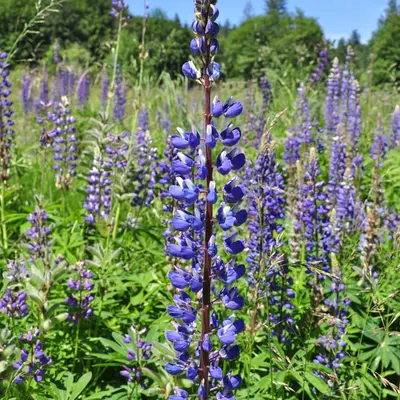
These hardy perennials are long-lived and require very little maintenance. The flowers look great in a meadow or garden, as well as bouquets. Attracts and provides a food source for bees. Stems are stiff, erect 1-2' spikes densely covered with ½" pea-like flowers. Perennial in Zones 4-8.
Harvest
365d
Days to harvest
Sun
Full sun to partial shade
Zones
4–9
USDA hardiness
Height
3-4 feet
Planting Timeline
Showing dates for Perennial Lupine in USDA Zone 7
All Zone 7 flower →Zone Map
Click a state to update dates
Perennial Lupine · Zones 4–9
Growing Details
Complete Growing Guide
Perennial Lupine rewards patience more than fussing, so the most important work happens before the seed ever touches soil. Choose a site with full sun to light afternoon shade and excellent drainage — lupines despise wet feet and will rot in heavy clay or low-lying spots. A gentle slope or raised bed is ideal in regions with wet winters. They prefer slightly acidic to neutral soil (pH 6.0-7.0) that's lean and sandy rather than rich. Skip the compost and manure: too much nitrogen produces floppy foliage at the expense of flower spikes, and as a legume, lupine fixes its own nitrogen via root nodules.
Lupine seeds have a notoriously hard coat, so scarify them before sowing — nick each seed with a file or sandpaper, or soak in warm water for 24-48 hours until they swell. For best results, direct sow in fall so seeds experience natural cold stratification, or sow in early spring after a 7-10 day cold-moist stratification in the refrigerator. Lupines have a long, brittle taproot and resent transplanting, so direct sowing is strongly preferred. If you must start indoors, use deep biodegradable pots (4 inches or more) and transplant while seedlings are still small, disturbing the roots as little as possible.
Sow seeds ¼ inch deep, spacing 12-18 inches apart. Germination takes 14-30 days and can be uneven. Water seedlings regularly until established, then back off — mature lupines are remarkably drought-tolerant and prefer to dry out between waterings. Mulch lightly with pine straw or shredded bark to keep roots cool, but keep mulch away from the crown to prevent rot.
Don't fertilize. Seriously. If your soil is extremely poor, a single light dressing of bone meal or rock phosphate in spring is plenty. Avoid all nitrogen-heavy fertilizers. The most common mistake new lupine growers make is "loving them to death" with rich soil, frequent watering, and fertilizer — all of which shorten the plant's lifespan dramatically.
In Zones 4-5, mulch crowns with evergreen boughs after the ground freezes to prevent heaving. In Zones 7-8, plant on the north side of taller plants to shade the roots during hot summers; lupines often go dormant in extreme heat and rebound in fall. Tall flower spikes in exposed sites may need light staking, especially after thunderstorms. Deadhead spent spikes promptly to encourage a second, smaller flush of blooms in late summer and to prevent prolific self-seeding (unless you want a meadow-style colony, in which case let a few pods mature). Plants typically bloom their second year from seed and live 3-5 years, naturalizing through self-sown seedlings that gradually replace the parent plants.
Harvesting
For cut flowers, harvest lupine spikes when roughly one-third to one-half of the florets on the stem have opened, with the lower blooms fully expanded and the upper buds still showing color but not yet open. Cutting too early causes the upper buds to abort; cutting too late means the lower florets will shatter within a day or two of arrangement. Harvest in the cool of early morning when stems are fully turgid and sugars are highest — this can double vase life compared to midday cuts.
Use sharp, clean snips and cut stems at an angle as long as possible, taking the spike down to the first set of leaves or a side shoot. Immediately plunge stems into a bucket of cool water and let them condition in a shaded spot for at least an hour before arranging. To collect seed for next year, wait until pods turn brown, fuzzy, and rattle when shaken — but harvest just before they split, as ripe pods explosively eject seeds several feet.
Storage & Preservation
Fresh-cut lupine stems last 5-7 days in a vase if you change the water every other day, recut stems underwater, and add floral preservative. Keep arrangements out of direct sun and away from ripening fruit, which releases ethylene and causes premature floret drop. Store cut stems in a cooler at 36-40°F if not arranging immediately.
Lupine spikes dry beautifully for everlasting arrangements: hang freshly cut stems upside down in a dark, dry, well-ventilated room for 2-3 weeks. Color holds best on purple and blue varieties. For seed saving, dry mature pods in paper bags for 1-2 weeks, then thresh and store seeds in airtight containers in a cool, dry place — viability remains good for 3-5 years. Note: all parts of lupine, especially seeds, contain toxic alkaloids and should never be eaten or stored near food.
History & Origin
The name Lupinus comes from the Latin lupus, meaning "wolf" — ancient Romans believed the plants "wolfed" nutrients from the soil, when in fact the opposite is true: as nitrogen-fixing legumes, lupines enrich poor soils. Lupinus perennis, the wild perennial lupine, is native to eastern North America, ranging from Maine to Florida and west to Minnesota and Louisiana, where it grows in sandy pine barrens, oak savannas, and open meadows.
Indigenous peoples and early colonists recognized the plant's striking blue spikes long before it entered ornamental gardens. It holds particular ecological importance as the sole larval host plant for the endangered Karner blue butterfly, whose decline mirrors the loss of native lupine habitat. While modern hybrid lupines like the famous Russell hybrids — developed by George Russell in Yorkshire, England, in the early 20th century — offer flashier colors, they are typically short-lived and derive primarily from the western species Lupinus polyphyllus. The true perennial lupine remains the heirloom of choice for naturalistic plantings, native gardens, and pollinator habitats.
Advantages
- +Nitrogen-fixing roots actually improve poor, sandy soil over time
- +Exceptional pollinator value — a top-tier food source for native bumblebees and an essential host plant for Karner blue butterflies
- +Thrives on neglect; performs better in lean soil than rich, amended beds
- +Long, stiff spikes make outstanding cut flowers and dry beautifully for everlasting arrangements
- +Hardy through Zone 4 winters with minimal protection
- +Self-sows readily to form naturalized colonies that persist for decades
- +Deer and rabbit resistant due to alkaloid content in foliage
Considerations
- -All parts are toxic to humans, livestock, dogs, and cats if ingested
- -Hard seed coat requires scarification or stratification for reliable germination
- -Brittle taproot makes transplanting risky — direct sowing strongly preferred
- -Individual plants are short-lived (3-5 years), relying on self-seeding for long-term presence
- -Struggles in heavy clay, alkaline soil, or hot, humid southern summers
- -Susceptible to powdery mildew and aphid infestations in poor air circulation
Companion Plants
Native meadow plants — Wild Bergamot, Black-Eyed Susan, Purple Coneflower, and Yarrow — are the right neighbors here. Their drainage and fertility needs are modest enough that they won't undercut what lupine's nitrogen-fixing root nodules are building in the soil, and their bloom times stagger across a long enough window that pollinators cycle through the whole planting rather than peaking and vanishing. Beans and clover are the worst choices: both are nitrogen fixers working the same rhizobial chemistry, so you get direct root-zone competition with no compensating benefit. Brassicas pull calcium and sulfur hard and tend to disrupt the soil structure that lupine depends on through its first couple of winters.
Plant Together
Wild Bergamot
Attracts beneficial insects and pollinators, complements lupine's nitrogen-fixing ability
Black-Eyed Susan
Blooms after lupine, extending pollinator season and providing complementary colors
Native Grasses
Benefits from lupine's nitrogen fixation while providing structural support
Yarrow
Attracts beneficial predatory insects that control lupine aphids
Penstemon
Shares similar soil preferences and attracts native pollinators
Indian Paintbrush
Thrives in lupine's nitrogen-enriched soil and creates stunning color combinations
Blanket Flower
Tolerates similar growing conditions and extends blooming season
Purple Coneflower
Benefits from lupine's soil improvement and attracts complementary pollinators
Keep Apart
Beans
Both are nitrogen-fixers, creating competition and potential soil nutrient imbalance
Clover
Competes for space and resources as another aggressive nitrogen-fixing legume
Brassicas
May be inhibited by lupine's alkaloid compounds in the soil
Troubleshooting Perennial Lupine
What you'll see, why it happens, and what to do about it.
Seedlings collapse at soil level, stems look pinched or rotted off, within the first 2-3 weeks after germination
Likely Causes
- Damping off (Pythium or Rhizoctonia spp.) — fungal pathogens that thrive in wet, poorly drained starting mix
- Overwatering or trays without drainage
What to Do
- 1.Scratch the seed coat with sandpaper or soak seeds in water for 24 hours before sowing — better germination means stronger seedlings faster
- 2.Water from the bottom only, and let the surface dry slightly between waterings
- 3.Thin to one seedling per cell immediately; crowding makes this worse
Leaves develop a powdery white coating across the upper surface, usually appearing mid-to-late summer
Likely Causes
- Powdery mildew (Erysiphe spp.) — common on lupines in humid conditions or when plants are crowded
- Spacing plants closer than 12 inches, which cuts airflow to near zero
What to Do
- 1.Cut the entire plant back hard after blooming — this removes infected tissue and often produces a flush of clean new growth
- 2.Switch to drip or base watering; wet foliage overnight is an open invitation for Erysiphe
- 3.Plant at 18 inches apart from the start; retrofitting spacing after the fact doesn't work
Flower spikes get shorter each year and the crown looks congested or woody after year 3 or 4
Likely Causes
- Lupinus polyphyllus is naturally short-lived — 3 to 5 years per plant is normal, not a sign of disease
- Skipping deadheading, which lets the plant exhaust its reserves into seed production
What to Do
- 1.Deadhead spent spikes down to a side shoot to push a second flush and keep the plant from burning out early
- 2.Let a few pods ripen each fall, collect the seed, and start fresh transplants every 2-3 years so you always have young plants coming in behind the old ones
- 3.If you want to divide rather than reseed, split congested crowns in early spring before new growth breaks — replant the outermost sections and compost the woody core
Frequently Asked Questions
How long does perennial lupine take to grow from seed?▼
Is perennial lupine good for beginners?▼
Can you grow perennial lupine in containers?▼
When should I plant perennial lupine seeds?▼
Why won't my lupine seeds germinate?▼
Is perennial lupine the same as Texas bluebonnet or Russell lupine?▼
Zone-by-Zone Planting Calendar
| Zone | Indoor Start | Transplant | Direct Sow | Harvest |
|---|---|---|---|---|
| Zone 3 | April – May | June – July | June – August | — |
| Zone 4 | March – April | June – June | June – July | — |
| Zone 5 | March – April | May – June | May – July | — |
| Zone 6 | March – April | May – June | May – July | — |
| Zone 7 | February – March | April – May | April – June | — |
| Zone 8 | February – March | April – May | April – June | — |
| Zone 9 | January – February | March – April | March – May | — |
| Zone 10 | January – January | February – March | February – April | — |
| Zone 1 | May – June | July – August | July – September | — |
| Zone 2 | April – May | June – July | June – August | — |
| Zone 11 | January – January | January – February | January – March | — |
| Zone 12 | January – January | January – February | January – March | — |
| Zone 13 | January – January | January – February | January – March | — |
Growing Guides from Wind River Greens
Sources & References
External authority sources used in compiling this guide.
- BreederJohnny's Selected Seeds
See the Methodology page for how this data is sourced, what's AI-assisted, and known limitations.