Purple Top Timothy
Phleum pratense 'Purple Top'
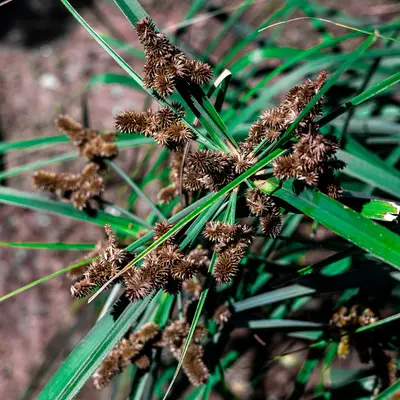
A premium cool-season grass variety prized for its distinctive purple-tinged seed heads and excellent performance in northern climates. This hardy perennial forms dense, uniform stands that provide excellent ground cover and erosion control. Timothy grass is beloved by wildlife and creates a naturalistic meadow appearance that's perfect for eco-friendly landscaping.
Harvest
60-90d
Days to harvest
Sun
Full sun to partial shade
Zones
2–7
USDA hardiness
Height
3 feet
Planting Timeline
Showing dates for Purple Top Timothy in USDA Zone 7
All Zone 7 grass →Zone Map
Click a state to update dates
Purple Top Timothy · Zones 2–7
Growing Details
Succession Planting
Timothy doesn't lend itself to tight succession planting the way cut-and-come-again crops do, but you can stagger establishment sowings to spread your forage window. Direct sow the first planting in March once soil temps reach 40–45°F, then put in a second seeding in late April — that gives you two stands at different maturity stages and stretches the 60–90 day harvest window across more of the calendar.
Stop seeding by mid-May in zone 7. Anything sown later runs directly into daytime highs above 85°F, which hammers germinating seedlings before they can build enough root mass to survive the summer.
Complete Growing Guide
Timothy (Phleum pratense) is a perennial cool-season grass of the family Poaceae. Stems grow in large clumps, reaching 0.5-1 metre (1.6-3.3 feet) in height with swollen bulb-like bases. Leaves are typically rolled lengthwise and are about 44 cm (17 inches) long. Flowering structures are long, dense, and cylindrical panicles resembling cattail heads. The plant demonstrates drought resistance and tolerates heavy and sandy soils. It is extensively grown as forage in North America and the United Kingdom. Source: Britannica.
Harvesting
Timothy serves as both a hay crop and pasture grass for livestock. Cut for hay when the plant reaches the early bloom stage for the best balance of yield and nutritional quality. First cutting is typically in early to mid-summer. Source: Britannica.
Storage & Preservation
Timothy hay should be cured to less than 20% moisture before baling to prevent mold. Store bales in a covered, well-ventilated area. Properly stored timothy hay maintains nutritional value for over a year. Source: standard forage management practice.
History & Origin
Timothy is native to mainland Europe. The plant was named after American farmer Timothy Hanson, who promoted its cultivation outside New England and among British farmers during the early 1700s. It became one of the most widely cultivated forage grasses in North America. Source: Britannica.
Advantages
- +Drought resistant
- +Tolerates heavy and sandy soils
- +Excellent hay and pasture grass
- +Hardy perennial — returns year after year
- +High palatability for livestock
Considerations
- -Cool-season grass — goes dormant in summer heat
- -Slow to establish compared to ryegrass
- -Does not tolerate close, frequent grazing
- -Shallow root system
Companion Plants
Red clover, white clover, and alfalfa are the strongest pairings — all three fix atmospheric nitrogen that timothy's shallow fibrous roots can actually use, and their lower growth habit fills canopy gaps without shading the grass out. Birdsfoot trefoil does the same work in wetter, low-lying spots where a pure-grass stand would thin out on its own. Around here in zone 7 Georgia, chicory and plantain pull extra weight because their deep taproots crack compaction layers and cycle up minerals that sit below the 6-inch range timothy roots mostly occupy. Tall fescue, johnsongrass, and quackgrass are a different story — all three spread fast enough to crowd out timothy within a single growing season, and none of them let go easily once they've taken hold.
Plant Together
Red Clover
Fixes nitrogen in soil, improving grass nutrition and establishing beneficial legume-grass partnership
White Clover
Low-growing nitrogen fixer that complements timothy's growth pattern and enriches soil
Alfalfa
Deep-rooted legume that brings up nutrients and fixes nitrogen for grass utilization
Birdsfoot Trefoil
Drought-tolerant legume that provides nitrogen fixation and extends grazing season
Chicory
Deep taproot breaks up compacted soil and provides minerals, complements shallow grass roots
Plantain
Natural mineral accumulator that improves soil health and provides medicinal benefits for livestock
Dandelion
Deep taproot improves soil aeration and brings up nutrients from subsoil layers
Yarrow
Attracts beneficial insects and improves overall pasture health with natural pest control
Keep Apart
Tall Fescue
Aggressive competitor that can crowd out timothy and contains endophytes toxic to livestock
Johnson Grass
Highly aggressive weed that outcompetes timothy and can contain harmful prussic acid
Quackgrass
Invasive perennial grass with aggressive rhizomes that displaces timothy stands
Pests & Disease Resistance
Resistance
Good resistance to most grass diseases
Common Pests
Aphids, armyworms (minor issues)
Diseases
Leaf spot, rust (in humid conditions)
Troubleshooting Purple Top Timothy
What you'll see, why it happens, and what to do about it.
Orange or reddish-brown powdery pustules on leaf blades and sheaths, typically appearing in late spring or after wet stretches
Likely Causes
- Crown rust or stem rust (Puccinia spp.) — fungal, spreads by windborne spores, thrives when humidity stays above 80% and temps sit between 60–75°F
- Dense stand with poor airflow trapping moisture on foliage
What to Do
- 1.Mow or clip the stand down to about 3–4 inches to remove infected tissue and open up airflow
- 2.Avoid late-evening irrigation — water in the morning so foliage dries before nightfall
- 3.If the stand is heavily infected two years running, overseed with a rust-tolerant blend and consider adding red clover to break up the pure-grass density
Small tan or brown oval lesions with darker borders on the upper leaf surface, leaves dying back from the tip down
Likely Causes
- Helminthosporium leaf spot (Drechslera phlei) — soil-borne fungus that splashes up during rain events
- Thatch layer thicker than half an inch holding moisture at the crown
What to Do
- 1.Dethatch if thatch depth exceeds half an inch — a stiff rake works fine on smaller plots
- 2.Rotate the field out of timothy for at least one full season and follow with a legume cover crop like white clover or alfalfa
- 3.Trash (don't compost) clippings from visibly infected areas to avoid cycling spores back into the field
Yellowing, stunted tillers with distorted or curled leaves appearing in patches, most visible during the first 30–45 days after germination
Likely Causes
- Aphid colonies (commonly English grain aphid, Sitobion avenae) feeding on new growth and excreting honeydew
- Fall armyworm (Spodoptera frugiperda) feeding in late summer — look for ragged leaf edges and frass near the crown
What to Do
- 1.Scout early — if aphid colonies are on more than 30% of tillers, knock them back with a strong water spray or a labeled insecticidal soap
- 2.For armyworm pressure, check for egg masses on leaf blades in late July and August; spinosad-based products work well on young larvae and spare most beneficial insects
- 3.Keep soil moisture consistent during establishment — plants stressed by drought pull heavier pest pressure than a well-watered stand does