German Extra Hardy Garlic
Allium sativum var. ophioscorodon 'German Extra Hardy'
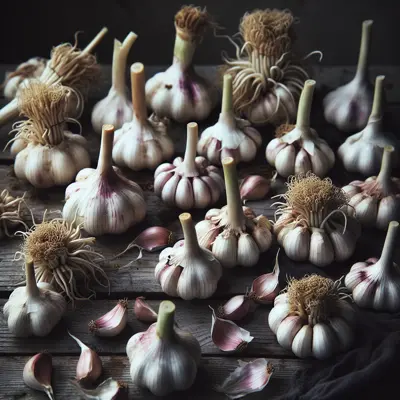
A robust hardneck garlic variety that lives up to its name by surviving the harshest winters while producing large, flavorful bulbs with 4-6 cloves each. This porcelain-type garlic offers excellent storage life and a rich, complex flavor that becomes sweet and nutty when roasted. It's an ideal choice for northern gardeners who want reliable garlic production and the bonus of edible scapes in early summer.
Harvest
240-270d
Days to harvest
Sun
Full sun
Zones
4–9
USDA hardiness
Height
12-18 inches
Planting Timeline
Showing dates for German Extra Hardy Garlic in USDA Zone 7
All Zone 7 allium →Zone Map
Click a state to update dates
German Extra Hardy Garlic · Zones 4–9
Growing Details
Succession Planting
Garlic doesn't lend itself to succession planting — you put it in once in fall, harvest once the following summer, and that's the whole cycle. If you want fresh alliums through the shoulder seasons, sow a short row of 'Evergreen Hardy White' bunching onions in early March; they'll be ready to pull by mid-April while your garlic bulbs are still sizing up underground.
Complete Growing Guide
Plant German Extra Hardy Garlic in fall (September-October in northern zones) to allow adequate cold exposure for proper bulb development, as this variety requires 240-270 days and a full winter vernalization period. Choose well-draining soil in full sun and space cloves 6 inches apart, as this robust hardneck type produces substantial bulbs that need room to expand. Unlike softneck varieties, German Extra Hardy is prone to bolting if temperatures fluctuate erratically in spring, so consistent mulching helps regulate soil temperature and reduces splitting. Monitor for white rot and fusarium, which thrive in poorly drained conditions—excellent drainage is essential for this cultivar's success. A practical tip: harvest scapes in late spring when they curl, which redirects energy to bulb enlargement and gives you an early-season delicacy, making your investment in winter-hardy garlic doubly rewarding.
Light: Full sun (6 or more hours of direct sunlight a day). Soil: Clay, High Organic Matter, Loam (Silt), Sand. Soil pH: Neutral (6.0-8.0). Drainage: Good Drainage, Moist. Height: 1 ft. 0 in. - 1 ft. 6 in.. Spread: 0 ft. 8 in. - 1 ft. 0 in.. Spacing: Less than 12 inches, 12 inches-3 feet. Growth rate: Medium. Maintenance: Medium. Regions: Coastal, Mountains, Piedmont.
Harvesting
German Extra Hardy Garlic reaches peak harvest readiness when the lower leaves turn brown or tan while upper leaves remain green, typically around late June through early July in northern zones. The bulbs feel firm and substantial when gently squeezed, and the papery outer skin develops a papery texture without splitting at the seams. Harvest the entire crop in a single session rather than continuously, as this hardneck variety's bulbs mature simultaneously and won't improve further after peak readiness. A reliable timing tip: wait until at least half the foliage has died back before pulling, as premature harvesting reduces clove size and storage longevity in this particular cultivar.
Capsule on top of the flowering stalk. Splits open when ripe.
Color: Cream/Tan. Type: Capsule.
Storage & Preservation
Cure freshly harvested German Extra Hardy garlic by hanging in bunches of 4-6 plants in a warm, dry, well-ventilated area (80-85°F) for 2-3 weeks until outer skins become papery. Once cured, trim roots and cut stems to 1 inch above the bulb.
Store cured bulbs in mesh bags or open baskets in a cool, dry location with good air circulation—ideal conditions are 60-65°F with 60-70% humidity. Properly cured German Extra Hardy will store 6-8 months, often lasting until the following spring.
For preservation, this variety excels when roasted whole and frozen in oil-packed containers for up to 6 months. Individual cloves freeze well when peeled and stored in airtight containers for up to one year. The rich, complex flavor also makes it excellent for fermenting into black garlic or creating garlic-infused vinegars. Avoid storing fresh garlic in the refrigerator, as this triggers sprouting and bitter flavors.
History & Origin
Documentation of German Extra Hardy Garlic's specific origins remains sparse in published horticultural records. The variety belongs to the hardneck porcelain group, a classification traditionally associated with European cold-climate regions where selective cultivation over generations produced garlic capable of withstanding severe winters. The "German" designation suggests Central European heritage, likely reflecting cultivation practices among German and Eastern European gardeners who prioritized cold-hardiness and storage quality. While precise breeding records or introduction dates are not readily documented in mainstream seed literature, the variety represents a product of farmer-led selection within Germanic garlic-growing traditions rather than formal institutional breeding programs, embodying the genetic adaptation of hardneck garlic to northern continental climates.
Origin: Asia and Iran
Advantages
- +Survives extremely cold winters, making it perfect for northern climates
- +Produces large bulbs with only 4-6 cloves, ideal for cooking
- +Excellent storage life keeps bulbs fresh for months after harvest
- +Rich, complex flavor becomes sweet and nutty when roasted
- +Edible scapes in early summer provide bonus harvests for cooks
Considerations
- -Requires 240-270 days to mature, limiting growing regions significantly
- -Susceptible to white rot and fusarium in poorly drained soils
- -Demands excellent drainage or bulbs will rot during wet seasons
Companion Plants
Garlic's sulfur compounds — primarily allicin — are what make it a useful neighbor around roses and cabbage; they deter aphids and some soft-bodied insects without any extra work on your part. Carrots and lettuce make good space-partners because neither competes with garlic's shallow, densely packed root zone, and leafy greens can shade the soil between rows during the spring push. In our zone 7 Georgia garden, we tuck garlic along the edges of fall brassica beds almost every year. Beans and peas belong on the other end of the garden entirely: garlic root exudates suppress the Rhizobium bacteria legumes depend on for nitrogen fixation, and a bad placement can noticeably cut your bean yield.
Plant Together
Tomatoes
Garlic repels aphids, spider mites, and hornworms that commonly attack tomatoes
Cabbage
Garlic deters cabbage worms, aphids, and other brassica pests
Carrots
Garlic repels carrot flies while carrots help break up soil around garlic bulbs
Lettuce
Garlic protects lettuce from aphids and slugs without competing for nutrients
Roses
Garlic repels aphids, Japanese beetles, and may reduce black spot disease
Peppers
Garlic deters aphids, spider mites, and other soft-bodied insects that damage peppers
Spinach
Garlic provides pest protection while spinach's shallow roots don't compete with garlic bulbs
Strawberries
Garlic repels slugs, aphids, and spider mites that commonly damage strawberry plants
Keep Apart
Beans
Garlic can inhibit bean growth and nitrogen fixation by rhizobia bacteria
Peas
Alliums can stunt pea growth and interfere with their nitrogen-fixing capabilities
Asparagus
Garlic can inhibit asparagus growth and may reduce spear production
Nutrition Facts
Per 100g serving. % Daily Value based on 2,000 calorie diet. Source: USDA FoodData Central (FDC #1104647)
Pests & Disease Resistance
Resistance
Good resistance to white rot and fusarium
Common Pests
Onion thrips, bulb mites (minimal issues)
Diseases
White rot, fusarium basal rot (in poor drainage)
Troubleshooting German Extra Hardy Garlic
What you'll see, why it happens, and what to do about it.
Bulbs pulled in late June are small — marble-sized or smaller — with tight, undeveloped cloves
Likely Causes
- Planted too late in fall (after soil dropped below 50°F), so roots didn't establish before dormancy
- Cloves planted too shallow (less than 2 inches deep), leading to frost heave and stunted root development
What to Do
- 1.In zone 7, aim to plant German Extra Hardy between October 15 and November 10 — you want 4–6 weeks of root growth before hard frost
- 2.Plant cloves pointed end up, 2–3 inches deep, and mulch with 4 inches of straw to hold soil temperature
- 3.Next season, pull a test bulb around day 240; if wrappers are still tight and green, give it another week or two before harvesting the bed
Leaves yellowing from the tips down, starting in late spring, with a sour or fermented smell at the base of the plant
Likely Causes
- Fusarium basal rot (Fusarium culmorum or F. oxysporum) — a soil-borne fungus that thrives in waterlogged or poorly drained beds
- Bulb mite infestation creating entry wounds that let fusarium establish
What to Do
- 1.Pull and discard affected plants immediately — don't compost them
- 2.Don't replant alliums in the same bed for at least 3 years; NC State Extension recommends a minimum 3-year rotation for fusarium-prone soils
- 3.Improve drainage before next fall's planting: work in compost and consider raised beds or a 2–3 inch crown above the surrounding grade
Silvery streaking or stippling on leaves in late spring, with tiny dark specks (frass) visible on close inspection
Likely Causes
- Onion thrips (Thrips tabaci) — they rasp leaf tissue and suck sap, and populations spike in hot, dry spells
What to Do
- 1.Spray a strong stream of water early in the morning to knock thrips off leaves — do this 3 days in a row for meaningful knockdown
- 2.If pressure is heavy, apply spinosad (an OMRI-listed organic option) every 7 days, targeting the base of leaves where thrips shelter
- 3.Reduce overhead irrigation, which creates the humid canopy thrips prefer; switch to drip or soaker hose if possible
Frequently Asked Questions
When should I plant German Extra Hardy garlic?▼
How long does German Extra Hardy garlic take to grow?▼
Can you grow German Extra Hardy garlic in containers?▼
What does German Extra Hardy garlic taste like?▼
Is German Extra Hardy garlic good for beginners?▼
How cold hardy is German Extra Hardy garlic really?▼
Zone-by-Zone Planting Calendar
| Zone | Indoor Start | Transplant | Direct Sow | Harvest |
|---|---|---|---|---|
| Zone 3 | — | — | May – June | December – October |
| Zone 4 | — | — | April – June | December – October |
| Zone 5 | — | — | April – May | December – November |
| Zone 6 | — | — | April – May | December – November |
| Zone 7 | — | — | March – May | December – November |
| Zone 8 | — | — | March – April | November – December |
| Zone 9 | — | — | February – March | October – December |
| Zone 10 | — | — | January – March | October – December |
| Zone 1 | — | — | June – July | December – September |
| Zone 2 | — | — | May – July | December – September |
| Zone 11 | — | — | January – February | September – December |
| Zone 12 | — | — | January – February | September – December |
| Zone 13 | — | — | January – February | September – December |
Growing Guides from Wind River Greens
Sources & References
External authority sources used in compiling this guide.
- ExtensionNC State Extension
- USDAUSDA FoodData Central
See the Methodology page for how this data is sourced, what's AI-assisted, and known limitations.