Glass Gem
Zea mays
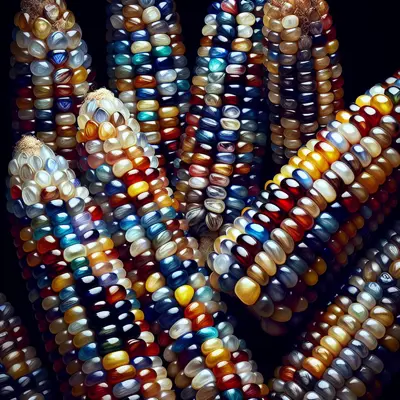
A distinctive presentation in fall displays, the glassy-looking kernels are unique to this variety. Kernels can be popped, but results may vary. Sturdy plants can reach 10' tall. Avg. ear size 6-8". Requires a fairly long growing season for favorable yields. Bred by the late Carl Barnes, an Oklahoma Cherokee who dedicated his career to reclaiming and preserving seed of traditional Native American corns.
Harvest
120d
Days to harvest
Sun
Full sun
Zones
2–11
USDA hardiness
Height
5-8 feet
Planting Timeline
Showing dates for Glass Gem in USDA Zone 7
All Zone 7 corn →Zone Map
Click a state to update dates
Glass Gem · Zones 2–11
Growing Details
Succession Planting
Glass Gem is a dry flint corn that needs the full 120 days to reach proper dry-down, so succession sowing doesn't make sense the way it does with radishes or salad greens — you plant one block and wait. In zone 7, direct sow from late April through early June. Anything started after mid-June is unlikely to hit 120 days before the first fall frost closes things down. The UGA Vegetable Garden Calendar lists a third corn planting in May as the practical cutoff for most gardeners; treat that as your hard stop for Glass Gem too.
Complete Growing Guide
A distinctive presentation in fall displays, the glassy-looking kernels are unique to this variety. Kernels can be popped, but results may vary. Sturdy plants can reach 10' tall. Avg. ear size 6-8". Requires a fairly long growing season for favorable yields. Bred by the late Carl Barnes, an Oklahoma Cherokee who dedicated his career to reclaiming and preserving seed of traditional Native American corns. According to Johnny's Selected Seeds, Glass Gem is 120 days to maturity, annual, open pollinated.
Light: Full sun (6 or more hours of direct sunlight a day). Soil: Clay, High Organic Matter, Loam (Silt). Soil pH: Acid (<6.0), Neutral (6.0-8.0). Drainage: Good Drainage. Height: 5 ft. 0 in. - 8 ft. 0 in.. Spread: 1 ft. 0 in. - 2 ft. 0 in.. Spacing: 12 inches-3 feet. Growth rate: Rapid. Maintenance: Medium. Propagation: Seed. Regions: Coastal, Mountains, Piedmont.
Harvesting
Glass Gem reaches harvest at 120 days from sowing per Johnny's Selected Seeds. Expect 6-8". at peak. As an annual, harvest continues until frost ends the season.
Color: Gold/Yellow. Type: Caryopsis. Length: > 3 inches. Width: 1-3 inches.
Garden value: Edible, Showy
Harvest time: Fall
Edibility: Edibile
Storage & Preservation
Freshly harvested Glass Gem ears should be dried further before storage. Remove husks immediately and spread ears in a single layer in a warm, dry, well-ventilated area for 2-4 weeks until kernels are completely hard and moisture content drops below 14%.
For long-term storage, keep whole ears in breathable containers like mesh bags or cardboard boxes in a cool, dry location. Properly dried ears remain viable for 2-3 years. Remove kernels from cobs just before use to maintain freshness.
To preserve as cornmeal, remove kernels using a corn sheller or by hand, then grind in small batches using a grain mill or high-powered blender. Fresh cornmeal should be stored in airtight containers in the refrigerator for up to 6 months, or frozen for longer storage. Many gardeners save the most colorful ears whole for ornamental use, as the stunning appearance is Glass Gem's primary appeal.
History & Origin
Glass Gem is open-pollinated, meaning seed saved from healthy plants will produce true-to-type offspring. Listed in the Johnny's Selected Seeds catalog.
Origin: Mexico
Advantages
- +Stunning ornamental kernels create eye-catching fall decorative displays.
- +Tall sturdy plants reach 10 feet, making dramatic garden statements.
- +Cultural significance preserves Native American agricultural heritage and seed legacy.
- +Versatile for grinding into unique cornmeal or popping experiments.
- +Generally more disease-resistant than standard sweet corn varieties.
Considerations
- -Requires full 120-day growing season, limiting options in short climates.
- -Birds aggressively target colorful kernels, requiring protective netting or deterrents.
- -Not suitable for fresh eating, restricting culinary uses significantly.
- -Long growing period and height demand sturdy support structures.
- -Kernel popping results vary inconsistently, making reliability unpredictable.
Companion Plants
Beans and squash are the natural partners here — beans fix nitrogen that heavy-feeding corn strips out of the soil, and squash leaves shade the ground enough to cut moisture loss and suppress weeds without crowding the corn roots at 8–12 inches spacing. Nasturtiums and marigolds draw aphids and thrips toward themselves rather than toward the silks. Fennel is allelopathic and stunts most things planted within a few feet of it — keep it in its own container or a far corner of the garden. Tomatoes aren't a disease conflict so much as a pest-concentration problem: both crops host corn earworm (Helicoverpa zea), so planting them side by side just gives the larvae more targets in one place.
Plant Together
Beans
Fixes nitrogen in soil that corn needs, part of the Three Sisters planting method
Squash
Ground cover suppresses weeds and retains moisture, completes Three Sisters guild
Nasturtiums
Trap crop for cucumber beetles and aphids that attack corn
Marigolds
Repels corn earworm moths and other harmful insects
Sunflowers
Attracts beneficial insects and provides natural windbreak for corn
Dill
Attracts beneficial predatory insects that control corn pests
Cucumber
Benefits from corn's nitrogen and corn provides natural trellis support
Radishes
Breaks up compacted soil and deters corn borers when planted nearby
Keep Apart
Black Walnut
Produces juglone toxin that severely stunts corn growth and development
Tomatoes
Both are heavy nitrogen feeders creating competition, and attract similar pests
Fennel
Allelopathic chemicals inhibit corn germination and growth
Nutrition Facts
Per 100g serving. % Daily Value based on 2,000 calorie diet. Source: USDA FoodData Central (FDC #168538)
Pests & Disease Resistance
Resistance
Good natural resistance typical of flint corns. More resistant than sweet corn varieties.
Common Pests
Corn earworm, birds (attracted to colorful kernels), European corn borer
Diseases
Common rust, smut, northern corn leaf blight (generally more resistant than sweet corn)
Troubleshooting Glass Gem
What you'll see, why it happens, and what to do about it.
Silks turn brown and kernels are chewed or missing at the tip of the ear, discovered at harvest
Likely Causes
- Corn earworm (Helicoverpa zea) — larvae enter through the silk channel and feed downward toward the tip
- European corn borer (Ostrinia nubilalis) — secondary feeding damage inside the ear or on stalks
What to Do
- 1.Apply a few drops of mineral oil to the silks 3–5 days after they emerge — this suffocates early-instar larvae before they burrow in
- 2.Check silks every 2–3 days once they appear; remove and destroy any egg masses you spot on the leaves (pale, flattened clusters)
- 3.As a flint corn grown to full dryness, tip damage is tolerable — shuck, cut off the top inch, and dry the rest normally
Orange or reddish-brown powdery pustules on the upper and lower leaf surfaces, appearing mid-season
Likely Causes
- Common rust (Puccinia sorghi) — spores spread by wind, favored by cool nights below 60°F and high humidity
- Southern rust (Puccinia polysora) — pustules more orange and clustered on the upper surface; more aggressive in warm, humid conditions per NC State Extension's CDIN-002
What to Do
- 1.If plants are past 90 days and ears are filling, rust is mostly cosmetic — hold off on sprays and let the crop finish
- 2.If infection is heavy before silking, strip the worst-affected lower leaves to slow spread
- 3.Switch to drip irrigation or water in the morning so foliage dries before nightfall; wet leaves overnight accelerates pustule development
Gray-black galls — some as large as a softball — erupting on ears, tassels, or stalks
Likely Causes
- Corn smut (Ustilago maydis) — a soil-borne fungus that enters through wounds or young tissue; NC State Plant Disease and Insect Clinic notes it persists in soil for several years
- Mechanical damage from cultivation, hail, or insect feeding opening entry points for the fungus
What to Do
- 1.Cut galls off before they turn black and burst — once they rupture, teliospores contaminate the surrounding soil
- 2.Bag galls in plastic and trash them; the compost pile will just cycle the spores back into your beds
- 3.Rotate corn out of that bed for at least 3 years; spore populations decline steadily without a host
Frequently Asked Questions
Can you eat Glass Gem corn fresh like sweet corn?▼
How long does Glass Gem corn take to grow?▼
Will Glass Gem corn grow true to type if I save seeds?▼
Can you grow Glass Gem corn in containers?▼
Why are my Glass Gem corn kernels not very colorful?▼
When should I plant Glass Gem corn?▼
Zone-by-Zone Planting Calendar
| Zone | Indoor Start | Transplant | Direct Sow | Harvest |
|---|---|---|---|---|
| Zone 1 | — | — | July – August | December – August |
| Zone 2 | — | — | June – August | November – September |
| Zone 11 | — | — | January – March | June – August |
| Zone 12 | — | — | January – March | June – August |
| Zone 13 | — | — | January – March | June – August |
| Zone 3 | — | — | June – July | November – October |
| Zone 4 | — | — | June – July | October – October |
| Zone 5 | — | — | May – June | October – October |
| Zone 6 | — | — | May – June | October – November |
| Zone 7 | — | — | April – June | September – November |
| Zone 8 | — | — | April – May | September – October |
| Zone 9 | — | — | March – April | August – September |
| Zone 10 | — | — | February – April | July – September |
Growing Guides from Wind River Greens
Sources & References
External authority sources used in compiling this guide.
- BreederJohnny's Selected Seeds
- USDAUSDA FoodData Central
See the Methodology page for how this data is sourced, what's AI-assisted, and known limitations.