Premium Greens Mix
Brassica spp.
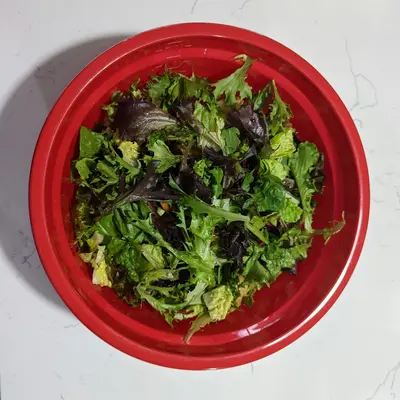
An amazing palette of greens and reds in an array of leaf shapes and textures. The flavors are equally diverse - spicy to mild to slightly sweet. Includes red mustard, red mizuna, green mustard, Chinese cabbage, and tatsoi. Varieties are subject to change depending upon availability.
Harvest
21d
Days to harvest
Sun
Full sun to part shade
Zones
6–9
USDA hardiness
Height
0 ft. 10 in. - 2 ft. 0 in.
Planting Timeline
Showing dates for Premium Greens Mix in USDA Zone 7
All Zone 7 lettuce →Zone Map
Click a state to update dates
Premium Greens Mix · Zones 6–9
Growing Details
Succession Planting
Direct sow every 14–21 days starting March 1 in zone 7, and plan your last spring sowing around mid-May — once daytime highs are consistently above 80°F, most brassica greens in this type of mix will bolt or turn bitter fast. That gives you roughly 4–5 successions before summer shuts things down. Pick back up with a late-summer sowing around August 15, once the worst heat has broken, and you can pull harvests through October or into early November depending on your first frost date.
At 21 days to first cut, the turnaround is quick enough that a two-week stagger keeps the harvest continuous. Sow a short row — 3–4 feet — rather than a long one each time, and cut at about 3 inches above the soil line to get a second or third flush before the planting runs out of energy.
Complete Growing Guide
An amazing palette of greens and reds in an array of leaf shapes and textures. The flavors are equally diverse - spicy to mild to slightly sweet. Includes red mustard, red mizuna, green mustard, Chinese cabbage, and tatsoi. Varieties are subject to change depending upon availability. According to Johnny's Selected Seeds, Premium Greens Mix is 21 days to maturity, annual, open pollinated. Notable features: Easy Choice.
Light: Full sun (6 or more hours of direct sunlight a day), Partial Shade (Direct sunlight only part of the day, 2-6 hours). Soil: Clay, Loam (Silt), Sand. Soil pH: Acid (<6.0), Neutral (6.0-8.0). Drainage: Good Drainage, Moist. Height: 0 ft. 10 in. - 2 ft. 0 in.. Spread: 1 ft. 0 in. - 2 ft. 0 in.. Spacing: 12 inches-3 feet. Growth rate: Medium. Maintenance: Medium. Propagation: Seed, Stem Cutting. Regions: Coastal, Mountains, Piedmont.
Harvesting
Premium Greens Mix reaches harvest at 21 days from sowing per Johnny's Selected Seeds. As an annual, harvest continues until frost ends the season.
The fruits dry and split when ripe.
Color: Brown/Copper, Green. Type: Siliqua. Length: > 3 inches.
Garden value: Edible
Harvest time: Fall, Summer
Bloom time: Spring, Summer
Edibility: The foliage is edible raw or cooked but when cooked can emit an unpleasant odor.
Storage & Preservation
Premium Greens Mix reaches peak quality when harvested in early morning after dew has dried. Store immediately at 32–35°F in a perforated plastic bag or breathable container, maintaining 95% relative humidity. A vegetable crisper drawer works well for home gardeners. Expect 7–10 days of acceptable freshness; use within a week for optimal crispness. The tender lettuce leaves don't freeze well whole, but you can blanch and freeze for cooked applications, though texture suffers considerably. Fermenting the Brassica components separately yields better results than fermenting the mix intact—the faster-wilting lettuce will break down unevenly. For longer preservation, dry the heartier Brassica leaves at 95–105°F until brittle, then store in airtight containers. A practical tip: harvest individual outer leaves rather than cutting the whole head, extending your harvest window by several days while keeping the plant productive.
History & Origin
Premium Greens Mix is open-pollinated, meaning seed saved from healthy plants will produce true-to-type offspring. Listed in the Johnny's Selected Seeds catalog.
Brassica is a genus of plants in the cabbage and mustard family (Brassicaceae). The members of the genus are informally known as cruciferous vegetables, cabbages, mustard plants, or simply brassicas. Crops from this genus are sometimes called cole crops—derived from the Latin caulis, denoting the stem or stalk of a plant.
Advantages
- +Diverse flavors from spicy mustard to sweet Chinese cabbage in one planting.
- +Ready to harvest in just 21 days for quick succession planting.
- +Beautiful mix of red and green leaves adds visual appeal to salads.
- +Easy difficulty level makes this ideal for beginner gardeners.
- +Multiple textures and leaf shapes provide interesting culinary variety.
Considerations
- -Varieties subject to change makes consistent flavor profiles unpredictable for customers.
- -Mustard greens in mix tend to bolt quickly in hot weather.
- -Requires consistent moisture; brassicas prone to splitting and cracking if inconsistent.
- -Multiple varieties means staggered maturity dates complicate single harvest timing.
Companion Plants
Radishes and chives are the most practical companions for a greens mix like this. Radishes germinate in 5–7 days and work as a quick living marker row; they also pull flea beetles away from your brassica greens before the greens are big enough to absorb that kind of shothole damage. Chives contribute sulfur compounds through their roots and foliage that genuinely deter aphids — a real problem on tender greens — and a perennial allium border stays put while everything else gets rotated around it. French marigolds (Tagetes patula specifically, not the big African types) add some root-zone nematode suppression over a full growing season.
Fennel produces anethole, a root exudate that stunts brassica and lettuce growth — keep it at least 3 feet away or out of the kitchen garden entirely. Broccoli looks like a natural neighbor but it competes directly for calcium and nitrogen at the same root depth, and crowding the two together tends to produce mediocre harvests of both rather than one strong crop.
Plant Together
Chives
Repels aphids and other soft-bodied insects that commonly attack lettuce
Marigolds
Deters nematodes and aphids while attracting beneficial insects
Carrots
Different root depths minimize competition and carrots help break up soil
Radishes
Quick-growing companions that help break up soil and deter flea beetles
Nasturtiums
Acts as trap crop for aphids and cucumber beetles, drawing pests away from lettuce
Spinach
Similar growing requirements and helps maximize space in cool-season gardens
Garlic
Natural pest deterrent against aphids, slugs, and rabbits
Dill
Attracts beneficial insects like ladybugs and lacewings that control lettuce pests
Keep Apart
Broccoli
Heavy feeder that competes for nutrients and can shade out lettuce plants
Sunflowers
Allelopathic compounds inhibit lettuce germination and growth
Fennel
Strong allelopathic effects that stunt growth of lettuce and most other vegetables
Nutrition Facts
Per 100g serving. % Daily Value based on 2,000 calorie diet. Source: USDA FoodData Central (FDC #2346388)
Pests & Disease Resistance
Common Pests
Aphids, flea beetles, slugs, snails
Diseases
Downy mildew, lettuce mosaic virus, root rot
Troubleshooting Premium Greens Mix
What you'll see, why it happens, and what to do about it.
Seedlings collapsing at the soil line within the first 7–10 days after direct sowing — stem looks pinched or water-soaked at the base
Likely Causes
- Damping off — a complex of soil-borne fungi including Pythium spp. and Rhizoctonia solani — common in cool, wet, poorly drained soil
- Overwatering or compacted soil that stays saturated after germination
What to Do
- 1.Pull and discard affected seedlings; don't compost them
- 2.Let the soil surface dry slightly between waterings — consistent moisture doesn't mean constantly wet
- 3.If this keeps happening in the same raised bed across multiple seasons, as NC State's IPM case study documents, rotate out of that bed and top-dress with fresh compost to interrupt the pathogen cycle
Pale yellow patches on upper leaf surfaces with a grayish-purple fuzzy coating on the underside, showing up in cool, humid weather
Likely Causes
- Downy mildew (Peronospora farinosa f. sp. lactucae) — thrives when nights are cool (50–60°F) and foliage stays wet for extended periods
- Overhead irrigation or dense planting that traps humidity between plants
What to Do
- 1.Remove and trash affected leaves immediately — don't leave them on the soil surface
- 2.Switch to drip or base irrigation to keep foliage dry
- 3.Thin to 12–18 inches between plants to open up airflow; this mix gets dense fast and downy mildew moves quickly through crowded stands
Ragged holes in leaves overnight, with a silvery slime trail visible in the morning — worst on seedlings and young growth
Likely Causes
- Slugs and snails — most active after rain or irrigation, especially where mulch or debris sits close to the bed
- Flea beetles (Phyllotreta spp.) — leave smaller, round shothole damage with no slime trail
What to Do
- 1.For slugs: scatter iron phosphate bait (e.g., Sluggo) around the bed at dusk; reapply after heavy rain
- 2.For flea beetles: cover newly seeded rows with floating row cover until plants are 4–5 inches tall
- 3.Clear boards, leaf piles, or dense mulch from directly against the bed edge — that's prime daytime shelter for slugs
Frequently Asked Questions
How long does Premium Greens Mix take to harvest?▼
Can you grow Premium Greens Mix in containers?▼
Is Premium Greens Mix good for beginners?▼
What does Premium Greens Mix taste like?▼
When should I plant Premium Greens Mix?▼
What leaf shapes are included in Premium Greens Mix?▼
Zone-by-Zone Planting Calendar
| Zone | Indoor Start | Transplant | Direct Sow | Harvest |
|---|---|---|---|---|
| Zone 3 | — | — | May – June | May – October |
| Zone 4 | — | — | April – June | May – October |
| Zone 5 | — | — | April – May | May – November |
| Zone 6 | — | — | April – May | April – November |
| Zone 7 | — | — | March – May | April – November |
| Zone 8 | — | — | March – April | March – December |
| Zone 9 | — | — | February – March | February – December |
| Zone 10 | — | — | January – March | February – December |
| Zone 1 | — | — | June – July | June – September |
| Zone 2 | — | — | May – July | June – September |
| Zone 11 | — | — | January – February | January – December |
| Zone 12 | — | — | January – February | January – December |
| Zone 13 | — | — | January – February | January – December |
Growing Guides from Wind River Greens
Sources & References
External authority sources used in compiling this guide.
- BreederJohnny's Selected Seeds
- USDAUSDA FoodData Central
See the Methodology page for how this data is sourced, what's AI-assisted, and known limitations.