Evergreen White Bunching Onion
Allium fistulosum 'Evergreen White'
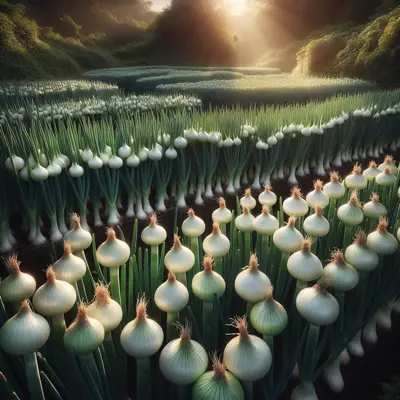
A hardy perennial scallion variety that lives up to its name by providing fresh green onions year-round in most climates. This vigorous variety forms thick white bases and dark green tops that can be harvested continuously by cutting and allowing to regrow. Perfect for gardeners who want a permanent source of fresh scallions without replanting.
Harvest
60-70d
Days to harvest
Sun
Full sun to partial shade
Zones
4–9
USDA hardiness
Height
1-3 feet
Planting Timeline
Showing dates for Evergreen White Bunching Onion in USDA Zone 7
All Zone 7 allium →Zone Map
Click a state to update dates
Evergreen White Bunching Onion · Zones 4–9
Growing Details
Succession Planting
In zone 7, direct sow Evergreen White every 14-21 days starting around March 1, and keep going through early May. Pick back up in late August — aim for September 1 through early October — for a fall harvest that runs well into November. Because bunching onions never form a storage bulb, you're pulling whole plants or snipping leaves continuously, and a single sowing goes fast if you're cooking with them more than once a week.
Stop spring sowings once daytime highs hold consistently above 85°F. New seed won't germinate reliably in that heat, and existing plants start looking ragged fast. The fall succession tends to outperform spring in the Southeast anyway — plants put on good size in cooling temperatures and hold in the ground for several weeks before you need to pull them ahead of a hard freeze.
Complete Growing Guide
This perennial cultivar thrives best when established in fall or early spring, allowing it to develop a robust root system before summer heat arrives, and unlike annual bunching onions, it returns reliably year after year without replanting. Evergreen White prefers full sun and well-draining soil rich in organic matter, performing best in USDA zones 3-9 where winter dormancy actually strengthens the plant for continuous spring-through-fall harvesting. While generally pest-resistant, watch for onion fly larvae in warm, humid climates and thin plantings to improve air circulation and prevent fungal issues. This variety has a slight tendency to bolt during particularly long day lengths or temperature stress, so consistent moisture and afternoon shade in hot regions helps minimize premature flowering. The key to maximizing productivity is harvesting outer leaves regularly while leaving the inner growth point intact, which encourages fuller regrowth compared to cutting entire plants at the base.
Light: Full sun (6 or more hours of direct sunlight a day), Partial Shade (Direct sunlight only part of the day, 2-6 hours). Soil: High Organic Matter, Loam (Silt), Sand. Drainage: Good Drainage. Height: 1 ft. 0 in. - 3 ft. 0 in.. Spread: 0 ft. 6 in. - 2 ft. 0 in.. Spacing: Less than 12 inches. Growth rate: Medium. Maintenance: Low. Propagation: Division. Regions: Coastal, Mountains, Piedmont.
Harvesting
Evergreen White Bunching Onions reach peak harvest readiness when the white bases measure approximately one-half to three-quarters inch in diameter and the dark green tops stand 6-8 inches tall with a firm, crisp texture. Rather than waiting for full maturity, embrace the continuous-harvest method by cutting the outer leaves and stems 1-2 inches above soil level, which stimulates vigorous regrowth from the center. For optimal flavor and longevity, harvest in the morning after dew dries but before intense midday heat, as this timing preserves the plant's sweet qualities and minimizes stress. The perennial nature of this cultivar means you can take multiple harvests throughout the growing season—simply allow 2-3 weeks between cuttings for adequate regeneration.
The capsule splits longitudinally and contains small round black seeds.
Type: Capsule.
Storage & Preservation
Fresh Evergreen White Bunching Onions store best in the refrigerator wrapped in damp paper towels inside a plastic bag, maintaining quality for 1-2 weeks. Keep the white and green portions intact until use to maximize freshness. Avoid washing until ready to use.
For longer preservation, slice both white and green portions and freeze in ice cube trays with water or oil – perfect for dropping into soups and stir-fries. The texture changes but flavor remains excellent for cooking applications.
Dehydrate cleaned, sliced green tops in a food dehydrator or low oven (140°F) until crisp, then store in airtight containers for up to one year. These dried scallion greens make excellent seasoning for soups, dips, and spice blends.
Ferment whole small scallions in a 3% salt brine for 3-5 days at room temperature, then refrigerate. This creates a tangy, probiotic-rich garnish that pairs beautifully with Asian dishes.
History & Origin
The Evergreen White Bunching Onion belongs to the Japanese bunching onion (negi) tradition, where perennial scallion varieties have been cultivated for centuries. While specific breeder names and introduction dates for this particular cultivar are not well documented in widely available sources, it represents a refined selection within the A. fistulosum breeding line that emphasizes cold hardiness and continuous harvesting capability. The variety likely emerged through conventional selection from Japanese or Asian seed-breeding programs, capitalizing on traits already present in bunching onion germplasm. The "Evergreen" designation reflects its perpetual productivity across seasons, a characteristic highly valued in Asian vegetable cultivation practices that have influenced modern seed companies' offerings.
Origin: Northern Hemisphere, North America and Eurasia
Advantages
- +Perennial variety eliminates need for replanting every season
- +Continuous harvest possible with cut-and-regrow method year-round
- +Mild, sweet flavor perfect for fresh eating and cooking
- +Hardy in most climates with excellent winter survival rates
- +Vigorous growth and thick white bases provide substantial yields
Considerations
- -Susceptible to thrips and aphids requiring regular pest monitoring
- -Can develop downy mildew in wet, humid growing conditions
- -Requires consistent moisture and well-draining soil for best performance
- -May eventually decline after several years of heavy harvesting
Companion Plants
Carrots and bunching onions earn each other's company for a practical reason: the onion's sharp volatile compounds confuse carrot fly (Psila rosae), and carrots' fine, deep root structure doesn't compete with the onion's shallow fibrous mat. Brassicas — cabbage, broccoli — get a similar benefit, since the sulfur-containing thiosulfinates alliums release deter aphids that would otherwise pile onto brassica leaves. Lettuce and spinach slot in easily as row companions because all three crops share the same cool-season window and none of them will shade the others out at mature height. In our zone 7 Georgia garden, tucking bunching onions into a fall brassica bed is one of the lower-effort ways to cut down on cabbage aphid (Brevicoryne brassicae) pressure without doing anything extra.
Beans and peas need their own space, well away from alliums. The compounds that make bunching onions useful against pests also suppress the Rhizobium bacteria that legumes rely on to fix nitrogen — crowd them together and your bean yield takes a measurable hit. Asparagus is a longer-term conflict: both crops want to occupy the same ground for years, and the root competition degrades both over time.
Plant Together
Carrots
Onions repel carrot flies while carrots help break up soil for onion root development
Tomatoes
Onions deter aphids, whiteflies, and hornworms that commonly attack tomatoes
Brassicas (Cabbage, Broccoli)
Onions repel cabbage worms, flea beetles, and other brassica pests
Lettuce
Onions provide pest protection without competing for space due to different growth habits
Strawberries
Onions deter slugs, aphids, and other soft-bodied pests that damage strawberry plants
Peppers
Onions repel aphids and spider mites while not competing for root space
Parsley
Both plants benefit from similar growing conditions and parsley attracts beneficial insects
Spinach
Onions provide pest protection and their vertical growth doesn't shade low-growing spinach
Keep Apart
Beans
Onions can inhibit bean growth and nitrogen fixation by interfering with beneficial root bacteria
Peas
Onions stunt pea growth and can reduce their ability to fix nitrogen effectively
Asparagus
Onions can inhibit asparagus spear development and overall plant vigor
Nutrition Facts
Per 100g serving. % Daily Value based on 2,000 calorie diet. Source: USDA FoodData Central (FDC #170000)
Pests & Disease Resistance
Resistance
Good resistance to most onion diseases, very hardy
Common Pests
Thrips, aphids, onion maggot
Diseases
Downy mildew, purple blotch (rarely serious)
Troubleshooting Evergreen White Bunching Onion
What you'll see, why it happens, and what to do about it.
Silvery streaking or stippling on leaves, tips browning and curling, plants look bleached in patches
Likely Causes
- Thrips (Thrips tabaci) — tiny insects that rasp the leaf surface and suck out cell contents
- Hot, dry conditions that favor thrips population explosions
What to Do
- 1.Spray foliage with insecticidal soap, hitting the base of leaves where thrips shelter — repeat every 5-7 days for 3 weeks
- 2.Keep beds consistently moist; drought-stressed bunching onions are more vulnerable
- 3.Lay reflective silver mulch between rows to disorient incoming thrips
Seedlings or young transplants collapsing at the soil line, with soft, rotted stems just below ground
Likely Causes
- Onion maggot (Delia antiqua) — larvae tunnel into the base of young plants in spring
- Planting in soil that hosted onions or leeks the previous season
What to Do
- 1.Cover newly sown rows with floating row cover (Agribon AG-19 or similar) immediately after seeding — don't wait for damage to appear
- 2.Rotate alliums to a bed that hasn't grown them in at least 2 seasons
- 3.Pull and bag any collapsed plants; don't compost them — larvae will overwinter in the debris
Grayish-purple fuzzy growth on leaf surfaces, leaves yellowing from the tips down, plants declining after a stretch of cool wet weather
Likely Causes
- Downy mildew (Peronospora destructor) — thrives in temperatures between 40-60°F with prolonged leaf wetness
- Overcrowded spacing that traps humidity around the foliage
What to Do
- 1.Thin plants to the full 4-6 inch spacing if you've been putting it off — airflow does more work than most people expect
- 2.Water at the base, not overhead, and water in the morning so foliage dries before nightfall
- 3.Remove heavily infected leaves and trash them; a copper-based fungicide (copper hydroxide or copper octanoate) can slow spread on the plants still standing
Frequently Asked Questions
How long does it take for Evergreen White bunching onions to grow?▼
Can you grow Evergreen White bunching onions in containers?▼
What do Evergreen White bunching onions taste like?▼
When should I plant Evergreen White bunching onions?▼
Do Evergreen White bunching onions come back every year?▼
How do you divide Evergreen White bunching onion clumps?▼
Zone-by-Zone Planting Calendar
| Zone | Indoor Start | Transplant | Direct Sow | Harvest |
|---|---|---|---|---|
| Zone 3 | — | — | May – June | July – October |
| Zone 4 | — | — | April – June | June – October |
| Zone 5 | — | — | April – May | June – November |
| Zone 6 | — | — | April – May | June – November |
| Zone 7 | — | — | March – May | May – November |
| Zone 8 | — | — | March – April | May – December |
| Zone 9 | — | — | February – March | April – December |
| Zone 10 | — | — | January – March | March – December |
| Zone 1 | — | — | June – July | August – September |
| Zone 2 | — | — | May – July | July – September |
| Zone 11 | — | — | January – February | February – December |
| Zone 12 | — | — | January – February | February – December |
| Zone 13 | — | — | January – February | February – December |
Growing Guides from Wind River Greens
Sources & References
External authority sources used in compiling this guide.
See the Methodology page for how this data is sourced, what's AI-assisted, and known limitations.