Kale Microgreens
Brassica napus
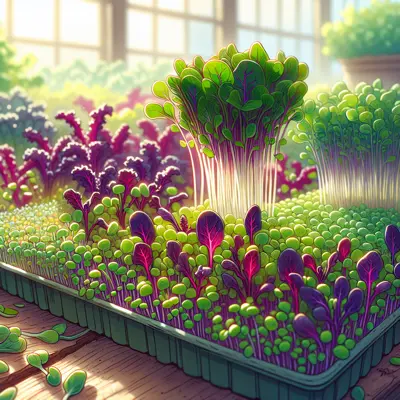
Kale microgreens are delicate, tender seedlings harvested at 10-14 days, featuring small green leaves with a mild, fresh flavor distinctly softer than mature kale. These nutrient-dense microgreens offer a subtle cabbage note with natural sweetness, making them ideal for salads, sandwiches, and smoothie bowls. Easy to grow indoors under lights or in bright windowsills, they mature quickly compared to their full-size counterparts while maintaining the nutritional benefits kale is known for. Perfect for beginners seeking a simple, rewarding crop.
Harvest
90d
Days to harvest
Sun
Full sun to partial shade
Zones
8–9
USDA hardiness
Height
4 feet
Planting Timeline
Showing dates for Kale Microgreens in USDA Zone 7
All Zone 7 microgreen →Zone Map
Click a state to update dates
Kale Microgreens · Zones 8–9
Growing Details
Succession Planting
Kale microgreens are one of the few crops you can sow on a rolling weekly basis year-round indoors. A standard 10×20 tray takes about 1–1.5 tablespoons of seed broadcast densely, and you'll be cutting at day 8–12, so stagger a new tray every 7 days to keep a continuous supply. If you want a heavier harvest less often, sow every 14 days and run two trays at a time.
The main limiting factor is space under your grow lights — aim for 16 hours of light per day if natural light is low — and how fast your household actually eats them. There's no heat-bolting threshold to manage here the way there is with full-size kale, since you're cutting long before the plant develops any opinion about the weather.
Complete Growing Guide
Growing kale microgreens is one of the most rewarding ways to produce nutrient-dense greens year-round, requiring minimal space and equipment. You'll need shallow growing trays (1-2 inches deep), a quality microgreen growing medium like coconut coir or a peat-based microgreen mix, and access to indirect bright light or LED grow lights.
Start by soaking your kale seeds for 6-8 hours in room temperature water - this crucial step significantly improves germination rates from around 70% to 90%. While seeds soak, prepare your growing medium by moistening it until it holds together when squeezed but doesn't drip water. Fill your trays with about 1 inch of medium, creating a level surface.
After soaking, drain the seeds and broadcast sow them evenly across your prepared medium at a density of about 1 ounce of seeds per 10x20 inch tray. You want good coverage without seeds piling on top of each other. Gently press seeds into the medium - don't bury them completely, just ensure good soil contact. Mist lightly with a spray bottle using clean water.
Cover immediately with a blackout dome or second tray weighted down with about 5 pounds. This blackout period is critical for proper germination and stem elongation. Keep in darkness for 3-4 days at 65-75°F, checking daily and misting if the surface appears dry. You'll see seeds germinating by day 2-3.
Once shoots reach about 1 inch tall and begin pushing against your cover, remove the blackout dome and place under grow lights 12-14 hours daily, positioned 6-12 inches above the microgreens. Avoid direct sunlight which can scorch tender shoots. Water from the bottom by placing trays in larger trays filled with 1/4 inch of water, allowing capillary action to hydrate the medium without disturbing delicate roots.
Maintain good air circulation with a small fan to prevent damping off - the most common failure with microgreens. Water every 2-3 days or when the medium surface begins to dry. Never let trays sit in standing water for more than 30 minutes. No fertilizer is needed as the seed provides all necessary nutrients for microgreen production.
Avoid these common mistakes: overwatering (leads to mold and damping off), insufficient air circulation, removing blackout dome too early, and harvesting too late when leaves become tough and bitter.
Harvesting
Harvest kale microgreens when the first true leaves are just beginning to form, typically 8-12 days after sowing. Look for shoots that are 1.5-2 inches tall with well-developed cotyledons (seed leaves) that show the characteristic purple and green coloration. The stems should be crisp and succulent, not woody or tough.
Test readiness by gently pinching a stem - it should snap cleanly rather than bend or tear. The cotyledons should be fully opened and vibrant in color. Harvest in the morning when plants are most hydrated and crisp.
Use clean, sharp scissors to cut just above the soil line, gathering small handfuls and cutting in one smooth motion. Don't pull or tug, which can disturb roots and contaminate your harvest with growing medium. Work systematically across the tray, cutting all microgreens at once since they won't regrow after harvesting. Immediately place cut microgreens in a clean container and rinse gently in cool water, then spin dry in a salad spinner or pat dry with paper towels.
Storage & Preservation
Fresh kale microgreens store best when completely dry and refrigerated at 35-40°F in breathable containers like perforated plastic bags or containers with loose-fitting lids. Properly stored, they'll maintain peak quality for 7-10 days, gradually losing crispness but remaining edible for up to 14 days.
For best results, line storage containers with paper towels to absorb excess moisture, and avoid washing until ready to use. Store away from ethylene-producing fruits like apples and bananas.
Kale microgreens freeze well for smoothies - spread clean, dry microgreens on baking sheets, freeze until solid, then transfer to freezer bags. They'll keep frozen for 6 months but lose their crisp texture. Dehydrating at 95°F for 8-12 hours creates nutrient-dense green powder perfect for smoothies or seasoning blends. Fresh microgreens also work beautifully in green ice cubes - blend with water and freeze in ice cube trays for convenient smoothie additions.
History & Origin
Kale microgreens represent a modern innovation in the ancient practice of sprouting seeds for food. While kale itself (Brassica oleracea var. acephala) has been cultivated for over 2,000 years, originating in the Mediterranean region and spreading throughout Europe, the concept of harvesting it as microgreens is relatively new.
The microgreens movement began in the 1980s in California restaurants, where chefs sought intensely flavored, visually striking garnishes. Initially expensive and restaurant-exclusive, microgreens gained popularity among home growers in the 2000s as growing equipment became more accessible and research revealed their exceptional nutritional density.
Kale microgreens specifically gained attention around 2010 during the "kale craze" when the mature vegetable became synonymous with superfood nutrition. Researchers discovered that kale microgreens contain up to 40 times more nutrients than mature kale leaves while offering a much milder flavor profile. This combination of intense nutrition without the bitter taste made them particularly appealing to health-conscious consumers who found mature kale unpalatable. Today, kale microgreens are among the most popular varieties for home growing due to their reliability, fast growth, and broad culinary applications.
Advantages
- +Exceptionally fast harvest cycle of just 8-12 days from seed to plate
- +Much milder flavor than mature kale while retaining up to 40x the nutritional density
- +Beautiful purple and green coloration adds visual appeal to any dish
- +Thrives in cool temperatures (60-70°F) making it perfect for year-round indoor growing
- +Naturally resistant to most pests and diseases when grown with proper air circulation
- +No fertilizer needed - seeds provide all nutrients for complete microgreen cycle
- +High germination rates (90%+) when seeds are properly pre-soaked
Considerations
- -Cannot be regrown after harvesting unlike cut-and-come-again greens
- -Prone to damping off if overwatered or air circulation is inadequate
- -Seeds require 6-8 hour soaking period, adding time to the growing process
- -More expensive per pound than mature kale due to seed costs and labor intensity
- -Short shelf life of 7-10 days compared to mature kale's 2-3 weeks
Companion Plants
For microgreens grown in trays, traditional field companions don't apply the way they do in an outdoor bed — you're not tucking garlic into a 10×20 flat. If you're growing kale micros alongside other tray crops, pairing them with basil or cilantro makes practical sense: those crops prefer similar moisture levels and germination temperatures around 65–70°F, so they can share a humidity dome and a watering schedule without one suffering for the other.
The "harmful" companions — tomatoes, strawberries, pole beans — are flagged for allelopathic and root-competition reasons that only matter in soil. In a tray with no shared root zone, that concern disappears entirely. If you're hardening off kale seedlings before a full-size transplant, keep them physically separated from tomato starts: nightshades can carry early blight (Alternaria solani) and other fungal spores that splash onto young brassica leaves during watering.
Plant Together
Basil
Repels aphids and flea beetles that commonly attack brassicas
Dill
Attracts beneficial insects like parasitic wasps that control cabbage worms
Onions
Repel cabbage moths and aphids with their strong sulfur compounds
Garlic
Natural fungicide properties help prevent damping-off disease in microgreens
Marigolds
Repel aphids, whiteflies, and nematodes while attracting beneficial predators
Nasturtiums
Act as trap crops for aphids and flea beetles, drawing pests away from kale
Lettuce
Compatible growing conditions and doesn't compete for nutrients
Cilantro
Attracts beneficial insects and has similar water and light requirements
Keep Apart
Tomatoes
Release solanine which can inhibit brassica germination and growth
Strawberries
Compete for similar nutrients and may stunt brassica growth
Pole Beans
Can shade microgreens and create excess humidity leading to fungal issues
Nutrition Facts
Per 100g serving. % Daily Value based on 2,000 calorie diet. Source: USDA FoodData Central (FDC #168421)
Pests & Disease Resistance
Resistance
Resistant to most diseases when grown with proper air circulation
Common Pests
Aphids, spider mites (rare indoors)
Diseases
Damping off from overwatering, powdery mildew in humid conditions
Troubleshooting Kale Microgreens
What you'll see, why it happens, and what to do about it.
Seedlings collapsing at the soil line within the first 5 days of germination, stems look pinched or water-soaked at the base
Likely Causes
- Damping off — typically Pythium or Rhizoctonia fungi thriving in waterlogged growing medium
- Overwatering combined with poor drainage in the tray
What to Do
- 1.Bottom-water only: set the tray in a shallow dish for 10–15 minutes rather than pouring water on top of the seeds
- 2.If you're using a humidity dome, pull it off by day 3 or as soon as you see the first sprouts
- 3.Toss the affected tray — damping off spreads fast and there's no saving it; start fresh with dry medium and a clean tray
Tiny soft-bodied insects clustered on stems or the underside of cotyledons, usually spotted around day 7–10
Likely Causes
- Aphids — more common if trays are near open windows or other infested houseplants
- Warm, still air indoors that lets colonies establish quickly
What to Do
- 1.At microgreen scale, just cut and eat — kale micros are ready by day 8–12 anyway, so harvest immediately rather than fight the infestation
- 2.If you want to keep the tray going, dislodge aphids with a gentle water spray, then set a small fan nearby to keep air moving
- 3.Isolate any infested trays from other plants right away
Frequently Asked Questions
How long do kale microgreens take to grow?▼
Are kale microgreens good for beginners?▼
Can you grow kale microgreens without soil?▼
What do kale microgreens taste like compared to mature kale?▼
Do kale microgreens need special lighting?▼
Can you eat kale microgreens raw?▼
Zone-by-Zone Planting Calendar
| Zone | Indoor Start | Transplant | Direct Sow | Harvest |
|---|---|---|---|---|
| Zone 1 | January – December | — | — | January – December |
| Zone 2 | January – December | — | — | January – December |
| Zone 11 | January – December | — | — | January – December |
| Zone 12 | January – December | — | — | January – December |
| Zone 13 | January – December | — | — | January – December |
| Zone 3 | January – December | — | — | January – December |
| Zone 4 | January – December | — | — | January – December |
| Zone 5 | January – December | — | — | January – December |
| Zone 6 | January – December | — | — | January – December |
| Zone 7 | January – December | — | — | January – December |
| Zone 8 | January – December | — | — | January – December |
| Zone 9 | January – December | — | — | January – December |
| Zone 10 | January – December | — | — | January – December |
Growing Guides from Wind River Greens
Sources & References
External authority sources used in compiling this guide.
See the Methodology page for how this data is sourced, what's AI-assisted, and known limitations.