Batavia
Lactuca sativa
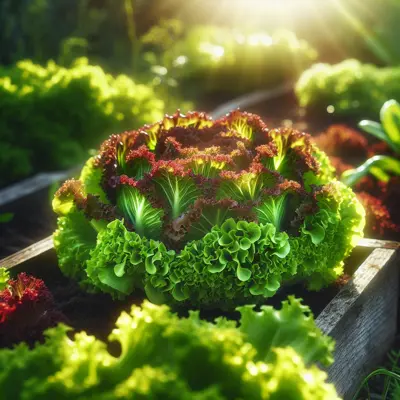
Batavia is a crinkled-leaf heirloom lettuce with a distinctive ruffled appearance and tender, frilly foliage that ranges from light to medium green. Maturing in approximately 47 days, this variety bridges butterhead and leaf lettuce characteristics, forming a loose head while maintaining the delicate texture of loose-leaf types. Its crisp, sweet flavor with nutty undertones and subtle mineral complexity makes it ideal for fresh salads and gourmet presentations. The crinkled leaves add visual appeal and pleasant texture contrast. Batavia thrives in cool-season gardens with full sun to partial shade and prefers rich, well-drained loam, making it accessible for both novice and experienced growers.
Harvest
47d
Days to harvest
Sun
Full sun to partial shade
Zones
2–11
USDA hardiness
Height
6-12 inches
Planting Timeline
Showing dates for Batavia in USDA Zone 7
All Zone 7 lettuce →Zone Map
Click a state to update dates
Batavia · Zones 2–11
Growing Details
Succession Planting
Direct sow every 14 days starting March 1 in zone 7, and keep going through early May. Batavia handles heat better than butterhead types, but daytime highs consistently above 80°F will still push it toward bolting — don't count on it lasting into July. Pick back up with sowings in late August and run through mid-October; that fall window can stretch harvest into November. Two or three successions per season is usually enough for a home garden before you're giving lettuce to people who didn't ask for it.
Complete Growing Guide
Batavia lettuce thrives when sown directly into the garden about two weeks before your last spring frost, or indoors four to six weeks earlier if you prefer transplanting seedlings. This French heirloom is remarkably forgiving with timing, but its real superpower emerges in summer—direct sow again in mid-summer for fall harvest, when heat-sensitive varieties have already bolted. Space plants eight to ten inches apart in rows, allowing room for the substantial heads to develop their characteristic size. Sow seeds one-quarter inch deep in loose, well-draining soil enriched with compost; Batavia appreciates consistent organic matter but doesn't demand heavy feeding like some varieties.
Water deeply and consistently, aiming for one to one-and-a-half inches per week through even moisture rather than sporadic soaking. During hot spells, check soil moisture daily since the large leaves evaporate water quickly, yet inconsistent watering—wet one day, dry the next—can trigger bolting even in this heat-tolerant variety. Apply a balanced fertilizer every three weeks or side-dress with compost halfway through the growing season; Batavia's vigor means it won't require excessive nitrogen that promotes weak outer leaves.
Aphids pose the most troublesome pest for Batavia, clustering on new growth and compromising the tender inner hearts you're growing this variety to enjoy. Scout regularly and spray with insecticidal soap at first signs of infestation. Leafminers tunnel through outer leaves but rarely damage the harvestable portions since Batavia's outer leaves are typically removed anyway. Slugs can devastate young transplants, so protect seedlings with copper tape or beer traps. Downy mildew occasionally appears in cool, wet springs—improve air circulation by spacing plants generously and remove any yellowing lower leaves promptly.
The critical technique gardeners overlook with Batavia is succession planting. Because these heads mature in fifty-five to sixty-five days and hold quality for weeks without bolting, plant new seeds every two to three weeks from spring through mid-summer for continuous harvest rather than one glorious crop followed by disappointment. This approach maximizes Batavia's heat tolerance advantage over other lettuces that decline as temperatures rise.
One mistake many gardeners make is harvesting Batavia too early or too aggressively. While you can cut outer leaves starting at fifty days, allow the full sixty-five days for complete head development and that signature combination of crispy exterior and butter-soft interior. The substantial size is part of the appeal—rushing the harvest wastes the variety's potential. Cut entire heads at soil level in cool morning hours for best crunch and storage.
Harvesting
Batavia heads reach peak harvest readiness when the dark red outer leaves feel firm and slightly springy to the finger pressure, while the contrasting green center remains tender and the entire head achieves its full 6-12 inch height. The deep burgundy coloring should be vibrant and uniform across the outer wrapper leaves. For continuous harvests, begin picking outer leaves when the head is still developing, or cut single mature heads at soil level for a one-time yield. Time your main harvest in early morning after dew has dried, as this cultivar's crisp texture and sweet, nutty flavor are most pronounced when fully hydrated, and the cooler temperatures help maintain optimal texture and prevent wilting during handling.
Tiny seeds with a dandelion-like tuft (pappus) to aid in wind dispersal.
Color: Brown/Copper. Type: Achene. Length: < 1 inch. Width: < 1 inch.
Harvest time: Summer
Edibility: Leaves can be used raw or cooked in salads, sandwiches, and other dishes. Head lettuce can be stored for 2-3 weeks while leaf and butterhead store for 1-2 weeks.
Storage & Preservation
Fresh Batavia lettuce keeps 7-10 days when stored properly in the refrigerator. Rinse heads gently in cool water, shake off excess moisture, and wrap loosely in damp paper towels before placing in perforated plastic bags in your crisper drawer.
For longer storage, separate leaves and store them between layers of paper towels in airtight containers. The sturdy outer leaves of Batavia hold up better than delicate varieties, making it excellent for meal prep.
While lettuce doesn't preserve well through traditional methods like canning or freezing for fresh eating, you can dehydrate Batavia leaves at 95°F for 8-12 hours to create lettuce powder for smoothies and soups. The substantial leaves also work well for quick pickling – blanch briefly and pickle in vinegar brine for a tangy side dish that keeps 2-3 weeks refrigerated.
History & Origin
The "Batavia" lettuce belongs to the butterhead type, a category that traces its origins to European heirloom lettuce traditions spanning centuries. While specific documentation of this particular cultivar's breeding lineage is limited, "Batavia" exemplifies the modern refinement of classic butterhead genetics, likely developed through selective breeding programs focused on combining the reliable heading characteristics of traditional varieties with improved disease resistance and consistent quality traits. The variety's designation as a Utility Patent holder suggests deliberate horticultural development, though the exact breeder and introduction year remain undocumented in widely available sources. Its nomenclature hints at possible European influence, consistent with the broader butterhead lettuce heritage centered in regions with strong vegetable breeding traditions.
Origin: Mediterranean to Siberia
Advantages
- +Beautiful dark red heads with striking green centers provide visual appeal
- +Reliable heading variety that consistently forms tight, compact heads
- +Crisp, sweet, and nutty flavor offers excellent taste complexity
- +Fast maturity at 47 days enables multiple succession plantings per season
- +Patented variety ensures quality genetics and consistent performance
Considerations
- -Vulnerable to downy mildew and bacterial leaf spot in wet conditions
- -Susceptible to lettuce mosaic virus which can devastate entire crops
- -Requires vigilant pest management against aphids, leafminers, slugs, and thrips
- -Moderate difficulty level demands attention to growing conditions for success
Companion Plants
Chives and garlic planted along the bed edges interfere with aphid host-finding through sulfur-based volatile compounds — worth doing since Batavia's semi-open head gives aphids easy access between the leaves. Marigolds (Tagetes patula) add above-ground deterrence against leafminers and suppress some soil nematode populations below. Radishes are probably the most practical pairing: they germinate in 5–7 days, mark the row while Batavia is still filling in at 47 days to harvest, and get pulled before they compete for the shallow moisture lettuce needs at 1–1.5 inches per week. Skip fennel entirely — its root exudates suppress germination and slow growth in most vegetables through allelopathy, and lettuce is no exception.
Plant Together
Chives
Repels aphids and improves lettuce flavor while providing natural pest deterrent
Marigolds
Deters nematodes, aphids, and other pests that commonly attack lettuce
Radishes
Breaks up soil for lettuce roots and repels flea beetles
Carrots
Loosens soil with deep roots and doesn't compete for space or nutrients
Nasturtiums
Acts as trap crop for aphids and cucumber beetles, protecting lettuce
Dill
Attracts beneficial insects like ladybugs that control aphids on lettuce
Garlic
Natural fungicide properties help prevent lettuce diseases and repel pests
Spinach
Similar growing requirements and can be interplanted for efficient space use
Keep Apart
Sunflowers
Allelopathic compounds inhibit lettuce germination and growth
Broccoli
Heavy feeder that competes for nutrients and can shade out lettuce
Fennel
Inhibits growth of most garden plants including lettuce through allelopathy
Nutrition Facts
Per 100g serving. % Daily Value based on 2,000 calorie diet. Source: USDA FoodData Central (FDC #2346388)
Pests & Disease Resistance
Resistance
Downy Mildew (EU) races 16-26, 32 (High); Downy Mildew (US) races 5-9 (High); Lettuce Leaf Aphid Nasonovia ribisnigri (High); Lettuce Mosaic Virus (Intermediate)
Common Pests
Aphids, leafminers, slugs, thrips
Diseases
Downy mildew, bacterial leaf spot, lettuce mosaic virus
Troubleshooting Batavia
What you'll see, why it happens, and what to do about it.
Seedlings collapse at the soil line within 7–10 days of transplanting or germination, sometimes with fuzzy white mold on the soil surface
Likely Causes
- Damping off — a fungal complex (commonly Pythium or Rhizoctonia solani) that thrives in cold, waterlogged soil
- Replanting lettuce in the same bed three or more years running without rotating, which lets fungal inoculum build up
What to Do
- 1.Hold off watering until the top inch of soil is dry — damping off almost always has wet soil underneath it
- 2.Next sowing, use a sterile seed-starting mix in clean trays; if you're direct sowing, dust the row with a copper-based fungicide before covering
- 3.Rotate lettuce out of that bed for at least one season; NC State's organic IPM guidance specifically flags soil history as a key diagnostic factor for this problem
Gray-white downy coating on the undersides of outer leaves, with pale yellow patches on the upper surface
Likely Causes
- Downy mildew (Bremia lactucae) — spreads fast in cool, humid conditions, especially when nights drop below 65°F and leaves stay wet
- Overhead irrigation or dense planting that keeps foliage damp for hours at a stretch
What to Do
- 1.Strip and trash affected outer leaves immediately — don't compost them
- 2.Switch to drip or furrow irrigation; Batavia's semi-crisp head structure traps moisture if water sits on the foliage
- 3.Thin to the full 10–12 inch spacing — crowded plants stay wet longer and Bremia lactucae will move through them fast
Pale winding trails or papery blotches on older outer leaves, sometimes alongside distorted new growth and sticky residue on leaf surfaces
Likely Causes
- Leafminers (Liriomyza spp.) — the adult fly lays eggs inside the leaf; larvae tunnel through tissue as they feed
- Aphid colonies on leaf undersides, which secrete honeydew and can vector lettuce mosaic virus into the planting
What to Do
- 1.For leafminers, crush visible trails between your fingers to kill larvae inside — no spray needed if you catch it at 1–2 leaves affected
- 2.For aphids, a hard spray of water from a hose dislodges most colonies; repeat every 3 days for two weeks
- 3.Cover transplants with row cover (Agribon AG-19 or similar) right after planting if either pest has shown up in that bed before
Frequently Asked Questions
How long does Batavia lettuce take to grow?▼
Can you grow Batavia lettuce in containers?▼
What does Batavia lettuce taste like?▼
When should I plant Batavia lettuce?▼
Is Batavia lettuce good for beginners?▼
Batavia vs romaine lettuce - what's the difference?▼
Zone-by-Zone Planting Calendar
| Zone | Indoor Start | Transplant | Direct Sow | Harvest |
|---|---|---|---|---|
| Zone 3 | — | — | May – June | July – October |
| Zone 4 | — | — | April – June | June – October |
| Zone 5 | — | — | April – May | June – November |
| Zone 6 | — | — | April – May | June – November |
| Zone 7 | — | — | March – May | May – November |
| Zone 8 | — | — | March – April | May – December |
| Zone 9 | — | — | February – March | April – December |
| Zone 10 | — | — | January – March | March – December |
| Zone 1 | — | — | June – July | July – September |
| Zone 2 | — | — | May – July | July – September |
| Zone 11 | — | — | January – February | February – December |
| Zone 12 | — | — | January – February | February – December |
| Zone 13 | — | — | January – February | February – December |
Growing Guides from Wind River Greens
Sources & References
External authority sources used in compiling this guide.
See the Methodology page for how this data is sourced, what's AI-assisted, and known limitations.