Jade Plant
Crassula ovata
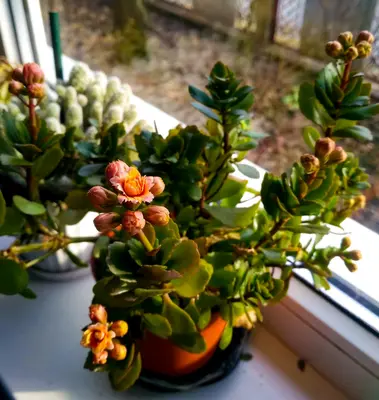
Often called the 'money tree' or 'friendship plant,' this classic succulent features thick, glossy oval leaves and a tree-like growth habit that makes it a perfect houseplant. Known for bringing good luck and fortune according to feng shui traditions, it's incredibly easy to grow and can live for decades with minimal care. Its small white or pink star-shaped flowers appear in winter, adding unexpected beauty to this already charming plant.
Sun
Full sun to partial shade
Zones
11–12
USDA hardiness
Height
3-6 feet
Complete Growing Guide
Light: Full sun (6 or more hours of direct sunlight a day), Partial Shade (Direct sunlight only part of the day, 2-6 hours). Soil: Loam (Silt). Drainage: Good Drainage, Occasionally Dry, Very Dry. Height: 3 ft. 0 in. - 6 ft. 0 in.. Spread: 2 ft. 0 in. - 3 ft. 0 in.. Spacing: 12 inches-3 feet, 3 feet-6 feet. Growth rate: Medium. Maintenance: Low. Propagation: Leaf Cutting, Stem Cutting.
Harvesting
Pollinated flowers produce a small capsule filled with seed.
Color: Insignificant. Type: Capsule.
Storage & Preservation
Jade plants are living houseplants, not harvested produce, so traditional storage doesn't apply. Keep the potted plant in a bright location at 65-75°F with 40-50% humidity. Indoors, jade plants last decades with proper care—some specimens exceed 100 years old. Preservation methods include: (1) Propagation via leaf or stem cuttings stored in dry conditions until roots develop, allowing you to preserve the plant indefinitely; (2) Winter dormancy by reducing watering and temperatures to 50-60°F, which extends longevity; (3) Repotting every 2-3 years with fresh succulent mix to prevent root rot and maintain vigor.
History & Origin
Origin: South Africa
Advantages
- +Requires minimal watering and care, making it perfect for busy plant parents
- +Can live for decades, becoming a cherished long-term houseplant investment
- +Produces delicate white or pink flowers during winter months for visual interest
- +Tree-like growth habit creates an attractive focal point in any room
- +Believed to bring good luck and fortune according to feng shui traditions
Considerations
- -Highly susceptible to root rot if soil doesn't drain properly or overwatered
- -Vulnerable to mealybugs, scale insects, and spider mites requiring frequent monitoring
- -Prone to powdery mildew in overly humid environments limiting placement options
Companion Plants
Jade does best alongside succulents that share its same stingy watering schedule — Aloe vera, Echeveria, Haworthia, and Sedum all want well-draining gritty soil and a dry-down period of 10-14 days between waterings. Grouping them together makes it harder to accidentally overwater one while tending another. Rosemary is the one non-succulent worth mentioning; it tolerates drought almost as well as jade does and won't compete for moisture or crowd the root zone at 12-18 inch spacing.
Ferns, Impatiens, and Begonias are the wrong neighbors. All three want consistently moist soil — ferns especially may need water every 1-2 days — and if you're calibrating your schedule to keep them alive, you'll drown jade's roots within a few weeks. There's no pest or disease interaction here, just a flat incompatibility in basic water needs.
Plant Together
Aloe Vera
Similar water and light requirements, creates harmonious succulent grouping
Echeveria
Identical drought tolerance and drainage needs, complementary rosette forms
Sedum
Shares low water requirements and helps prevent soil moisture retention
Haworthia
Compatible light needs and creates attractive textural contrast
String of Pearls
Similar care requirements with cascading growth that complements upright jade
Hens and Chicks
Drought tolerant ground cover that doesn't compete for resources
Zebra Plant
Matching light and water needs with striking architectural contrast
Rosemary
Tolerates similar dry conditions and may help repel common succulent pests
Keep Apart
Ferns
Requires high humidity and frequent watering that can cause jade plant root rot
Impatiens
High water and shade requirements conflict with jade plant's drought tolerance
Begonias
Needs consistent moisture and humidity that promotes fungal issues in succulents
Pests & Disease Resistance
Resistance
Excellent when not overwatered. Very tolerant of neglect.
Common Pests
Mealybugs, scale insects, spider mites
Diseases
Root rot from overwatering, powdery mildew in humid conditions
Troubleshooting Jade Plant
What you'll see, why it happens, and what to do about it.
Soft, mushy stem at the base, leaves dropping with the slightest touch
Likely Causes
- Root rot (Pythium or Phytophthora spp.) from soil staying wet too long
- Pot without drainage holes trapping excess water
What to Do
- 1.Unpot the plant immediately and cut away any black or brown mushy roots with clean scissors
- 2.Let the root ball air-dry on a paper towel for 24-48 hours before repotting into dry, gritty cactus mix
- 3.Switch to a terra cotta pot with at least one drainage hole — terra cotta pulls moisture out of the soil faster than glazed ceramic or plastic
White cottony clumps tucked into leaf axils or along stems
Likely Causes
- Mealybugs (Pseudococcus longispinus or Planococcus citri) — common on succulents kept indoors in low airflow
What to Do
- 1.Dab each cluster directly with a cotton swab soaked in 70% isopropyl alcohol — it dissolves their waxy coating on contact
- 2.Follow up with a full spray of diluted neem oil (2 tsp per quart of water) on all surfaces, including under the leaves
- 3.Quarantine the plant away from your other succulents for at least 3 weeks and recheck every 7 days
Pale gray or white powdery coating on leaves, mostly in late summer or fall
Likely Causes
- Powdery mildew (Erysiphe cichoracearum) — flares when humidity climbs above 70% and airflow is poor
- Keeping the jade near a bathroom or kitchen where steam accumulates regularly
What to Do
- 1.Move the plant to a spot with better air circulation — near an open window or a small fan set on low
- 2.Wipe affected leaves with a cloth dampened in a diluted baking soda solution (1 tsp baking soda per quart of water)
- 3.In our zone 7 Georgia summers, outdoor humidity routinely hits 80%+, so jade is better off inside near a south-facing window than on a covered porch where air stagnates