Audray Mix
Gomphrena globosa
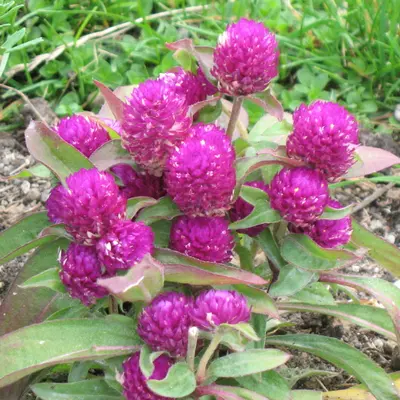
The Audray series offers highly uniform plants with tall stems for cut flowers. Compared to the QIS series, Audray is taller and more uniform but a bit later to flower, and with a limited color range. Mixture includes: Audray White, Bicolor Rose, Pink, and Purple Red. 1 1/2" blooms. Also known as globe amaranth and common globe amaranth.
Harvest
95-110d
Days to harvest
Sun
Full sun to partial shade
Zones
2–11
USDA hardiness
Height
12-24 inches
Planting Timeline
Showing dates for Audray Mix in USDA Zone 7
All Zone 7 flower →Zone Map
Click a state to update dates
Audray Mix · Zones 2–11
Growing Details
Complete Growing Guide
The Audray series offers highly uniform plants with tall stems for cut flowers. Compared to the QIS series, Audray is taller and more uniform but a bit later to flower, and with a limited color range. Mixture includes: Audray White, Bicolor Rose, Pink, and Purple Red. 1 1/2" blooms. Also known as globe amaranth and common globe amaranth. According to Johnny's Selected Seeds, Audray Mix is 95 - 110 days to maturity, annual, open pollinated. Notable features: Grows Well in Containers, Use for Cut Flowers and Bouquets, Ideal for Drying and Crafts.
Light: Full sun (6 or more hours of direct sunlight a day), Partial Shade (Direct sunlight only part of the day, 2-6 hours). Drainage: Good Drainage, Occasionally Dry. Height: 1 ft. 0 in. - 2 ft. 0 in.. Spread: 0 ft. 6 in. - 1 ft. 0 in.. Spacing: Less than 12 inches. Growth rate: Medium. Maintenance: Low. Propagation: Seed. Regions: Coastal, Mountains, Piedmont.
Harvesting
Audray Mix reaches harvest at 95 - 110 days from sowing per Johnny's Selected Seeds. Expect 1 1/2" at peak. As an annual, harvest continues until frost ends the season.
This is an ornamental variety — not grown for harvest. Enjoy in the garden landscape.
Storage & Preservation
Fresh globe amaranth blooms are best stored at room temperature (65-70°F) in a vase with fresh water, as refrigeration can shorten vase life. Keep away from direct sunlight and ethylene-producing fruits. Shelf life is typically 2-3 weeks in water. For preservation, try air-drying by hanging stems upside down in a warm, dark, well-ventilated space for 2-3 weeks—dried blooms retain color and shape beautifully for long-lasting arrangements. Alternatively, press flowers between parchment paper under weight for 1-2 weeks for floral crafts, or glycerin-preserve by standing stems in a 1:1 glycerin-water solution for 1-2 weeks for softer, preserved blooms.
History & Origin
Audray Mix is open-pollinated, meaning seed saved from healthy plants will produce true-to-type offspring. Listed in the Johnny's Selected Seeds catalog.
Origin: Mexico to Brazil
Advantages
- +Highly uniform plants ideal for professional cut flower production
- +Tall stems maximize vase arrangements and commercial appeal
- +Beautiful color variety with white, pink, bicolor, and purple options
- +Easy to grow with minimal care requirements for beginners
- +Long vase life makes blooms excellent for floral arrangements
Considerations
- -Later flowering than QIS series delays harvest by 2-3 weeks
- -Limited color range compared to other globe amaranth varieties
- -Requires 95-110 days to maturity, extending production timeline significantly
Companion Plants
Marigolds (Tagetes spp.) and sweet alyssum are the most practical neighbors — marigolds push out aphids and whiteflies through foliar and root compounds, and sweet alyssum draws parasitic wasps that put a dent in pest pressure before it starts. Zinnias and cosmos fit naturally in the same row, sharing similar sun and water needs without crowding root zones at 12-18 inch spacing. Black walnut (Juglans nigra) is the one to exclude from the vicinity — its roots release juglone, a compound toxic enough to stunt or kill most annuals, and gomphrena is no exception. Fennel suppresses neighboring annuals through allelopathic root exudates and earns its own bed well away from the flower patch.
Plant Together
Marigolds
Repel nematodes, aphids, and other harmful insects while attracting beneficial predators
Sweet Alyssum
Attracts beneficial insects like lacewings and provides ground cover to retain moisture
Nasturtiums
Act as trap crops for aphids and cucumber beetles while repelling squash bugs
Zinnia
Attracts butterflies and beneficial pollinators, shares similar growing conditions
Cosmos
Attracts beneficial insects and provides structural support in mixed flower beds
Lavender
Repels moths, fleas, and mosquitoes while attracting bees and beneficial pollinators
Petunias
Repel aphids, tomato hornworms, and squash bugs while providing continuous blooms
Cleome
Attracts beneficial insects and provides height variation in flower arrangements
Keep Apart
Black Walnut
Produces juglone toxin that inhibits growth and can kill sensitive flowering plants
Eucalyptus
Releases allelopathic compounds that suppress growth of nearby flowering plants
Fennel
Inhibits growth of most garden plants through allelopathy and attracts harmful insects
Pests & Disease Resistance
Common Pests
Spider mites, whiteflies, aphids
Diseases
Powdery mildew, root rot in poorly drained soil
Troubleshooting Audray Mix
What you'll see, why it happens, and what to do about it.
Fine webbing on stems and undersides of leaves, with stippled, dull-looking foliage — usually in hot, dry spells
Likely Causes
- Spider mite (Tetranychus urticae) infestation — thrives when temps push above 90°F and humidity drops
What to Do
- 1.Blast the plant down with a strong stream of water every 2-3 days to knock mites off
- 2.Apply insecticidal soap or neem oil to the undersides of leaves in the early morning, not midday
- 3.If the plant is badly infested, remove and bag the worst stems before treating the rest
White powdery coating on upper leaf surfaces, starting on older leaves, usually in late summer
Likely Causes
- Powdery mildew (Erysiphe cichoracearum or related species) — common when nights cool down but days stay warm, especially with poor airflow
- Overcrowded planting at less than 12 inches apart
What to Do
- 1.Thin or space plants to at least 12-18 inches so air can move between them
- 2.Spray with a diluted baking soda solution (1 tablespoon per gallon of water) or potassium bicarbonate fungicide at first sign
- 3.Avoid overhead watering in the evening — water at the base in the morning
Yellowing, wilting stems at the base with mushy or discolored roots, even when the soil isn't obviously dry
Likely Causes
- Root rot — usually Pythium or Rhizoctonia species in poorly drained or consistently waterlogged soil
- Planting in a low spot that holds water after rain
What to Do
- 1.Dig the affected plant and check the roots — brown and soft rather than white and firm means root rot, not drought stress
- 2.Amend the bed with coarse perlite before replanting, or move the whole operation to a raised bed with at least 6 inches of drainage depth
- 3.Don't put gomphrena back in that same low spot; it's one of the more reliably drought-tolerant annuals you can grow, and it still won't survive wet feet
Frequently Asked Questions
How long do Audray Mix globe amaranth flowers last in a vase?▼
Is Audray Mix a good choice for beginner gardeners?▼
Can you grow Audray Mix globe amaranth in containers?▼
When should I plant Audray Mix seeds?▼
How does Audray Mix compare to the QIS series?▼
Zone-by-Zone Planting Calendar
| Zone | Indoor Start | Transplant | Direct Sow | Harvest |
|---|---|---|---|---|
| Zone 1 | May – June | July – August | July – September | — |
| Zone 2 | April – May | June – July | June – August | — |
| Zone 11 | January – January | January – February | January – March | — |
| Zone 12 | January – January | January – February | January – March | — |
| Zone 13 | January – January | January – February | January – March | — |
| Zone 3 | April – May | June – July | June – August | — |
| Zone 4 | March – April | June – June | June – July | — |
| Zone 5 | March – April | May – June | May – July | — |
| Zone 6 | March – April | May – June | May – July | — |
| Zone 7 | February – March | April – May | April – June | — |
| Zone 8 | February – March | April – May | April – June | — |
| Zone 9 | January – February | March – April | March – May | — |
| Zone 10 | January – January | February – March | February – April | — |
Growing Guides from Wind River Greens
Sources & References
External authority sources used in compiling this guide.
- BreederJohnny's Selected Seeds
See the Methodology page for how this data is sourced, what's AI-assisted, and known limitations.