Black Krim
Solanum lycopersicum
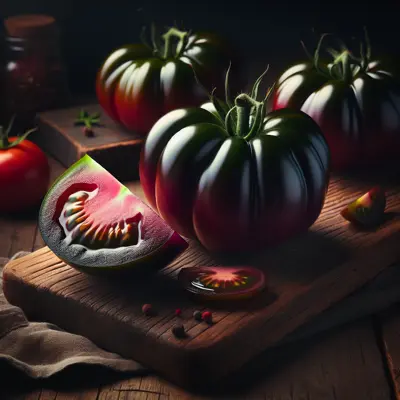
Black Krim combines bold, smoky flavor and good texture with an unusual appearance. Deep brown/red, 8-16 oz. tomatoes have brown/green shoulders that get darker with more heat and sunlight. High-yielding. Indeterminate.
Harvest
80d
Days to harvest
Sun
Full sun
Zones
10–11
USDA hardiness
Height
1-10 feet
Planting Timeline
Showing dates for Black Krim in USDA Zone 7
All Zone 7 tomato →Zone Map
Click a state to update dates
Black Krim · Zones 10–11
Growing Details
Complete Growing Guide
Black Krim combines bold, smoky flavor and good texture with an unusual appearance. Deep brown/red, 8-16 oz. tomatoes have brown/green shoulders that get darker with more heat and sunlight. High-yielding. Indeterminate. According to Johnny's Selected Seeds, Black Krim is 80 days to maturity, annual, open pollinated, indeterminate growth habit. Notable features: Organic Seeds, Plants, and Supplies, Heirloom.
Light: Full sun (6 or more hours of direct sunlight a day). Soil: Clay, High Organic Matter, Loam (Silt), Sand. Soil pH: Acid (<6.0), Neutral (6.0-8.0). Drainage: Good Drainage, Moist. Height: 1 ft. 0 in. - 10 ft. 0 in. Spread: 1 ft. 0 in. - 4 ft. 0 in. Spacing: 3 feet-6 feet. Growth rate: Rapid. Maintenance: High. Propagation: Seed. Regions: Coastal, Mountains, Piedmont.
Harvesting
Black Krim reaches harvest at 80 days from sowing per Johnny's Selected Seeds. Expect 8-16 oz. at peak. As an annual, harvest continues until frost ends the season.
The fruits are smooth, shiny, glossy, and are classified as berries. The size, shape, and color will vary depending on the variety or cultivar. The color of the fruits may be red, yellow, orange, green, purple, or pink. The fruits may contain over 100 yellow to light brown seeds.
Color: Gold/Yellow, Green, Orange, Pink, Purple/Lavender, Red/Burgundy, Variegated. Type: Berry. Length: > 3 inches. Width: > 3 inches.
Garden value: Edible, Showy
Harvest time: Fall, Summer
Edibility: The fruits or berries of the tomato are edible. They may be eaten raw, cooked, dried, or processed. They are a rich source of Vitamin A, Vitamin C, folic acid, and antioxidants. Lycopene is an antioxidant that gives the tomato its rich red color. Many plants will drop fruit when ripe or the fruit will come off easily. Tomatoes will continue to ripen once picked. Store them at room temperature.
Storage & Preservation
Black Krim tomatoes are best stored at room temperature (68–72°F) away from direct sunlight, where they'll keep for 5–7 days at peak flavor. Avoid refrigeration, which dulls their complex taste and damages texture. Store stem-side down in a single layer on a breathable surface like a wooden crate or cardboard box lined with paper towels to prevent moisture buildup.
Fresh use is ideal for this variety—their rich, smoky character shines in slicing and salads. Due to low acid content, they're unsuitable for conventional water-bath canning. Instead, consider freezing whole or chopped for soups and sauces, though this sacrifices texture for fresh eating. Drying intensifies their savory notes beautifully; slice thin and dry at 135°F until leathery. Fermentation also works well, preserving flavor while developing depth. Because Black Krims are primarily grown as fresh market tomatoes, plan harvests around consumption needs rather than bulk preservation.
History & Origin
Black Krim is an heirloom variety with documented breeding heritage. Black Krim is open-pollinated, meaning seed saved from healthy plants will produce true-to-type offspring. Listed in the Johnny's Selected Seeds catalog.
Origin: Peru
Advantages
- +Bold, smoky flavor with complex sweetness makes Black Krim exceptional for cooking
- +Unusual dark appearance with brown shoulders creates striking visual appeal in dishes
- +High-yielding indeterminate plants produce abundant 8-16 oz. tomatoes throughout season
- +Medium ripening time at 80 days allows reasonable harvest window in temperate zones
Considerations
- -Fruit cracking tendency requires consistent watering and careful moisture management practice
- -Susceptibility to late blight makes Black Krim risky in humid or wet climates
- -Green shoulder coloring can indicate incomplete ripeness, confusing harvest decisions
- -Multiple pest vulnerabilities including hornworms and spider mites demand vigilant monitoring
Companion Plants
Basil planted 12–18 inches out is a reliable neighbor — same full-sun, high-water needs as Black Krim, no meaningful root competition, and it won't shade the fruit. The pest-repellent claims get overstated online; the real value is that you're using space that would otherwise sit empty under a sprawling indeterminate plant. Marigolds (Tagetes patula specifically) earn a spot for a concrete reason: their roots produce thiophenes that suppress root-knot nematodes in the surrounding soil. That matters more for Black Krim than for most varieties, because NC State Extension flags that heirloom tomatoes often lack resistance to soilborne diseases that modern hybrids carry. Carrots and lettuce tuck in well as low-growing gap fillers; lettuce especially appreciates the afternoon shade a 4–5-foot tomato plant throws by midsummer.
Fennel is broadly allelopathic — it suppresses nearby plants through root exudates — and Black Walnut roots release juglone, a compound that's toxic to Solanaceae, so give it at least 50 feet of clearance from any walnut tree. Brassicas and corn are lower-drama, but both pull aphid pressure and both attract cutworms; running them adjacent to your tomatoes just stacks the same problems in one corner of the garden.
Plant Together
Basil
Repels aphids and whiteflies, may improve tomato flavor
Marigold
Deters nematodes and aphids with natural compounds
Oregano
Repels spider mites and provides ground cover
Parsley
Attracts beneficial insects like hoverflies and parasitic wasps
Carrots
Help break up soil and don't compete for nutrients
Nasturtium
Acts as trap crop for aphids and cucumber beetles
Chives
Repels aphids and may improve disease resistance
Lettuce
Provides living mulch and utilizes different soil layers
Keep Apart
Black Walnut
Releases juglone toxin that causes tomato wilt and stunting
Fennel
Inhibits growth through allelopathic compounds
Brassicas
Compete for similar nutrients and may stunt tomato growth
Corn
Both attract corn earworm which also damages tomatoes
Nutrition Facts
Per 100g serving. % Daily Value based on 2,000 calorie diet. Source: USDA FoodData Central (FDC #321360)
Pests & Disease Resistance
Resistance
Typical heirloom susceptibility, prone to cracking in wet conditions
Common Pests
Tomato hornworm, aphids, whiteflies, spider mites
Diseases
Late blight, early blight, blossom end rot, fruit cracking
Troubleshooting Black Krim
What you'll see, why it happens, and what to do about it.
Large gray-green patches spreading across foliage fast — whole branches wilting and dying within a few days, sometimes with dark sunken spots on fruit
Likely Causes
- Late blight (Phytophthora infestans) — NC State Extension notes this is a highly destructive disease monitored across North Carolina; timing varies year to year but it can move through a planting shockingly fast in cool, wet weather
What to Do
- 1.Pull and bag affected plants immediately — don't compost them, don't leave them in the bed
- 2.Don't work in the garden while foliage is wet; you'll spread spores on your hands and tools
- 3.Rotate nightshades out of that bed for at least 3 years; NC State IPM guidance suggests up to 5–7 years for serious tomato diseases
Lower leaves developing dark brown bullseye-patterned spots, yellowing around the spots, starting around day 45–50 after transplant
Likely Causes
- Early blight (Alternaria solani) — soil-borne fungus that splashes up onto lower foliage during rain or irrigation
- Crowded spacing under 24 inches that traps humidity and slows the leaves from drying
What to Do
- 1.Strip the affected lower leaves and throw them in the trash, not the compost pile
- 2.Lay 3–4 inches of straw mulch at the base of each plant to stop soil splash
- 3.Make sure plants are spaced at least 24 inches apart and suckers are pruned so air can move through
Dark, leathery, sunken patch on the blossom end of the fruit — not rot, not a bug hole, just a flat black depression
Likely Causes
- Blossom end rot — a calcium deficiency in the developing fruit, caused by inconsistent soil moisture rather than a lack of calcium in the soil (NC State Extension's diagnostic framework points to moisture fluctuations as the driver)
- Irregular watering: letting the soil dry out between waterings, then soaking it
What to Do
- 1.Water consistently — Black Krim needs high, even moisture; drip irrigation on a timer is the most reliable way to get there
- 2.Mulch heavily to buffer soil moisture swings between rain events
- 3.Test soil pH; if it's below 6.2, calcium uptake suffers regardless of how much is in the soil — lime to bring it into the 6.2–6.8 range
Fruit splitting radially or in concentric rings after a heavy rain, especially on nearly ripe fruit
Likely Causes
- Fruit cracking — rapid water uptake after a dry period causes the inside of the fruit to expand faster than the skin can stretch
- Black Krim's thin skin makes it more susceptible than most modern hybrids
What to Do
- 1.Keep soil moisture as even as possible through the fruiting period — mulch and consistent drip irrigation help more than anything else here
- 2.Harvest fruit at first blush of color and let it finish ripening on the counter; a fruit cracked on the vine draws disease and insects within hours
- 3.Ease off nitrogen fertilizer once fruit sets — a late-season nitrogen push drives fast vegetative growth and thinner skin
Frequently Asked Questions
How long does Black Krim tomato take to grow from seed?▼
Is Black Krim good for beginners?▼
Can you grow Black Krim tomatoes in containers?▼
What does Black Krim tomato taste like?▼
When should I plant Black Krim tomato seeds?▼
Black Krim vs Cherokee Purple - what's the difference?▼
Zone-by-Zone Planting Calendar
| Zone | Indoor Start | Transplant | Direct Sow | Harvest |
|---|---|---|---|---|
| Zone 3 | April – April | June – July | — | September – October |
| Zone 4 | March – April | June – June | — | September – October |
| Zone 5 | March – March | May – June | — | August – October |
| Zone 6 | March – March | May – June | — | August – October |
| Zone 7 | February – March | April – May | — | July – September |
| Zone 8 | February – February | April – May | — | July – September |
| Zone 9 | January – January | March – April | — | June – August |
| Zone 10 | January – January | February – March | — | May – July |
| Zone 1 | May – May | July – August | — | October – August |
| Zone 2 | April – May | June – July | — | September – September |
| Zone 11 | January – January | January – February | — | April – June |
| Zone 12 | January – January | January – February | — | April – June |
| Zone 13 | January – January | January – February | — | April – June |
Growing Guides from Wind River Greens
Sources & References
External authority sources used in compiling this guide.
- BreederJohnny's Selected Seeds
- USDAUSDA FoodData Central
See the Methodology page for how this data is sourced, what's AI-assisted, and known limitations.