Common Chamomile
Matricaria recutita
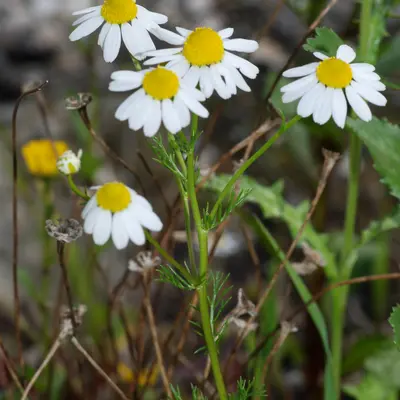
Good yields of small, sweet-smelling, daisy-like flowers. Tea made from the flowers aids digestion and acts as a gentle sleep inducer. Harvest using the Chamomile Rake. Also known as German chamomile and Hungarian chamomile.Edible Flowers: The flowers can be used to garnish salads, desserts, and drinks. Flavor is slightly sweet and of chamomile.
Harvest
60-65d
Days to harvest
Sun
Full sun to part shade
Zones
2–8
USDA hardiness
Height
1 ft. 1 in. - 2 ft. 6 in.
Planting Timeline
Showing dates for Common Chamomile in USDA Zone 7
All Zone 7 herb →Zone Map
Click a state to update dates
Common Chamomile · Zones 2–8
Growing Details
Succession Planting
Start transplants or direct-sow every 3 to 4 weeks from April through early June in zone 7, stopping before sustained daytime highs settle above 85°F — heat accelerates flowering and compresses the harvest window from weeks down to days. A single large sowing tends to give you a glut followed by nothing; staggered plantings spread the work and the yield.
Harvest flower heads every 5 to 7 days once fully open and the petals begin to reflex back toward the stem. Miss a flush and the plant sets seed fast and shuts down. If you want a fall run, sow again in late August — chamomile tolerates light frost down to around 28°F and will keep producing until a hard freeze takes it.
Complete Growing Guide
Good yields of small, sweet-smelling, daisy-like flowers. Tea made from the flowers aids digestion and acts as a gentle sleep inducer. Harvest using the Chamomile Rake. Also known as German chamomile and Hungarian chamomile.Edible Flowers: The flowers can be used to garnish salads, desserts, and drinks. Flavor is slightly sweet and of chamomile. According to Johnny's Selected Seeds, Common Chamomile is 60 - 65 days to maturity, annual, open pollinated. Notable features: Use for Cut Flowers and Bouquets, Edible Flowers.
Light: Full sun (6 or more hours of direct sunlight a day), Partial Shade (Direct sunlight only part of the day, 2-6 hours). Soil: Clay, Loam (Silt). Drainage: Good Drainage. Height: 1 ft. 1 in. - 2 ft. 6 in.. Spread: 0 ft. 8 in. - 0 ft. 1 in.. Spacing: Less than 12 inches. Growth rate: Rapid. Maintenance: Low. Propagation: Seed. Regions: Coastal, Mountains, Piedmont.
Harvesting
Common Chamomile reaches harvest at 60 - 65 days from sowing per Johnny's Selected Seeds. As an annual, harvest continues until frost ends the season.
Edibility: Flowers for tea and other culinary uses.
Storage & Preservation
Fresh chamomile flowers should be stored in a breathable container—a paper bag or mesh pouch works best—kept in a cool, dark place around 50–60°F with moderate humidity. They'll hold for 3–5 days at room temperature before losing potency. For longer preservation, drying is the gold standard: harvest flowers in mid-morning after dew dries, spread them on screens or hang in bundles in a warm, well-ventilated space away from direct sunlight. They're ready when papery and crisp, usually within a week. Store dried flowers in airtight glass jars away from light. Frozen chamomile works too—freeze fresh flowers on a tray, then transfer to freezer bags for up to a year, though they're best used in teas rather than fresh applications. Chamomile's volatile oils concentrate beautifully during drying, actually improving the flavor and medicinal quality of the final product compared to fresh use.
History & Origin
Common Chamomile is open-pollinated, meaning seed saved from healthy plants will produce true-to-type offspring. Listed in the Johnny's Selected Seeds catalog.
Origin: Temp. Eurasia to Indo-China
Advantages
- +Edible: Flowers for tea and other culinary uses.
- +Fast-growing
- +Low maintenance
Considerations
- -Toxic (Flowers, Leaves): Low severity
Companion Plants
Cabbage, broccoli, and onions are the strongest companions here. Chamomile's scent is thought to confuse aphids and cabbage moths, and the open flowers draw in hoverflies (Syrphidae) whose larvae feed on aphids — a double benefit since aphids pressure both chamomile and brassicas at the same time. Carrots and tomatoes benefit similarly, and chamomile's shallow roots at 12 to 18 inches don't compete with deeper-rooted crops for moisture. Mint is the companion to skip — it spreads aggressively by runner and will physically crowd chamomile out within a single season. Black walnut (Juglans nigra) is a harder stop: the roots and leaf litter release juglone, a compound toxic to a wide range of plants, and chamomile is sensitive enough that you'll see stunting and dieback well before you trace the cause.
Plant Together
Cabbage
Chamomile improves cabbage growth and flavor while repelling cabbage moths
Onions
Mutual pest protection - onions repel chamomile pests while chamomile deters onion flies
Cucumbers
Chamomile enhances cucumber growth and helps prevent bacterial wilt
Tomatoes
Chamomile may improve tomato flavor and growth while providing ground cover
Broccoli
Attracts beneficial insects that control broccoli pests like cabbage worms
Beans
Chamomile's flowers attract pollinators beneficial for bean production
Carrots
Chamomile improves soil health and may enhance carrot flavor
Lettuce
Provides beneficial shade and attracts pest-eating beneficial insects
Keep Apart
Mint
Both are aggressive spreaders that compete for space and resources
Black Walnut
Releases juglone which is toxic to chamomile and inhibits its growth
Nutrition Facts
Per 100g serving. % Daily Value based on 2,000 calorie diet. Source: USDA FoodData Central (FDC #172232)
Pests & Disease Resistance
Common Pests
Aphids, spider mites, flies
Diseases
Powdery mildew, root rot in humid conditions, damping off in seedlings
Troubleshooting Common Chamomile
What you'll see, why it happens, and what to do about it.
White powdery coating on leaves and stems, usually appearing mid-summer
Likely Causes
- Powdery mildew (Erysiphe spp.) — thrives in warm, dry days with cool nights and poor airflow
- Crowded spacing under 12 inches that traps humidity around foliage
What to Do
- 1.Spray a preventive mix of 1 tablespoon baking soda plus 1 tablespoon summer horticultural oil per gallon of water every 3 to 5 days, per NC State Extension's organic disease management guidance
- 2.Neem oil also works as a fungicide — reapply every 100 hours or less since sunlight breaks it down quickly
- 3.Thin plants to at least 12-inch spacing and cut out the worst-affected stems at the base
Seedlings collapsing at the soil line within the first 2 weeks after germination
Likely Causes
- Damping off — most often Pythium spp. or Rhizoctonia solani — triggered by overwatered, poorly drained seed-starting mix
- Reusing old, unsterilized trays that carry pathogen inoculum
What to Do
- 1.Water seedlings from below and let the top of the mix dry slightly between waterings
- 2.Start fresh with sterile seed-starting mix each season — don't reuse last year's plugs
- 3.Apply a Bacillus subtilis biofungicide drench at seeding; NC State Extension notes it suppresses a broad range of foliar and soilborne diseases
Stems turning brown and mushy at or just below the soil surface on established plants
Likely Causes
- Root rot — Pythium or Phytophthora spp. — almost always tied to waterlogged or compacted soil
- Planting in a low spot that holds water after rain
What to Do
- 1.Pull the affected plant — once the crown is rotted it won't recover
- 2.Work compost into the bed to improve drainage before replanting, or mound the soil 4 to 6 inches above grade
- 3.Chamomile is drought-tolerant once established; scale back irrigation after the first 3 to 4 weeks in the ground
Leaves stippled silver or bronze with fine webbing on undersides, especially during hot dry stretches
Likely Causes
- Two-spotted spider mite (Tetranychus urticae) — populations explode when temperatures stay above 85°F and humidity is low
- Dusty conditions along field edges that coat leaves and deter natural predators
What to Do
- 1.Knock mites off with a firm spray of water early in the morning, hitting the undersides of leaves
- 2.Apply neem oil as a miticide — NC State Extension's organic gardening guidance lists it as effective against mites and their eggs — reapplying every 3 to 4 days until pressure drops
- 3.Avoid broad-spectrum insecticides that kill predatory mites (Phytoseiidae), which naturally keep Tetranychus populations in check
Frequently Asked Questions
How long does common chamomile take to grow from seed to harvest?▼
Can you grow chamomile in containers or pots?▼
Is common chamomile good for beginners?▼
What does common chamomile taste like?▼
When is the best time to plant common chamomile?▼
Common chamomile vs. Roman chamomile—what's the difference?▼
Zone-by-Zone Planting Calendar
| Zone | Indoor Start | Transplant | Direct Sow | Harvest |
|---|---|---|---|---|
| Zone 2 | April – May | June – August | — | August – September |
| Zone 3 | April – May | June – July | — | July – October |
| Zone 4 | March – April | June – July | — | July – October |
| Zone 5 | March – April | May – June | — | June – October |
| Zone 6 | March – April | May – June | — | June – November |
| Zone 7 | February – March | April – June | — | June – November |
| Zone 8 | February – March | April – May | — | May – December |
| Zone 9 | January – February | March – April | — | April – December |
| Zone 10 | January – January | February – April | — | April – December |
Growing Guides from Wind River Greens
Sources & References
External authority sources used in compiling this guide.
- BreederJohnny's Selected Seeds
- USDAUSDA FoodData Central
See the Methodology page for how this data is sourced, what's AI-assisted, and known limitations.