Red Russian Kale
Brassica napus
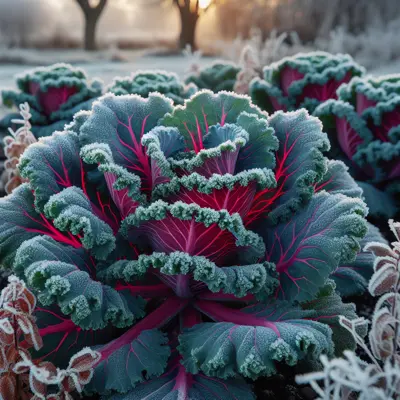
Stems are purple; leaves are flat and toothed with purple veins. Mature plants are medium-tall and leaves are tender compared to other kales. For salads and light cooking. Sized seed. Also available in organic seed.
Harvest
50-65d
Days to harvest
Sun
Full sun to partial shade
Zones
8–11
USDA hardiness
Height
4 feet
Planting Timeline
Showing dates for Red Russian Kale in USDA Zone 7
All Zone 7 brassica →Zone Map
Click a state to update dates
Red Russian Kale · Zones 8–11
Growing Details
Succession Planting
Direct sow Red Russian Kale every 3 weeks starting March 1 through late April in zone 8; in zone 7, push that window to early May. Stop new successions when daytime highs are running consistently above 85°F — germination rates fall off and the leaves turn tough and bitter quickly. Pick back up with a fall run starting August 15 in zone 7 (late August in zone 8), sowing every 2–3 weeks through mid-September to carry harvest into November.
Two successions — one in early spring and one timed to mature in the cool of fall — usually covers a season without a gap you can't bridge with storage. The fall planting tends to outperform spring anyway: lower temperatures sweeten the leaves noticeably, and cabbage worm pressure drops off sharply after the first frost.
Complete Growing Guide
Start your Red Russian kale journey by selecting a site with well-draining soil and at least 4 hours of direct sunlight, though this variety tolerates partial shade better than most kales. Work in 2-3 inches of compost or aged manure before planting, as this Siberian heirloom thrives in nutrient-rich soil with a pH between 6.0-7.0.
For spring planting, direct sow seeds ½ inch deep about 4-6 weeks before your last frost date. Red Russian kale actually germinates better in cool soil (45-65°F), so don't wait for warm weather. Space seeds 6 inches apart in rows 18 inches apart, or broadcast in wide beds and thin later. If starting indoors, sow 6-8 weeks before transplant date in individual cells to avoid root disturbance.
Transplant seedlings when they have 3-4 true leaves and soil temperature stays above 40°F. Harden off gradually over 7 days, as sudden temperature changes can cause bolting. Set transplants slightly deeper than they grew in containers, burying the stem up to the first set of leaves for stronger root development.
Feed with balanced fertilizer at planting, then switch to high-nitrogen fertilizer every 3-4 weeks. Side-dress with compost monthly for sustained growth. Unlike other kales, Red Russian responds well to light, frequent feeding rather than heavy applications.
Avoid the common mistake of planting too early in hot weather—this variety performs best when temperatures stay below 75°F during the day. In zones 7-9, focus on fall and winter growing seasons. Plant your fall crop 10-12 weeks before your first hard frost for the sweetest leaves.
Maximize yield by harvesting outer leaves continuously rather than cutting the entire plant. This keeps the crown producing new growth for months. In cold climates, mulch around plants in late fall to extend harvest through winter.
Harvesting
Begin harvesting Red Russian kale when leaves reach 4-6 inches long, typically 50-65 days from seeding. The leaves are ready when they feel tender but substantial, with the characteristic blue-green color and purple veining fully developed. Baby leaves can be harvested as early as 25-30 days for tender salad greens.
Always harvest in the morning when leaves are crisp and full of moisture. Cut or pinch outer leaves first, leaving the central growing point intact. Look for leaves that snap cleanly when bent—tough, leathery leaves indicate over-maturity. The sweetest harvest comes after the first light frost, when starches convert to sugars.
Use clean, sharp scissors or a knife to cut stems about an inch above the soil line. Avoid pulling leaves, which can damage the crown. Never harvest more than one-third of the plant at once. After frost exposure, leaves develop deeper purple coloration and noticeably sweeter flavor—this is your cue for premium harvest quality.
Storage & Preservation
Fresh Red Russian kale stores best unwashed in perforated plastic bags in the refrigerator crisper drawer, maintaining quality for 5-7 days. The sturdy leaves hold up better than curly kale varieties, making them excellent for meal prep.
For longer storage, blanch leaves in boiling water for 2-3 minutes, shock in ice water, then freeze in portions. The tender texture makes Red Russian ideal for freezing—unlike tougher kale varieties, it doesn't become overly chewy. Dehydrate at 125°F for crispy kale chips that store for months in airtight containers.
Fermentation works exceptionally well with Red Russian's sweet flavor profile. Massage leaves with salt for quick refrigerator pickles, or add to sauerkraut blends. The purple stems add beautiful color to fermented vegetables and maintain their crunch better than the leaves.
History & Origin
Red Russian kale traces its hardy lineage to the windswept regions of Siberia, where it evolved to withstand brutal winters and short growing seasons. This ancient variety was likely cultivated for centuries by Russian peasants who valued its ability to provide fresh greens through the harshest months.
The variety made its way to North America through Russian immigrants in the late 1800s and early 1900s, particularly during waves of migration to Alaska and the Pacific Northwest. Seeds were often carried in small pouches as precious cargo, representing sustenance and a connection to homeland.
Seed catalogs from the early 1900s reference 'Russian kale' as a curiosity for adventurous gardeners, but it wasn't until the heirloom revival movement of the 1980s that Red Russian gained widespread recognition. Seed Savers Exchange and other preservation organizations helped rescue this variety from obscurity, recognizing its superior cold tolerance and unique ornamental qualities that set it apart from common curly kales.
Advantages
- +Exceptional cold tolerance down to 20°F, surviving when other greens fail
- +Sweetens noticeably after frost exposure, unlike many vegetables that deteriorate
- +Tender texture requires no massaging for raw salads, unlike tough curly kales
- +Stunning ornamental value with purple stems and veining for edible landscaping
- +Slower to bolt in spring heat compared to other kale varieties
- +Self-seeds readily for effortless succession planting
- +Baby leaves ready in just 25 days for quick microgreen harvests
Considerations
- -Purple stems can be fibrous and tough if plants get overmature
- -More susceptible to aphid infestations than waxy-leaved kale varieties
- -Seeds can be harder to source than common grocery store kale types
- -Leaves become bitter if plants experience drought stress
- -Less productive per plant than dense, curly kale varieties
Companion Plants
Dill and nasturtiums earn their spots for different reasons. Dill draws parasitic wasps that target cabbage worm larvae (Pieris rapae and Trichoplusia ni), while nasturtiums function as a trap crop — aphids pile onto them and mostly leave the kale alone. Garlic and onions planted through the bed at 18-inch intervals produce enough sulfur compounds to disrupt cabbage moths searching for egg-laying sites. Tomatoes are the pairing to skip: they go after the same soil nutrients at roughly the same root depth (6–12 inches), and you'll see both crops underperform compared to planting them separately.
Plant Together
Dill
Attracts beneficial wasps that parasitize cabbage worms and aphids
Nasturtiums
Acts as trap crop for aphids and flea beetles, repels cabbage moths
Onions
Repels cabbage root flies, aphids, and flea beetles with strong sulfur compounds
Marigolds
Deters flea beetles and cabbage worms, reduces nematode populations
Carrots
Different root depths reduce competition, carrots help break up soil
Lettuce
Provides ground cover and efficient space usage, similar growing conditions
Garlic
Natural pesticide properties repel cabbage loopers and aphids
Chamomile
Attracts beneficial insects and may improve kale flavor and growth
Keep Apart
Strawberries
Compete for nutrients and may stunt brassica growth
Pole Beans
Can shade kale excessively and compete for nitrogen
Tomatoes
May inhibit kale growth and both attract similar pests like hornworms
Nutrition Facts
Per 100g serving. % Daily Value based on 2,000 calorie diet. Source: USDA FoodData Central (FDC #168421)
Pests & Disease Resistance
Resistance
Good cold tolerance and moderate disease resistance
Common Pests
Cabbage worms, aphids, flea beetles
Diseases
Clubroot, black rot, downy mildew
Troubleshooting Red Russian Kale
What you'll see, why it happens, and what to do about it.
Tiny, irregular holes punched through leaves — looks like the leaf was hit with fine buckshot — showing up early in the season or during warm spells
Likely Causes
- Flea beetles (Phyllotreta spp.) — small, jumping beetles that feed aggressively on young brassica leaves
- Seedlings and transplants under heat stress are hit hardest
What to Do
- 1.Cover transplants with row cover immediately at planting — flea beetles locate plants by smell and sight, and physical exclusion is the most reliable control
- 2.If you're direct sowing, sow densely so plants can outgrow the damage; thin after the first true leaves harden off
- 3.Diatomaceous earth dusted around the base slows them down, but reapply after every rain
Leaves curl and yellow; flip them over and you'll find dense clusters of soft-bodied insects, sometimes with a sticky residue coating the lower foliage
Likely Causes
- Cabbage aphids (Brevicoryne brassicae) — they colonize fast and can stunt plants in under two weeks
- Over-fertilizing with nitrogen pushes the soft new growth aphids prefer
What to Do
- 1.Knock colonies off with a hard stream of water — do it in the morning so leaves dry before evening
- 2.Spray insecticidal soap (2–3% solution) directly on colonies; it has to make contact to work, so coat the undersides of leaves thoroughly
- 3.Pull back on nitrogen side-dressing if you've been heavy with it; slowing the leafy flush reduces aphid pressure
Plants wilt suddenly, don't recover overnight, and when you pull one up the roots are swollen and deformed — lumpy, irregular knobs instead of clean taproots
Likely Causes
- Clubroot (Plasmodiophora brassicae) — a soilborne pathogen that persists in the soil for 20 or more years once established
- Low soil pH (below 6.0) and poor drainage both favor the pathogen's spread
What to Do
- 1.Pull and bag affected plants immediately — don't compost them; the spores survive the pile and come back around
- 2.Lime the bed to bring pH to 7.0–7.2; clubroot is significantly suppressed above pH 7.0
- 3.Rotate out of all brassicas — kale, cabbage, broccoli, turnips — for at least 4 years in that bed; the spore load doesn't drop quickly
Frequently Asked Questions
How long does Red Russian kale take to grow?▼
Can you grow Red Russian kale in containers?▼
What does Red Russian kale taste like compared to regular kale?▼
When should I plant Red Russian kale for winter harvest?▼
Is Red Russian kale good for beginners?▼
Red Russian kale vs curly kale - what's the difference?▼
Zone-by-Zone Planting Calendar
| Zone | Indoor Start | Transplant | Direct Sow | Harvest |
|---|---|---|---|---|
| Zone 3 | March – April | May – June | May – June | June – October |
| Zone 4 | March – April | May – June | April – June | June – October |
| Zone 5 | February – March | April – May | April – May | June – November |
| Zone 6 | February – March | April – May | April – May | May – November |
| Zone 7 | February – March | April – May | March – May | May – November |
| Zone 8 | January – February | March – April | March – April | April – December |
| Zone 9 | January – January | February – March | February – March | March – December |
| Zone 10 | January – January | February – March | January – March | March – December |
| Zone 1 | April – May | June – July | June – July | July – September |
| Zone 2 | April – May | June – July | May – July | July – September |
| Zone 11 | January – January | January – February | January – February | February – December |
| Zone 12 | January – January | January – February | January – February | February – December |
| Zone 13 | January – January | January – February | January – February | February – December |
Growing Guides from Wind River Greens
Sources & References
External authority sources used in compiling this guide.
See the Methodology page for how this data is sourced, what's AI-assisted, and known limitations.