Trinidad Scorpion 'Butch T'
Capsicum chinense 'Trinidad Scorpion Butch T'
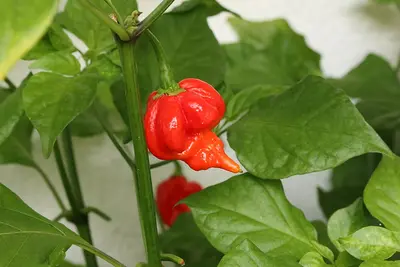
One of the world's hottest peppers, this Trinidad native delivers scorching heat that builds intensity like a venomous sting. The wrinkled, tail-like pods ripen to a brilliant red and pack serious firepower for hot sauce makers and extreme heat enthusiasts. Despite the intimidating heat, these peppers offer a fruity, almost floral flavor underneath the burn.
Harvest
90-100d
Days to harvest
Sun
Full sun
Zones
10–11
USDA hardiness
Height
12-30 inches
Planting Timeline
Showing dates for Trinidad Scorpion 'Butch T' in USDA Zone 7
All Zone 7 pepper →Zone Map
Click a state to update dates
Trinidad Scorpion 'Butch T' · Zones 10–11
Growing Details
Complete Growing Guide
Trinidad Scorpion 'Butch T' demands a longer season than standard peppers—start seeds 8–10 weeks before your last frost since these plants need 90–100 days plus extra time to reach productive maturity. This cultivar thrives in intense heat and full sun (8+ hours daily) with consistently warm soil above 75°F; cooler conditions cause flower drop and stunted growth. Provide well-draining, nutrient-rich soil amended with compost, and maintain even moisture without waterlogging, as this variety is particularly prone to root rot in soggy conditions. Watch closely for spider mites and aphids, which proliferate rapidly in hot, dry microclimates around these plants. The plant tends toward leggy growth when light is insufficient, so space generously to ensure air circulation and prevent fungal diseases. One essential tip: use a thick mulch layer to regulate soil temperature and moisture while reflecting heat away from the base, which protects these heat-lovers from stress-induced blossom-end rot despite their love of warmth.
Light: Full sun (6 or more hours of direct sunlight a day). Soil: Clay, High Organic Matter, Loam (Silt), Sand. Soil pH: Acid (<6.0), Alkaline (>8.0), Neutral (6.0-8.0). Drainage: Good Drainage, Moist. Height: 1 ft. 0 in. - 2 ft. 6 in.. Spread: 1 ft. 0 in. - 2 ft. 0 in.. Spacing: 12 inches-3 feet. Growth rate: Medium. Maintenance: Medium. Regions: Coastal, Mountains, Piedmont.
Harvesting
Harvest Trinidad Scorpion 'Butch T' peppers when pods reach their full brilliant red color and develop the characteristic wrinkled, tail-like appearance that gives this variety its scorpion namesake. The peppers should feel firm yet slightly yielding to gentle pressure, indicating peak capsaicinoid development. These plants respond exceptionally well to continuous harvesting—picking mature pods regularly encourages prolific flower and fruit production throughout the season rather than investing energy in single large harvests. For optimal heat intensity, wait until peppers are fully colored and have been on the plant for at least 90 days from transplant, as the final weeks of maturation significantly concentrate the Scoville compounds that define this extreme cultivar.
Fruits are a non-pulpy berry and vary considerably across cultivars in shape and color. Many tend to have a lumpy, crinkled appearance compared to other species. They contain high capsaicin levels.
Color: Gold/Yellow, Green, Orange, Purple/Lavender, Red/Burgundy, White. Type: Berry. Length: 1-3 inches. Width: 1-3 inches.
Garden value: Edible, Good Dried, Showy
Harvest time: Fall, Summer
Storage & Preservation
Store freshly harvested Trinidad Scorpion 'Butch T' peppers in a cool, dark place at 50–60°F with moderate humidity, or refrigerate in a perforated plastic bag for up to two weeks. Fresh peppers remain firm and flavorful when kept away from direct light and ethylene-producing fruits.
For longer preservation, freezing works exceptionally well: wash, dry thoroughly, remove seeds if desired, slice or leave whole, then freeze on a tray before bagging. Alternatively, dry the peppers whole in a dehydrator at 135°F until completely brittle, then grind into powder for storage in airtight containers—dried scorpion peppers intensify in heat and concentrate their fruity complexity.
Fermentation is also viable for sauce production: blend fresh peppers with salt and pack into jars to ferment at room temperature for several weeks, creating a complex condiment base. Hot sauce canning requires careful pH management and proper sterilization protocols if sharing preserved batches.
Because of their extreme potency, wear nitrile gloves during all processing steps and work in well-ventilated areas to avoid respiratory irritation.
History & Origin
The Trinidad Scorpion 'Butch T' emerged from Trinidad and Tobago's rich pepper-breeding heritage, though detailed documentation of its specific origins remains limited. The variety is believed to have been developed through selective breeding within the Trinidad Scorpion line, a naturally occurring superhot pepper native to the Caribbean island. The 'Butch T' designation references its developer or promoter, though historical records are sparse regarding the exact breeder and development timeline. What is confirmed is that this cultivar gained prominence in the early 2000s as part of the broader trend toward extreme-heat pepper cultivation, eventually earning recognition as one of the world's hottest peppers and becoming commercially significant among specialty seed companies and hot sauce producers.
Origin: Bolivia, northern Brazil, and Peru
Advantages
- +Extreme heat level (1.46M Scoville) satisfies competitive hot sauce makers
- +Brilliant red color and unique tail shape create striking visual appeal
- +Fruity, citrus undertones provide flavor complexity beneath the intense burn
- +Trinidad native genetics offer proven tropical adaptation and reliability
Considerations
- -90-100 day maturity requires long growing season in cooler climates
- -Susceptible to multiple serious diseases including bacterial leaf spot and blight
- -High pest pressure from aphids, spider mites, thrips, and weevils
- -Difficult cultivation demands expertise in temperature, humidity, and soil management
Companion Plants
Basil and marigolds do the most useful work here. Basil's volatile oils may reduce aphid and thrips pressure — both are documented Capsicum chinense pests per NC State Extension — and planting it every 18 inches along the row costs little. French marigolds (Tagetes patula) suppress root-knot nematodes in the soil and pull in predatory wasps. Fennel produces root exudates that suppress most vegetables, so give it at least 20 feet of clearance. Black walnut produces juglone, a compound that's toxic to peppers at even modest proximity, so a single nearby tree can quietly kill a planting. Skip brassicas in the same bed — they compete hard for calcium and phosphorus, two nutrients Butch T already demands in quantity.
Plant Together
Basil
Repels aphids, spider mites, and thrips while potentially enhancing pepper flavor
Marigold
Deters nematodes, aphids, and whiteflies with natural pest-repelling compounds
Oregano
Repels aphids and provides ground cover while attracting beneficial insects
Parsley
Attracts beneficial insects like hoverflies and parasitic wasps that control pests
Carrots
Loosens soil with deep taproot and doesn't compete for nutrients
Onions
Repels aphids, spider mites, and other soft-bodied insects with sulfur compounds
Nasturtiums
Acts as trap crop for aphids and cucumber beetles while attracting predatory insects
Spinach
Provides living mulch and cool-season harvest without competing for space
Keep Apart
Black Walnut
Releases juglone toxin that inhibits pepper growth and fruit production
Fennel
Produces allelopathic compounds that stunt pepper growth and development
Brassicas
Compete heavily for nutrients and may attract pests that also damage peppers
Nutrition Facts
Per 100g serving. % Daily Value based on 2,000 calorie diet. Source: USDA FoodData Central (FDC #169394)
Pests & Disease Resistance
Resistance
Good resistance to bacterial leaf spot and pepper mottle virus
Common Pests
Aphids, spider mites, thrips, pepper weevil
Diseases
Bacterial leaf spot, anthracnose, phytophthora blight
Troubleshooting Trinidad Scorpion 'Butch T'
What you'll see, why it happens, and what to do about it.
Sunken, dark, leathery patch on the bottom or side of fruit — sometimes with secondary gray or black mold developing over it
Likely Causes
- Blossom end rot — localized calcium deficiency in the developing fruit
- Inconsistent watering causing water stress that blocks calcium uptake
- High ammonium nitrogen fertilizer interfering with calcium availability
What to Do
- 1.Water on a consistent schedule — 1 to 1.5 inches per week — and mulch heavily to hold soil moisture between rains
- 2.Get a soil test before amending; if calcium is low, work in gypsum or lime to adjust
- 3.Back off high-nitrogen synthetic fertilizers, especially ammonium-based ones, once plants are flowering
Small water-soaked spots on leaves that turn brown and papery, sometimes with yellow halos — showing up mid-season after wet weather
Likely Causes
- Bacterial leaf spot (Xanthomonas campestris pv. vesicatoria) — spreads fast in warm, wet conditions
- Overhead irrigation or rain splash moving bacteria from soil to foliage
What to Do
- 1.Switch to drip irrigation if you can — keeping water off the leaves slows spread significantly
- 2.Pull and trash (don't compost) heavily infected leaves as soon as you spot them
- 3.Rotate nightshades — peppers, tomatoes, eggplant, potatoes — out of this bed for at least 2 seasons; NC State Extension's organic gardening guidance notes these crops share several soilborne and splash-spread pathogens
Frequently Asked Questions
How long does Trinidad Scorpion Butch T take to grow from seed?▼
Is Trinidad Scorpion Butch T good for beginners?▼
Can you grow Trinidad Scorpion Butch T in containers?▼
What does Trinidad Scorpion Butch T taste like?▼
How hot is Trinidad Scorpion Butch T compared to other peppers?▼
When should I plant Trinidad Scorpion Butch T seeds?▼
Zone-by-Zone Planting Calendar
| Zone | Indoor Start | Transplant | Direct Sow | Harvest |
|---|---|---|---|---|
| Zone 1 | May – May | July – August | — | October – August |
| Zone 2 | April – May | June – July | — | October – September |
| Zone 11 | January – January | January – February | — | May – July |
| Zone 12 | January – January | January – February | — | May – July |
| Zone 13 | January – January | January – February | — | May – July |
| Zone 3 | April – April | June – July | — | September – October |
| Zone 4 | March – April | June – June | — | September – October |
| Zone 5 | March – March | May – June | — | September – October |
| Zone 6 | March – March | May – June | — | August – October |
| Zone 7 | February – March | April – May | — | August – October |
| Zone 8 | February – February | April – May | — | July – September |
| Zone 9 | January – January | March – April | — | June – August |
| Zone 10 | January – January | February – March | — | June – August |
Growing Guides from Wind River Greens
Sources & References
External authority sources used in compiling this guide.
See the Methodology page for how this data is sourced, what's AI-assisted, and known limitations.
More Peppers
Carolina Reaper
Sweet Pepper 'Carmen'
Ghost Pepper 'Bhut Jolokia'
Scotch Bonnet 'Scotch Bonnet Orange'
Chocolate Habanero
Sweet Italian Pepper 'Marconi Rosso'
Purple Beauty Bell Pepper
Mad Hatter