Lollo Rosso
Lactuca sativa 'Lollo Rosso'
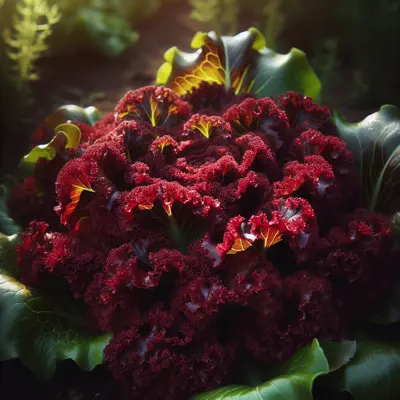
An Italian heirloom that brings European flair to the home garden with its spectacular burgundy-red frilly leaves and compact growth habit. This loose-leaf variety is prized by chefs worldwide for its beautiful appearance and slightly bitter, sophisticated flavor that adds complexity to salad mixes. The deeply curled leaves create an almost flower-like appearance, making it as ornamental as it is edible.
Harvest
50-65d
Days to harvest
Sun
Full sun to partial shade
Zones
2–11
USDA hardiness
Height
6-12 inches
Planting Timeline
Showing dates for Lollo Rosso in USDA Zone 7
All Zone 7 lettuce →Zone Map
Click a state to update dates
Lollo Rosso · Zones 2–11
Growing Details
Succession Planting
Direct sow every 14 days starting March 1 in zone 7, and keep going through late April. Once daytime highs are consistently hitting 80°F, Lollo Rosso will bolt — the center stem elongates, the leaves turn bitter, and the head is finished. Pick up again around August 15, when temperatures start backing off, and you can harvest through October or into November depending on your first frost date.
Skip any sowings during July. Soil temperatures above 75°F drop germination rates sharply, and anything that does come up will bolt before it sizes up. Two windows per season — spring and fall — is the honest expectation for this variety.
Complete Growing Guide
This Italian heirloom thrives in cool-season conditions and reaches peak flavor when grown in spring or fall, as summer heat triggers premature bolting—plant it 8-10 weeks before expected temperatures exceed 70°F. Lollo Rosso develops its signature burgundy coloring most intensely under cooler nights and moderate light, so afternoon shade in warm climates helps prevent fading. Unlike heartier lettuce varieties, its delicate frilly leaves are particularly vulnerable to powdery mildew in humid conditions; ensure excellent air circulation and water only at soil level to keep foliage dry. Though generally pest-resistant, watch for aphids hiding within the dense leaf structure. The cultivar's loose-leaf nature means it won't form a firm head, so plan for continuous harvesting of outer leaves rather than a single cutting. For best results, succession-plant every two weeks during your cool season to maintain a steady supply of tender, unblemished leaves at their flavor peak.
Light: Full sun (6 or more hours of direct sunlight a day), Partial Shade (Direct sunlight only part of the day, 2-6 hours). Soil: High Organic Matter. Soil pH: Neutral (6.0-8.0). Drainage: Good Drainage, Moist. Height: 0 ft. 6 in. - 1 ft. 0 in.. Spread: 0 ft. 6 in. - 1 ft. 0 in.. Spacing: Less than 12 inches. Growth rate: Rapid. Maintenance: Medium. Propagation: Seed. Regions: Coastal, Mountains, Piedmont.
Harvesting
Harvest Lollo Rosso when the distinctive burgundy-red frilly leaves reach full color intensity and the plant forms a compact rosette approximately 6 to 8 inches across, signaling peak tenderness and flavor development. The leaves should feel crisp and slightly firm to the touch rather than wilted or overly soft. This variety responds exceptionally well to continuous harvesting—remove outer leaves from the base while allowing the center to continue growing, extending your harvest window by several weeks. Alternatively, cut the entire plant just above soil level for a single harvest. For optimal quality, harvest in early morning after dew dries but before afternoon heat stresses the delicate leaves, as this timing preserves the tender texture and prevents bitterness from intensifying.
Tiny seeds with a dandelion-like tuft (pappus) to aid in wind dispersal.
Color: Brown/Copper. Type: Achene. Length: < 1 inch. Width: < 1 inch.
Harvest time: Summer
Edibility: Leaves can be used raw or cooked in salads, sandwiches, and other dishes. Head lettuce can be stored for 2-3 weeks while leaf and butterhead store for 1-2 weeks.
Storage & Preservation
Store freshly harvested Lollo Rosso immediately in perforated plastic bags in the refrigerator's crisper drawer at 32-35°F with high humidity. Properly stored leaves maintain quality for 7-10 days, though optimal flavor and texture last only 3-5 days.
Before storing, gently wash leaves in cold water, spin dry thoroughly, and wrap in slightly damp paper towels to prevent wilting. Never store wet leaves as this promotes rapid decay.
Lollo Rosso doesn't freeze or can well due to its delicate texture, but you can preserve it by making pesto or herb butter with the leaves, then freezing in ice cube trays. The leaves also work well in fermented mixed vegetable preparations where the bitter compounds add complexity. For immediate use, store harvested heads stem-down in shallow water like cut flowers for 2-3 days maximum.
History & Origin
Lollo Rosso emerged from Italian vegetable breeding traditions in the 1970s, though specific breeder credits remain largely undocumented in accessible horticultural records. The variety developed from the broader Lollo family of loose-leaf lettuces, which originated in Italy and became particularly popular throughout Europe. Its distinctive burgundy-red coloring and deeply frilled leaves represent deliberate selection within Italian seed companies and regional growing communities seeking ornamental yet flavorful salad greens. While comprehensive breeding documentation is sparse, Lollo Rosso entered international seed commerce primarily through European suppliers before gaining widespread cultivation in North American and global gardens, where it remains a beloved heirloom celebrated for its aesthetic appeal and culinary sophistication.
Origin: Mediterranean to Siberia
Advantages
- +Stunning burgundy-red frilly leaves make it ornamental and visually striking in gardens
- +Sophisticated mildly bitter flavor with nutty notes elevates salad mixes and gourmet dishes
- +Compact growth habit suits small spaces, containers, and intensive planting arrangements
- +Ready to harvest in just 50-65 days, providing quick returns for impatient gardeners
- +Loose-leaf variety allows selective harvesting without removing entire plant
Considerations
- -Susceptible to downy mildew and lettuce drop in humid or poorly ventilated conditions
- -Prone to tipburn when calcium uptake is inconsistent or humidity fluctuates widely
- -Frilly leaves trap moisture and debris, increasing pest and disease vulnerability
- -Requires moderate growing skill to prevent bolting during warm weather spells
Companion Plants
Radishes and carrots are the most practical neighbors for Lollo Rosso. Radishes are ready to pull in 25-30 days and clear out before lettuce needs the full 6-8 inches, so you're using the same square footage twice without any real competition. Carrots stay narrow underground and don't jostle lettuce's shallow roots — both species work the top 6 inches but in different directions. Chives and garlic nearby put off sulfur compounds that deter aphids, which are the pest most likely to get into a Lollo Rosso head and stay invisible until you're washing leaves at the sink.
Fennel is the one to move to a corner by itself — its roots release allelopathic compounds that suppress germination and stunt growth in most vegetables, lettuce included. Broccoli isn't chemically hostile, but it's a heavy nitrogen feeder and its canopy grows fast enough to shade a low-growing lettuce head before you notice what's happening. Both belong on the far side of the garden from any lettuce planting.
Plant Together
Chives
Repels aphids and improves lettuce flavor while taking up minimal space
Carrots
Different root depths prevent competition, carrots help loosen soil for lettuce
Radishes
Quick-growing radishes break up soil and can be harvested before lettuce needs space
Marigolds
Repel aphids, whiteflies, and nematodes that commonly attack lettuce
Nasturtiums
Act as trap crop for aphids and cucumber beetles, drawing pests away from lettuce
Spinach
Similar growing requirements and can provide mutual shade in hot weather
Garlic
Natural fungicide properties help prevent lettuce diseases like downy mildew
Dill
Attracts beneficial insects that prey on lettuce pests like aphids
Parsley
Attracts beneficial insects and has similar water and nutrient requirements
Keep Apart
Fennel
Produces allelopathic compounds that inhibit lettuce growth and germination
Broccoli
Heavy feeder that competes for nutrients and can shade out lettuce
Sunflowers
Allelopathic effects inhibit lettuce growth and tall plants create too much shade
Nutrition Facts
Per 100g serving. % Daily Value based on 2,000 calorie diet. Source: USDA FoodData Central (FDC #2346388)
Pests & Disease Resistance
Resistance
Moderate resistance to bolting in cool weather
Common Pests
Aphids, slugs, snails, cabbage loopers
Diseases
Downy mildew, lettuce drop, tipburn
Troubleshooting Lollo Rosso
What you'll see, why it happens, and what to do about it.
Seedlings collapse at soil level within the first 1-2 weeks after transplanting or germination, sometimes with fuzzy white mold on the soil surface
Likely Causes
- Damping off — a complex of soil-borne fungi (commonly Pythium or Rhizoctonia) that thrives in wet, poorly drained soil
- Overwatering or planting into cold, compacted soil that stays saturated
What to Do
- 1.Pull the dead seedlings and check the stem base — if it's pinched or rotted at the soil line, damping off is your culprit; don't replant into that spot without amending drainage first
- 2.Start fresh seed in a different bed or container with new potting mix; don't reuse soil from the affected area this season
- 3.Water in the morning so the soil surface dries out by evening, and ease off frequency until seedlings have 4+ true leaves
Gray-purple fuzzy coating on the undersides of leaves, with pale yellow patches on the upper surface, appearing in cool damp stretches
Likely Causes
- Downy mildew (Bremia lactucae) — spreads fast in temps between 50–65°F with high humidity or overhead irrigation
- Crowded spacing below the recommended 6-8 inches that traps moisture and cuts airflow
What to Do
- 1.Remove and bin (don't compost) any affected leaves immediately — the spores spread by air and water splash
- 2.Switch to drip irrigation or water at the base; keep foliage dry as much as possible
- 3.Give plants the full 6-8 inch spacing; Lollo Rosso's dense, frilly head holds moisture if packed in too tight
Frequently Asked Questions
How long does Lollo Rosso take to grow from seed?▼
Can you grow Lollo Rosso in containers?▼
What does Lollo Rosso lettuce taste like?▼
Is Lollo Rosso good for beginners?▼
When should I plant Lollo Rosso lettuce?▼
Lollo Rosso vs Lollo Bianco - what's the difference?▼
Zone-by-Zone Planting Calendar
| Zone | Indoor Start | Transplant | Direct Sow | Harvest |
|---|---|---|---|---|
| Zone 3 | — | — | May – June | June – October |
| Zone 4 | — | — | April – June | June – October |
| Zone 5 | — | — | April – May | June – November |
| Zone 6 | — | — | April – May | May – November |
| Zone 7 | — | — | March – May | May – November |
| Zone 8 | — | — | March – April | April – December |
| Zone 9 | — | — | February – March | March – December |
| Zone 10 | — | — | January – March | March – December |
| Zone 1 | — | — | June – July | July – September |
| Zone 2 | — | — | May – July | July – September |
| Zone 11 | — | — | January – February | February – December |
| Zone 12 | — | — | January – February | February – December |
| Zone 13 | — | — | January – February | February – December |
Growing Guides from Wind River Greens
Sources & References
External authority sources used in compiling this guide.
See the Methodology page for how this data is sourced, what's AI-assisted, and known limitations.