Romaine Cos
Lactuca sativa var. longifolia 'Cos'
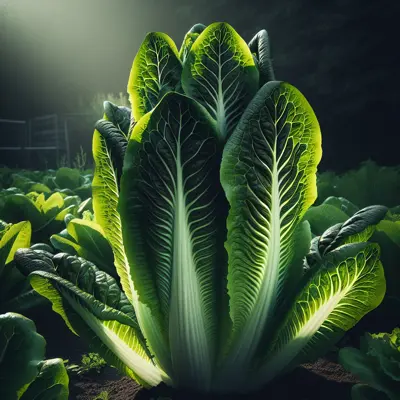
The classic upright lettuce that forms tall, sturdy heads of dark green leaves with prominent white ribs and exceptional crunch. This traditional variety has been cultivated for over 2,000 years and remains the gold standard for Caesar salads and Mediterranean cuisine. Its robust structure and intense flavor make it indispensable for gardeners who want restaurant-quality lettuce at home.
Harvest
70-85d
Days to harvest
Sun
Full sun to partial shade
Zones
2–11
USDA hardiness
Height
6-12 inches
Planting Timeline
Showing dates for Romaine Cos in USDA Zone 7
All Zone 7 lettuce →Zone Map
Click a state to update dates
Romaine Cos · Zones 2–11
Growing Details
Succession Planting
In zone 7, direct sow Romaine Cos every 14–18 days starting around March 1, and keep going through late April. After that, daytime highs push past 75°F with some regularity and Romaine bolts — it sends up a seed stalk fast and the leaves turn bitter before the head fills out. Pick up again in late August with a second succession, sowing every 14 days through mid-September. Those fall plantings tend to produce the better-tasting heads of the year and will carry you into November without much fuss.
At 70–85 days to harvest, each sowing window is long enough that the exact date matters less than the interval — don't compress sowings to less than 2 weeks apart or you'll have a glut followed by a gap. If a cold snap threatens after germination (below 28°F), a single layer of row cover buys another 4–6 degrees of protection without much effort.
Complete Growing Guide
Romaine Cos thrives when direct sown into the garden about two weeks before your last spring frost, as this variety prefers cool soil temperatures between 60–65°F for optimal germination. You can also start seeds indoors 4–6 weeks before transplanting, though direct sowing typically produces sturdier, less stressed plants. For fall crops in most regions, sow in mid to late summer to harvest before winter's harshest weather arrives. The classic upright structure of Romaine Cos means it needs room to develop its characteristic tall, columnar head, so space plants 8–10 inches apart in rows at least 12 inches apart. Sow seeds only ¼ inch deep in well-draining, fertile soil enriched with compost or aged manure; Romaine Cos demands consistent soil nutrition to build those crisp, nutrient-dense ribs that make it prized for Caesar salads.
Water deeply and evenly throughout the growing season, aiming for 1–1.5 inches per week. This variety is particularly susceptible to tipburn, a calcium-related disorder that causes brown, papery damage to new inner leaves, which intensifies under irregular watering and high heat. Feed with a balanced, slow-release fertilizer at planting time, then side-dress with nitrogen-rich fertilizer or compost every three weeks to sustain the vigorous leaf production needed for a full, dense head. Mulching helps regulate soil moisture and keeps the soil cool during warmer months.
Romaine Cos attracts specific pests that gardeners must monitor closely. Aphids cluster on young leaves and can stunt growth; inspect the underside of leaves regularly and spray with insecticidal soap if populations spike. Leafminers create telltale serpentine tunnels in foliage—remove affected leaves promptly to prevent spread. Flea beetles puncture the leaf surface, particularly problematic when plants are young and tender; row covers applied at sowing time provide excellent protection. Cutworms sever seedlings at soil level, so create barriers using collars around transplants.
Disease management focuses on prevention for this susceptible variety. Downy mildew appears as yellow patches with fuzzy gray undersides in cool, humid conditions; ensure good air circulation and avoid overhead watering. Bottom rot develops in waterlogged soil, making drainage crucial. Bacterial leaf spot causes water-soaked lesions and spreads rapidly; remove infected leaves immediately and avoid working in wet foliage.
Succession planting is essential for continuous harvests, as Romaine Cos reaches maturity in 70–85 days. Sow new seeds every two to three weeks from spring through early summer to stagger your crops. One critical mistake gardeners make is harvesting the entire head too early; Romaine Cos actually tastes sweeter and crunchier when left longer in cool weather, sometimes up to 90 days. Allow the head to fully develop and tighten before cutting, and harvest in early morning when leaves contain maximum moisture for peak crunchiness and flavor.
Harvesting
Harvest Romaine Cos when the heads reach 6 to 10 inches tall with tightly packed, dark green leaves and prominent white ribs that feel firm and crisp to gentle pressure. Peak readiness is signaled by a compact, upright structure that resists flopping when gently squeezed at the base. For continuous harvests, remove outer leaves once plants are established, allowing the central crown to continue growing and producing for several weeks. Alternatively, harvest entire heads at ground level for a single, complete yield. Time your harvest in early morning when leaves are fully hydrated and crispest, which maximizes texture and shelf life while minimizing wilting.
Tiny seeds with a dandelion-like tuft (pappus) to aid in wind dispersal.
Color: Brown/Copper. Type: Achene. Length: < 1 inch. Width: < 1 inch.
Harvest time: Summer
Edibility: Leaves can be used raw or cooked in salads, sandwiches, and other dishes. Head lettuce can be stored for 2-3 weeks while leaf and butterhead store for 1-2 weeks.
Storage & Preservation
Store freshly harvested Romaine Cos in the refrigerator crisper drawer, wrapped loosely in damp paper towels inside a perforated plastic bag. Properly stored heads maintain quality for 7-10 days, significantly longer than most lettuce varieties due to their sturdy structure.
For best flavor and texture, use within 5 days of harvest. Wash leaves just before use, never before storage, as excess moisture accelerates decay.
Romaine Cos isn't suitable for traditional preservation methods like freezing or canning due to its high water content. However, you can dehydrate outer leaves at 135°F to create crispy lettuce chips, or ferment chopped leaves with salt to make a tangy condiment similar to sauerkraut. The robust leaves also work well in quick refrigerator pickles when combined with vinegar and spices.
History & Origin
With origins tracing to the Mediterranean region over two millennia ago, Romaine Cos emerged from ancient Roman cultivation practices, though precise breeder attribution remains undocumented in historical records. The variety name itself reflects its dual heritage: "Romaine" references its Roman associations, while "Cos" derives from the Greek island of Kos, where similar lettuces were cultivated in antiquity. Unlike modern hybrids developed by specific seed companies or universities, Romaine Cos represents a heritage variety that evolved through centuries of farmer selection across Mediterranean populations. Its lineage reflects traditional open-pollinated breeding rather than formal twentieth-century breeding programs, making its exact development pathway difficult to pinpoint beyond its deep historical cultivation patterns.
Origin: Mediterranean to Siberia
Advantages
- +Classic upright head structure makes harvesting and storage exceptionally convenient
- +Prominent white ribs provide outstanding crunch that rivals commercial Caesar salad lettuce
- +Dark green leaves deliver robust flavor with distinctive mineral undertones ideal for Mediterranean dishes
- +Ancient 2,000-year heritage ensures proven reliability and consistent performance in home gardens
- +Moderate difficulty level makes it accessible for most gardeners with basic experience
Considerations
- -Susceptible to downy mildew and bottom rot in cool, humid growing conditions
- -Requires consistent soil moisture and nutrition to prevent tipburn on inner leaves
- -Multiple pest vulnerabilities including aphids, leafminers, and flea beetles demand vigilant monitoring
- -70-85 day maturity means slower harvest compared to loose-leaf lettuce varieties
Companion Plants
Radishes are the most practical companion for Romaine. They germinate in 5–7 days and can be pulled well before the lettuce needs its full 8–12 inches of space, so they do double duty as a row marker and a light trap crop for flea beetles — the beetles will chew the radish tops while leaving your Cos heads mostly alone. Chives and garlic work along a similar line: their sulfur compounds confuse aphid scouts before a colony gets established, and aphids are the insect problem you'll face most often on Romaine during a cool-season planting.
French marigolds (Tagetes patula) are worth putting at the row ends. They draw in parasitic wasps and hoverflies that prey on aphid colonies, and they mark your bed edges clearly when the lettuce is still small. Dill does the same job for beneficial insects and grows upright enough that it won't shade a low-growing Cos head — just don't let it bolt and seed directly next to the row or you'll be pulling volunteer dill for two seasons.
Fennel is the one to keep well clear of. Its roots produce allelopathic compounds that suppress germination and early root development across a wide range of vegetables, and lettuce is particularly susceptible. Sunflowers cast the kind of dense shade that causes Romaine to stretch and fail to form a tight head — a real problem in zone 7 Georgia, where the usable cool season is already short before heat forces a bolt. Broccoli is trouble for a plainer reason: it occupies the same shallow root zone and the same narrow cool-season window, and crowding the two together means one or both will underperform.
Plant Together
Chives
Repels aphids and improves lettuce flavor while providing natural pest deterrent
Carrots
Deep roots don't compete with shallow lettuce roots, maximizes garden space efficiently
Radishes
Quick-growing companion that loosens soil and deters flea beetles
Marigolds
Repels aphids, whiteflies, and other pests that commonly attack lettuce
Dill
Attracts beneficial insects like ladybugs and lacewings that control aphids
Garlic
Natural fungicide properties help prevent lettuce diseases and repel pests
Nasturtiums
Acts as trap crop for aphids and cucumber beetles, protecting lettuce
Spinach
Similar growing requirements and harvesting times, efficient space utilization
Parsley
Attracts beneficial insects and provides ground cover without competing for nutrients
Keep Apart
Broccoli
Heavy feeder that competes for nutrients and may shade lettuce excessively
Fennel
Releases allelopathic compounds that inhibit growth of lettuce and most vegetables
Sunflowers
Allelopathic effects suppress lettuce growth and tall plants create excessive shade
Nutrition Facts
Per 100g serving. % Daily Value based on 2,000 calorie diet. Source: USDA FoodData Central (FDC #169247)
Pests & Disease Resistance
Resistance
Moderate resistance to tipburn, susceptible to bottom rot in wet conditions
Common Pests
Aphids, leafminers, cutworms, flea beetles
Diseases
Downy mildew, bottom rot, tipburn, bacterial leaf spot
Troubleshooting Romaine Cos
What you'll see, why it happens, and what to do about it.
Seedlings collapsing at the soil line within the first 7-10 days after transplanting or direct sow — stems look pinched or rotted at the base, sometimes with fuzzy whitish mold on the soil surface nearby
Likely Causes
- Damping off — a complex of soil-borne fungi (Pythium spp., Rhizoctonia solani) that thrive in cold, wet, poorly drained soil
- Replanting lettuce in the same raised bed year after year, which allows pathogen populations to build up (NC State's organic IPM case study flags this exact pattern with Romaine in consecutive-year beds)
What to Do
- 1.Hold off watering until the top inch of soil dries out — saturated soil is what lets these fungi take hold
- 2.Rotate lettuce out of any bed where it's been grown for 2 or more consecutive years
- 3.If starting indoors, use a sterile seed-starting mix with drainage holes and bottom-water rather than wetting the foliage
Outer leaves developing pale yellow patches on the upper surface with a grayish-purple fuzzy coating on the underside — usually appears during cool, wet spells in the 50–65°F range
Likely Causes
- Downy mildew (Bremia lactucae) — a water mold (oomycete) that spreads fast when humidity is high and foliage stays wet overnight
- Overhead irrigation or rain that keeps leaves damp for extended periods
What to Do
- 1.Pull and trash (not compost) any affected outer leaves the moment you spot symptoms
- 2.Switch to drip irrigation or water at the base of plants in the morning so leaves dry before nightfall
- 3.Space plants the full 8–12 inches apart — crowded rows trap moisture and Bremia lactucae moves fast once it gets a foothold
Frequently Asked Questions
How long does Romaine Cos lettuce take to grow?▼
Can you grow Romaine Cos lettuce in containers?▼
When should I plant Romaine Cos lettuce?▼
Is Romaine Cos good for beginner gardeners?▼
What does Romaine Cos lettuce taste like?▼
Why is my Romaine Cos lettuce bolting to seed?▼
Zone-by-Zone Planting Calendar
| Zone | Indoor Start | Transplant | Direct Sow | Harvest |
|---|---|---|---|---|
| Zone 3 | — | — | May – June | July – October |
| Zone 4 | — | — | April – June | July – October |
| Zone 5 | — | — | April – May | July – November |
| Zone 6 | — | — | April – May | June – November |
| Zone 7 | — | — | March – May | June – November |
| Zone 8 | — | — | March – April | May – December |
| Zone 9 | — | — | February – March | April – December |
| Zone 10 | — | — | January – March | April – December |
| Zone 1 | — | — | June – July | August – September |
| Zone 2 | — | — | May – July | August – September |
| Zone 11 | — | — | January – February | March – December |
| Zone 12 | — | — | January – February | March – December |
| Zone 13 | — | — | January – February | March – December |
Growing Guides from Wind River Greens
Sources & References
External authority sources used in compiling this guide.
See the Methodology page for how this data is sourced, what's AI-assisted, and known limitations.