Paul Robeson
Solanum lycopersicum 'Paul Robeson'
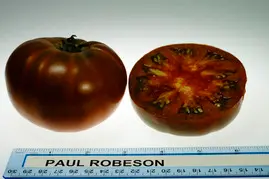
A stunning Russian heirloom named after the famous American singer and activist, prized for its extraordinary dark burgundy-black color and exceptional flavor. This large beefsteak variety delivers complex, wine-like taste with perfect balance of sweetness and acidity. A true gourmet tomato that stands out in any garden with its dramatic appearance.
Harvest
90-95d
Days to harvest
Sun
Full sun
Zones
10–10
USDA hardiness
Height
1-10 feet
Planting Timeline
Showing dates for Paul Robeson in USDA Zone 7
All Zone 7 tomato →Zone Map
Click a state to update dates
Paul Robeson · Zones 10–10
Growing Details
Complete Growing Guide
This Russian heirloom requires patience and consistent warmth to develop its signature dark pigmentation—plant 2-3 weeks earlier than standard varieties since the 90-95 day maturity counts from transplant, not seed. Paul Robeson demands full sun exposure and well-draining, slightly acidic soil rich in potassium to maximize flavor complexity and prevent blossom-end rot. The indeterminate vines grow vigorously to 6-10 feet and benefit from robust support systems and strategic pruning to improve air circulation, as this cultivar shows increased susceptibility to early and late blight in humid conditions. Watch closely for septoria leaf spot during wet seasons. The thick-walled fruits are prone to sunscald if over-pruned, so maintain adequate foliage while removing lower leaves for disease prevention. A practical tip: delay nitrogen fertilization after flowering to avoid excessive vegetative growth that delays ripening and dilutes the wine-like flavor this variety is prized for.
Light: Full sun (6 or more hours of direct sunlight a day). Soil: Clay, High Organic Matter, Loam (Silt), Sand. Soil pH: Acid (<6.0), Neutral (6.0-8.0). Drainage: Good Drainage, Moist. Height: 1 ft. 0 in. - 10 ft. 0 in.. Spread: 1 ft. 0 in. - 4 ft. 0 in.. Spacing: 3 feet-6 feet. Growth rate: Rapid. Maintenance: High. Propagation: Seed. Regions: Coastal, Mountains, Piedmont.
Harvesting
Harvest Paul Robeson tomatoes when they achieve their signature deep burgundy-black coloration throughout, as this Russian heirloom requires full color development to deliver its complex, wine-like flavor profile. The fruit should yield slightly to gentle palm pressure and feel heavy for its size, indicating peak ripeness. These large beefsteak tomatoes typically reach 8-12 ounces at maturity. For best results, practice continuous harvesting rather than waiting for all fruits to ripen simultaneously, which encourages ongoing production throughout the season. Crucially, pick tomatoes in early morning when temperatures are coolest to preserve their delicate, smoky complexity and prevent flavor degradation from heat stress.
The fruits are smooth, shiny, glossy, and are classified as berries. The size, shape, and color will vary depending on the variety or cultivar. The color of the fruits may be red, yellow, orange, green, purple, or pink. The fruits may contain over 100 yellow to light brown seeds.
Color: Gold/Yellow, Green, Orange, Pink, Purple/Lavender, Red/Burgundy, Variegated. Type: Berry. Length: > 3 inches. Width: > 3 inches.
Garden value: Edible, Showy
Harvest time: Fall, Summer
Edibility: The fruits or berries of the tomato are edible. They may be eaten raw, cooked, dried, or processed. They are a rich source of Vitamin A, Vitamin C, folic acid, and antioxidants. Lycopene is an antioxidant that gives the tomato its rich red color. Many plants will drop fruit when ripe or the fruit will come off easily. Tomatoes will continue to ripen once picked. Store them at room temperature.
Storage & Preservation
Store Paul Robeson tomatoes at room temperature, away from direct sunlight, with good air circulation. They'll keep for 5–7 days on the counter, or up to two weeks in the refrigerator's warmest section if you must chill them, though cold storage diminishes their complex flavor. For longer preservation, freezing works best: quarter the tomatoes, spread on a tray to freeze solid, then transfer to freezer bags for up to eight months. Thaw and use in cooked applications like sauces or soups. Drying is also excellent for this variety—slice thin, dry in a dehydrator or low oven until leathery, then store in airtight containers. Skip canning due to the thick flesh and lower acid content relative to water content. Because these tomatoes develop their signature smoky depth only when fully ripe and enjoyed fresh, prioritize eating them within days of harvest rather than preserving—they're bred for the table, not the pantry.
History & Origin
This Russian heirloom tomato emerged from Eastern European breeding traditions, though comprehensive documentation of its specific breeder and introduction year remains limited in available horticultural records. The variety carries strong connections to Russian seed-saving practices and heirloom preservation networks that developed during the Cold War era, when gardeners maintained diverse tomato genetics outside commercial channels. Named in honor of Paul Robeson, the influential African-American singer and activist, the cultivar reflects a cultural homage rather than direct breeding collaboration. The tomato's dark pigmentation and complex flavor profile align with Russian beefsteak breeding objectives that prioritized taste and distinctive appearance, suggesting it emerged from established Eastern European heirloom lines rather than formal institutional breeding programs.
Origin: Peru
Advantages
- +Exceptional dark burgundy-black color creates stunning visual garden appeal
- +Complex wine-like flavor with perfect sweetness and acidity balance
- +Large beefsteak size produces satisfying yields per fruit
- +Unique Russian heirloom variety appeals to gourmet tomato enthusiasts
Considerations
- -Moderate to difficult cultivation requires experienced gardener attention
- -Susceptible to late blight and early blight fungal diseases
- -Fruit cracks easily in wet conditions causing harvest loss
- -90-95 day maturity demands long growing season commitment
Companion Plants
Basil and French marigolds (Tagetes patula) are the two worth planting close. Basil's volatile oils may confuse aphids and thrips, and at 12–18 inches away it won't compete for water — that said, the culinary payoff at harvest is the more reliable argument for keeping it nearby. Marigolds release alpha-terthienyl from their roots, which suppresses root-knot nematodes in the top 6 inches of soil — a real concern for Paul Robeson specifically, since NC State Extension notes that heirloom varieties lack the soilborne disease resistance bred into modern hybrids. Keep fennel at least 10 feet out; it produces anethole, a compound that stunts tomato root development. Brassicas belong in a separate bed entirely — they share aphid and cutworm pressure with tomatoes, so planting them adjacent just concentrates two problems in one place.
Plant Together
Basil
Repels aphids, whiteflies, and hornworms while potentially improving tomato flavor
Marigold
Deters nematodes, aphids, and whiteflies with natural compounds
Carrots
Loosens soil for tomato roots and doesn't compete for nutrients
Parsley
Attracts beneficial insects like hoverflies that prey on tomato pests
Chives
Repels aphids and may help prevent fungal diseases
Nasturtium
Acts as trap crop for aphids and cucumber beetles, repels whiteflies
Oregano
Repels many insects and may provide some disease resistance benefits
Lettuce
Benefits from tomato shade and doesn't compete for deep nutrients
Keep Apart
Black Walnut
Produces juglone toxin that causes tomato wilt and stunted growth
Fennel
Inhibits tomato growth through allelopathic compounds
Brassicas
Compete heavily for nutrients and may stunt tomato growth
Corn
Both attract corn earworms and compete for similar nutrients
Nutrition Facts
Per 100g serving. % Daily Value based on 2,000 calorie diet. Source: USDA FoodData Central (FDC #321360)
Pests & Disease Resistance
Resistance
Typical heirloom susceptibility to diseases. Requires good air circulation and disease prevention.
Common Pests
Tomato hornworm, aphids, spider mites, cutworms
Diseases
Late blight, early blight, fusarium wilt, cracking in wet conditions
Troubleshooting Paul Robeson
What you'll see, why it happens, and what to do about it.
Large gray-green patches spreading across foliage fast — sometimes overnight — with dark, water-soaked lesions on fruit
Likely Causes
- Late blight (Phytophthora infestans) — spreads rapidly in cool, wet weather, and NC State Extension flags it as one of the most destructive diseases they monitor year to year
- Overhead irrigation or prolonged leaf wetness keeping foliage damp
What to Do
- 1.Pull and bag affected plants immediately — don't compost them
- 2.Switch to drip irrigation to keep foliage dry; water in the morning if you're using overhead
- 3.Rotate nightshades out of that bed for at least 3 years; NC State IPM recommends 5–7 years for serious tomato disease pressure
Lower leaves yellowing then developing brown bullseye spots, progressing up the plant from the ground
Likely Causes
- Early blight (Alternaria solani) — soil-borne fungus that splashes onto lower leaves during rain or irrigation
- Crowded spacing under 36 inches that traps humidity at the base of the plant
What to Do
- 1.Strip affected lower leaves and throw them in the trash, not the compost pile
- 2.Lay 3–4 inches of straw mulch around the base to stop soil splash
- 3.Space plants a full 36 inches apart and prune suckers to open up airflow
Fruit splitting radially or concentrically after a heavy rain following a dry spell
Likely Causes
- Irregular watering — the plant absorbs water faster than the skin can expand after a period of drought stress
- Paul Robeson's thinner skin makes it more prone to cracking than thicker-walled slicers
What to Do
- 1.Aim for 1–1.5 inches of water per week and don't let the soil dry out completely between waterings
- 2.Mulch heavily to buffer soil moisture swings between rain events
- 3.During rainy stretches, pick fruit at first blush and let it finish ripening indoors — it comes off the vine fine at that stage
Frequently Asked Questions
How long does Paul Robeson tomato take to grow?▼
Is Paul Robeson tomato good for beginners?▼
Can you grow Paul Robeson tomatoes in containers?▼
What does Paul Robeson tomato taste like?▼
When should I plant Paul Robeson tomato seeds?▼
Paul Robeson vs Cherokee Purple tomato - what's the difference?▼
Zone-by-Zone Planting Calendar
| Zone | Indoor Start | Transplant | Direct Sow | Harvest |
|---|---|---|---|---|
| Zone 1 | May – May | July – August | — | October – August |
| Zone 2 | April – May | June – July | — | October – September |
| Zone 11 | January – January | January – February | — | May – July |
| Zone 12 | January – January | January – February | — | May – July |
| Zone 13 | January – January | January – February | — | May – July |
| Zone 3 | April – April | June – July | — | September – October |
| Zone 4 | March – April | June – June | — | September – October |
| Zone 5 | March – March | May – June | — | September – October |
| Zone 6 | March – March | May – June | — | August – October |
| Zone 7 | February – March | April – May | — | August – October |
| Zone 8 | February – February | April – May | — | July – September |
| Zone 9 | January – January | March – April | — | June – August |
| Zone 10 | January – January | February – March | — | June – August |
Growing Guides from Wind River Greens
Sources & References
External authority sources used in compiling this guide.
See the Methodology page for how this data is sourced, what's AI-assisted, and known limitations.