Carrot Microgreens
Daucus carota var. sativus
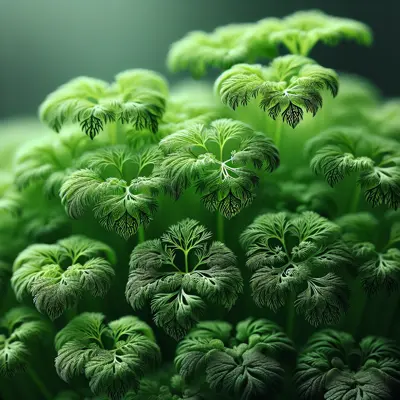
Carrot Microgreens are delicate, feathery seedlings harvested at 16-25 days, showcasing fine, fern-like green foliage with pale root stems. This heirloom variety offers a distinctive sweet carrot taste balanced by earthy, slightly bitter herbal notes uncommon in typical microgreens. Best grown in fine, well-draining seed starting mix under full sun to partial shade (4-6+ hours), they present a moderate to challenging cultivation difficulty but reward growers with vibrant, nutrient-dense greens perfect for garnishing and flavor complexity in dishes.
Harvest
16-25d
Days to harvest
Sun
Full sun to partial shade
Zones
4–11
USDA hardiness
Difficulty
Moderate to challenging
Planting Timeline
Showing dates for Carrot Microgreens in USDA Zone 7
All Zone 7 microgreen →Zone Map
Click a state to update dates
Carrot Microgreens · Zones 4–11
Growing Details
Succession Planting
Carrot microgreens are done in 16-25 days and don't regrow after a cut, so you have to stagger if you want a steady supply. Start a new tray every 7-10 days and you'll avoid the gap between one tray finishing and the next being ready. Because these grow indoors, that cadence holds year-round — no frost dates, no heat thresholds to plan around, just a rolling schedule on the kitchen counter.
Complete Growing Guide
Carrot microgreens demand patience and precision compared to faster-growing varieties, requiring the full 16-25 day window to develop their signature sweet flavor with herbal complexity. These seeds need consistent moisture throughout germination and growth phases, as uneven watering causes splitting and weak germination rates. The primary challenge is excessive stretching in low-light conditions—carrot microgreens are particularly prone to leggy growth, so position trays in bright, indirect light or under grow lights at 2-3 inches above the canopy. Watch for damping-off disease in overly humid environments; maintain good air circulation and avoid waterlogging. Unlike quicker microgreens, carrots benefit from a slightly longer darkening period during initial germination (2-3 days) before exposing to light. A practical tip: harvest when the first true leaves emerge rather than waiting for full cotyledon development, as this stage captures peak flavor and prevents the bitter, woody taste that develops in older shoots.
Light: Full sun (6 or more hours of direct sunlight a day), Partial Shade (Direct sunlight only part of the day, 2-6 hours). Soil: Clay, High Organic Matter, Loam (Silt), Sand, Shallow Rocky. Soil pH: Acid (<6.0), Alkaline (>8.0), Neutral (6.0-8.0). Drainage: Good Drainage, Moist, Occasionally Dry. Growth rate: Rapid. Maintenance: High. Propagation: Seed.
Harvesting
Carrot microgreens reach peak harvest when the first true leaves emerge above the cotyledons, displaying their characteristic feathery, fern-like appearance with a vibrant orange-tinged color. The seedlings should measure approximately two to three inches tall and feel tender yet sturdy when gently touched. For optimal flavor development, wait until day twenty to twenty-two when the herbal, slightly bitter notes fully emerge alongside the sweet carrot taste. These microgreens are best harvested in a single cut just above soil level using clean scissors, rather than continuous harvesting, since re-sprouting is minimal and inconsistent. A critical timing tip: harvest in the early morning hours when stems are most hydrated and crisp, ensuring maximum shelf life and delicate texture for your plating presentation.
Small, dry, and ribbed with bristly hairs. The compound umbel of fruits folds inward to form a roundish shape that can be blown by the wind and roll across the ground dropping seeds.
Color: Brown/Copper. Type: Achene. Length: < 1 inch. Width: < 1 inch.
Edibility: Leaves, roots, flowers, and seeds are edible. The young fleshy roots can be cooked or eaten raw, the flower clusters can be french-fried to produce a carrot-flavored dish, the aromatic seed is used as a flavoring in stews, etc. The dried roasted roots are ground into a powder and are used for making coffee.
Storage & Preservation
Store freshly harvested carrot microgreens in the refrigerator between 35-40°F in a breathable container lined with paper towels to absorb excess moisture. Unlike hardy microgreens, these delicate greens maintain peak quality for only 3-5 days, so plan harvests accordingly.
For immediate use, rinse gently in cold water just before serving and pat dry with paper towels. Their feathery texture makes them fragile when wet.
Carrot microgreens don't freeze or dry well due to their delicate structure and high moisture content. Instead, preserve their essence by making compound butter – finely chop fresh microgreens and blend with softened butter, then freeze in portions. You can also infuse vinegar with the greens for 1-2 weeks to capture their unique flavor, though this won't preserve the visual appeal. For best results, focus on frequent small harvests rather than long-term preservation methods.
History & Origin
Carrot microgreens derive from the common cultivated carrot (*Daucus carota subsp. sativus*), a domesticated root vegetable with origins in Central Asia and the Mediterranean region. The specific microgreen variety lacks well-documented breeding history comparable to heirloom carrot cultivars, as microgreens represent a modern culinary application rather than a distinct breeding line. The practice of cultivating carrot seeds as microgreens emerged from the broader microgreens movement in the late twentieth century, which repurposed standard vegetable seeds for rapid, soil-less sprouting. Contemporary carrot microgreen production relies on standard horticultural carrot seed stock, selected primarily for germination rates and visual appeal rather than through specialized breeding programs.
Origin: Europe, Eastern Asia and northern Africa
Advantages
- +Sweet carrot flavor with earthy notes appeals to diverse palates
- +Delicate appearance adds elegant visual garnish to finished dishes
- +Moderately fast growth cycle completes in three to four weeks
- +Nutrient-dense microgreens contain beta-carotene and essential vitamins
Considerations
- -Moderate to challenging difficulty makes them unsuitable for beginners
- -Susceptible to damping off and leaf blight in humid conditions
- -Extended 16-25 day growing period ties up growing space longer
- -Carrot rust fly larvae risk requires careful sanitation protocols
Companion Plants
Chives, leeks, and onions make sense near carrot microgreens if you're running multiple trays in the same space — their sulfur compounds help suppress green peach aphid (Myzus persicae), which is the one pest that'll actually find an indoor tray. A pot of Tagetes marigolds nearby does something similar, and rosemary or sage, while too drought-tolerant to share a tray with anything, won't cause problems sitting on the same shelf.
Dill, fennel, and coriander are the ones to keep at a distance. All three are Apiaceae relatives of carrot, and dill and fennel in particular release allelopathic compounds that can slow carrot germination — already the slowest part of this whole 16-25 day process. If you're growing any of them to seed on the same rack, move the carrot trays to a different shelf entirely.
Plant Together
Chives
Repels carrot fly and aphids with strong sulfur compounds
Rosemary
Deters carrot fly and other pests with aromatic oils
Sage
Repels carrot fly and cabbage moths while improving soil health
Leek
Masks carrot scent from pests and repels carrot fly
Onion
Strong scent confuses carrot fly and reduces pest damage
Marigold
Releases compounds that deter nematodes and aphids
Lettuce
Provides ground cover and doesn't compete for nutrients
Parsley
Attracts beneficial insects and shares similar growing conditions
Keep Apart
Dill
Can stunt carrot growth and attract carrot fly when mature
Fennel
Inhibits growth through allelopathic compounds that suppress germination
Coriander
Competes for space and may inhibit carrot seed germination
Nutrition Facts
Per 100g serving. % Daily Value based on 2,000 calorie diet. Source: USDA FoodData Central (FDC #170393)
Pests & Disease Resistance
Resistance
Moderate resistance, longer growing cycle increases risk
Common Pests
Aphids, carrot rust fly larvae (rare indoors)
Diseases
Damping off, leaf blight in humid conditions
Troubleshooting Carrot Microgreens
What you'll see, why it happens, and what to do about it.
Seedlings collapsing at the soil line, stems pinching off and turning brown at the base, anywhere from day 3 to day 10
Likely Causes
- Damping off (Pythium or Rhizoctonia spp.) — triggered by overwatering and poor airflow
- Seeding too densely, which traps moisture between stems
What to Do
- 1.Improve airflow immediately — set a small fan on low nearby, even just a few hours a day
- 2.Let the medium surface dry slightly between mistings instead of keeping it visibly wet
- 3.Discard the entire tray; damping off spreads fast and there's no saving an affected batch
Seeds germinate unevenly or not at all after 10+ days — patchy coverage with bare spots across the tray
Likely Causes
- Carrot seed is notoriously slow and finicky; seed older than 2 years drops off sharply in viability
- Medium dried out during the 7-14 day germination window, even once
- Seeds buried too deep instead of pressed lightly onto the surface
What to Do
- 1.Use fresh seed — carrot microgreen seed from this season or last is worth the cost difference
- 2.Cover the tray with a humidity dome or a second tray inverted on top for the first 7 days to hold moisture without constant misting
- 3.Press seed firmly onto pre-moistened medium; don't bury it more than 1/8 inch
Tiny pale or translucent insects clustering on cotyledons or the undersides of first true leaves, around day 18-22
Likely Causes
- Aphids — usually green peach aphid (Myzus persicae), hitchhiking in from nearby plants or open windows
What to Do
- 1.Harvest the tray immediately if it's close to the 16-25 day window — don't wait
- 2.If too early to harvest, knock the colonies off with a direct mist of water, then harvest within 2-3 days regardless
- 3.Check neighboring trays and any soil-grown plants nearby for the source; aphids don't appear from nowhere
Seedlings pale yellow-green and flopping over by day 14-16, with long spindly stems instead of standing upright
Likely Causes
- Insufficient light — carrot microgreens need 4-6+ hours of direct sun or a grow light positioned 2-4 inches above the canopy
- Ambient temperature above 75°F pushing stretched, weak growth
What to Do
- 1.Move the tray to a south-facing windowsill or directly under a grow light; drop the fixture to 2-4 inches above the seedlings
- 2.In a zone 7 Georgia summer, a hot windowsill can push temps well past 80°F — a climate-controlled room or basement beats a sunroom from June through September
- 3.Leggy microgreens are still edible; harvest them now at the soil line rather than waiting for improvement that won't come
Frequently Asked Questions
How long do carrot microgreens take to grow?▼
Are carrot microgreens good for beginners?▼
Can you grow carrot microgreens without soil?▼
What do carrot microgreens taste like?▼
Why are my carrot microgreens not germinating?▼
Can you regrow carrot microgreens after cutting?▼
Zone-by-Zone Planting Calendar
| Zone | Indoor Start | Transplant | Direct Sow | Harvest |
|---|---|---|---|---|
| Zone 1 | January – December | — | — | January – December |
| Zone 2 | January – December | — | — | January – December |
| Zone 11 | January – December | — | — | January – December |
| Zone 12 | January – December | — | — | January – December |
| Zone 13 | January – December | — | — | January – December |
| Zone 3 | January – December | — | — | January – December |
| Zone 4 | January – December | — | — | January – December |
| Zone 5 | January – December | — | — | January – December |
| Zone 6 | January – December | — | — | January – December |
| Zone 7 | January – December | — | — | January – December |
| Zone 8 | January – December | — | — | January – December |
| Zone 9 | January – December | — | — | January – December |
| Zone 10 | January – December | — | — | January – December |
Growing Guides from Wind River Greens
Sources & References
External authority sources used in compiling this guide.
See the Methodology page for how this data is sourced, what's AI-assisted, and known limitations.