German Giant Radish
Raphanus sativus 'German Giant'
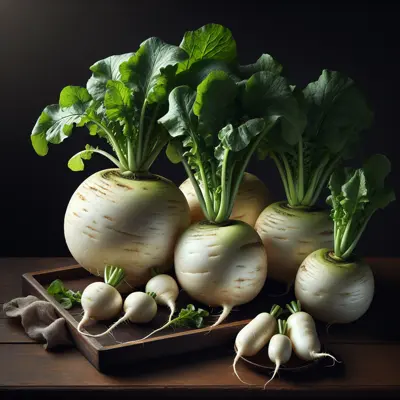
A massive white radish that can grow to impressive sizes while maintaining surprisingly mild flavor and crisp texture. Unlike typical small radishes, German Giant becomes milder and sweeter as it grows larger, making it perfect for cooking applications. This unique variety bridges the gap between European radishes and Asian daikon types.
Harvest
45-60d
Days to harvest
Sun
Full sun to partial shade
Zones
2–11
USDA hardiness
Height
0-3 feet
Planting Timeline
Showing dates for German Giant Radish in USDA Zone 7
All Zone 7 root-vegetable →Zone Map
Click a state to update dates
German Giant Radish · Zones 2–11
Growing Details
Succession Planting
Direct sow every 14 days starting March 1 in zone 7, and keep going through early May for a spring run. German Giant runs 45–60 days to harvest, so time your last spring sowing to pull roots before daytime highs lock in above 80°F — beyond that threshold, roots go pithy fast and the flavor turns sharp in an unpleasant way. Pick back up with a fall run: sow again from late August through late September, and you'll pull roots well into November. That fall window is often the better one — cooler nights firm up the flesh and the flavor mellows considerably compared to roots pulled in May heat.
Complete Growing Guide
Start your German Giant radish journey with proper soil preparation, as these giants need room to develop their impressive roots. Work your soil to at least 8-10 inches deep, incorporating 2-3 inches of compost or well-aged manure. The key is creating a loose, stone-free planting bed – any rocks or hard soil clumps will cause forked or stunted roots.
Direct sow seeds ½ inch deep in early spring, 4-6 weeks before your last frost date, or in late summer for fall harvest. Space seeds 2-3 inches apart in rows 12 inches apart – resist the urge to plant closer as crowding leads to smaller roots. German Giants prefer cool weather (50-65°F), making them perfect for shoulder seasons when other vegetables struggle.
Keep soil consistently moist but never waterlogged. Irregular watering causes woody, cracked roots, so aim for 1 inch weekly through deep, infrequent watering rather than daily sprinkles. Mulch around plants to retain moisture and suppress weeds that compete with developing roots.
Fertilize lightly with a balanced fertilizer (10-10-10) at planting, then side-dress with compost tea every 2-3 weeks. Avoid high-nitrogen fertilizers which promote leafy growth at the expense of root development – you want that energy going underground.
The biggest mistake beginners make is harvesting too early. German Giants improve with size, unlike small radishes that turn pithy. Let them grow to at least 4-6 inches long for best flavor development. In zones 7-9, you can succession plant every 2-3 weeks through fall for continuous harvest. Northern gardeners should focus on spring and late summer plantings to avoid hot weather stress.
Watch for flea beetle damage on young leaves – use row covers for the first 3-4 weeks if these pests are problematic in your area. Once plants reach 4-5 inches tall, they can typically outgrow pest damage.
Harvesting
German Giant radishes are ready when they reach 4-8 inches long and 2-3 inches wide, typically 45-60 days from sowing. Unlike smaller radishes, bigger is often better with this variety – they maintain their mild, sweet flavor even at impressive sizes. Check readiness by gently brushing soil away from the shoulder; the radish should show bright white skin with no green tinge.
Harvest in the morning when roots are fully hydrated and crisp. Grasp the foliage close to the base and pull straight up with steady pressure – these large roots require more effort than small radishes. If the tops break off, use a garden fork to carefully dig around the root, loosening soil before lifting.
Test for peak quality by checking the shoulder firmness – it should feel solid with no give when pressed. Harvest before hot weather arrives, as heat triggers flowering and makes roots woody. You can leave them in cool soil for several weeks past maturity without quality loss, unlike smaller radish varieties that quickly turn pithy.
Storage & Preservation
Fresh German Giant radishes store exceptionally well when properly handled. Remove tops immediately after harvest, leaving 1 inch of stem to prevent moisture loss. Store unwashed roots in perforated plastic bags in the refrigerator crisper drawer, where they'll maintain quality for 2-3 months – significantly longer than small radishes.
For longer preservation, German Giants excel in fermentation due to their mild flavor and firm texture. Slice and ferment like sauerkraut, or pickle whole small ones. They can also be blanched and frozen for up to 8 months, though texture becomes softer – perfect for soups and stews. Unlike most radishes, German Giants can be successfully dehydrated when sliced thin, creating shelf-stable chips. Their low water content compared to small radishes makes them ideal candidates for root cellaring in damp sand at 32-35°F.
History & Origin
German Giant radish traces its lineage to traditional European winter radishes cultivated in Germanic regions since the medieval period. These large storage radishes were essential winter vegetables, bridging the gap between small salad radishes and the massive Asian daikon varieties that wouldn't reach Europe until much later.
Developed through centuries of selection by German and Austrian farmers, this variety represents the culmination of European radish breeding focused on size, storage ability, and mild flavor. Unlike their smaller cousins bred for quick spring harvest, German Giants were specifically selected to grow large while maintaining eating quality – a trait that made them invaluable during long European winters when fresh vegetables were scarce.
The variety gained popularity among American gardeners through German immigrants in the 19th century, particularly in the Midwest where growing conditions closely matched their European homeland. Today's German Giant maintains the same characteristics that made it prized by Old World gardeners: exceptional storage life, mild flavor that improves with size, and reliable performance in cool weather conditions.
Advantages
- +Becomes milder and sweeter as it grows larger, unlike typical radishes that turn woody
- +Exceptional storage life of 2-3 months in refrigeration without quality loss
- +Strong resistance to clubroot and black rot compared to other brassicas
- +Thrives in cool weather when many vegetables struggle, perfect for shoulder seasons
- +Versatile culinary applications from fresh eating to roasting and braising
- +Self-sufficient variety requiring minimal fertilization once established
- +Excellent germination rates even in cooler soil temperatures
Considerations
- -Requires deep, well-prepared soil or roots will fork and become unmarketable
- -Long growing season (45-60 days) limits succession planting opportunities
- -Vulnerable to flea beetle damage on young seedlings before establishment
- -Cannot tolerate hot weather - bolts quickly once temperatures exceed 75°F consistently
- -Large size makes container growing impractical in pots smaller than 12 inches deep
Companion Plants
Lettuce and spinach are the most practical companions here — shallow-rooted, finished before the radish canopy closes in, and they shade the soil surface enough to slow moisture loss between waterings. Carrots work for the same spatial reason: their taproot runs well below the 4–6 inch zone where radish roots are doing their thing, so there's no real competition. Nasturtiums genuinely pull aphids away from radishes — they're a preferred host, and you'll often find colonies clustered on nasturtium stems instead of your crop. Keep all brassicas and turnips out of the same bed; they share both clubroot (Plasmodiophora brassicae) and cabbage root maggot (Delia radicum) pressure, and concentrating susceptible plants guarantees you'll feed both problems at once. Hyssop is traditionally listed as inhibiting radish germination, and there's no upside to testing that claim.
Plant Together
Lettuce
Shallow roots don't compete with radish taproot, radish breaks up soil for lettuce
Carrots
Radishes mature quickly and loosen soil for slower-growing carrots
Spinach
Compatible growing requirements and harvest times, efficient space usage
Nasturtiums
Trap crop for flea beetles and aphids that commonly attack radishes
Chives
Repels root maggots and other soil pests that damage radish roots
Marigolds
Deter nematodes and other soil-dwelling pests harmful to root vegetables
Peas
Fix nitrogen in soil and have different root zones, reducing competition
Cucumber
Radishes deter cucumber beetles and striped cucumber beetle
Keep Apart
Brassicas
Same family plants compete for nutrients and attract similar pests like flea beetles
Turnips
Both are root vegetables competing for same soil space and nutrients
Hyssop
Can inhibit growth of radishes and other root vegetables through allelopathic compounds
Nutrition Facts
Per 100g serving. % Daily Value based on 2,000 calorie diet. Source: USDA FoodData Central (FDC #169276)
Pests & Disease Resistance
Resistance
Good resistance to clubroot and black rot
Common Pests
Flea beetles, cabbage root maggot, aphids
Diseases
Clubroot, black rot, downy mildew
Troubleshooting German Giant Radish
What you'll see, why it happens, and what to do about it.
Tiny irregular holes peppering the leaves of seedlings within the first 2 weeks after germination
Likely Causes
- Flea beetles (Phyllotreta spp.) — small, jumping beetles that feed aggressively on young brassica-family leaves
- Dry, warm conditions that stress seedlings and increase beetle activity
What to Do
- 1.Cover the bed immediately with row cover (Agribon-15 or similar) and seal the edges — flea beetles can't find what they can't land on
- 2.Keep soil consistently moist at 1 inch per week; stressed seedlings take damage much harder than well-watered ones
- 3.If pressure is heavy, apply spinosad-based spray in the evening when pollinators are inactive
Roots stunted or hollow, outer skin cracked or discolored, plants wilting despite adequate water — especially in roots harvested after 60 days
Likely Causes
- Cabbage root maggot (Delia radicum) — fly larvae tunnel into the root, causing rot entry points and structural damage
- Inconsistent watering leading to boom-bust moisture cycles that crack roots before maggots are even involved
What to Do
- 1.At planting, lay a brassica collar or fine mesh barrier around each plant's stem base to block the adult fly from laying eggs at the soil line
- 2.Water on a consistent schedule — 1 inch per week, more in hot spells — to prevent the cracking that mimics maggot damage but is purely environmental
- 3.Rotate this bed out of any brassica-family crops (radish, turnip, kale, cabbage) for at least 2 seasons to break the maggot cycle
Frequently Asked Questions
How big do German Giant radishes actually get?▼
Can German Giant radishes be grown in containers?▼
When should I plant German Giant radishes for best results?▼
What's the difference between German Giant and daikon radishes?▼
Do German Giant radishes get woody like regular radishes when large?▼
How do I know when German Giant radishes are ready to harvest?▼
Zone-by-Zone Planting Calendar
| Zone | Indoor Start | Transplant | Direct Sow | Harvest |
|---|---|---|---|---|
| Zone 3 | — | — | May – June | June – October |
| Zone 4 | — | — | April – June | June – October |
| Zone 5 | — | — | April – May | June – November |
| Zone 6 | — | — | April – May | May – November |
| Zone 7 | — | — | March – May | May – November |
| Zone 8 | — | — | March – April | April – December |
| Zone 9 | — | — | February – March | March – December |
| Zone 10 | — | — | January – March | March – December |
| Zone 1 | — | — | June – July | July – September |
| Zone 2 | — | — | May – July | July – September |
| Zone 11 | — | — | January – February | February – December |
| Zone 12 | — | — | January – February | February – December |
| Zone 13 | — | — | January – February | February – December |
Growing Guides from Wind River Greens
Sources & References
External authority sources used in compiling this guide.
See the Methodology page for how this data is sourced, what's AI-assisted, and known limitations.