Red Splendor
Brassica juncea
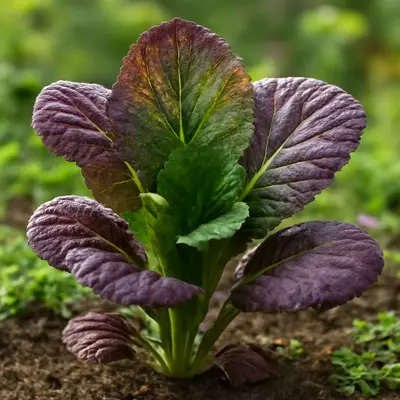
Very slow-bolting plants hold their color in hot weather, making this variety a good choice for summer production. Hot, mustardy flavor. Plant at high density to keep from becoming oversized.
Harvest
21d
Days to harvest
Sun
Full sun to partial shade
Zones
8–11
USDA hardiness
Height
12-18 inches
Planting Timeline
Showing dates for Red Splendor in USDA Zone 7
All Zone 7 lettuce →Zone Map
Click a state to update dates
Red Splendor · Zones 8–11
Growing Details
Succession Planting
Red Splendor hits harvest in about 21 days, which makes it well-suited for tight succession sowing. Direct sow every 10–14 days starting in early March and keep going through early May, stopping before daytime highs push past 80°F — mustard greens bolt quickly in heat and the leaves turn sharp and bitter. Pick back up in late August or early September once temperatures drop, and sow through October for fall cuts.
For the fall window, count backward from your first frost date and make sure you have at least 3 weeks of workable weather. In zones 8–11, that window stretches well into November. If you're cutting baby leaves at 14 days rather than pulling whole plants, you can squeeze even more harvests out of each sowing before the heat or cold shuts things down.
Complete Growing Guide
Very slow-bolting plants hold their color in hot weather, making this variety a good choice for summer production. Hot, mustardy flavor. Plant at high density to keep from becoming oversized. According to Johnny's Selected Seeds, Red Splendor is 21 baby; 45 full size to maturity, annual, open pollinated. Notable features: Cold Tolerant, Hydroponic Performer, Heat Tolerant.
Light: Full sun (6 or more hours of direct sunlight a day), Partial Shade (Direct sunlight only part of the day, 2-6 hours). Soil: High Organic Matter. Soil pH: Neutral (6.0-8.0). Drainage: Good Drainage, Moist. Height: 1 ft. 0 in. - 1 ft. 6 in.. Spread: 1 ft. 0 in. - 1 ft. 6 in.. Spacing: Less than 12 inches. Growth rate: Rapid. Maintenance: Medium. Regions: Coastal, Mountains, Piedmont.
Harvesting
Red Splendor reaches harvest at 21 baby; 45 full size from sowing per Johnny's Selected Seeds. As an annual, harvest continues until frost ends the season.
Long pods with round, brown seeds. The fruits will dry and split when ripe. The seeds are harvested for use in condiments and oil.
Color: Brown/Copper. Type: Siliqua.
Garden value: Edible
Edibility: The leaves, seeds, flowers, and stems of this mustard variety are edible raw or cooked. Harvested leaves can be stored in the fridge for 3-5 days.
Storage & Preservation
Red Splendor lettuce keeps best at 32–35°F with 95% humidity in a perforated plastic bag within your refrigerator's crisper drawer. Expect 7–10 days of acceptable freshness; quality peaks within the first week. For longer storage, freezing works if you blanch leaves for 2–3 minutes, then plunge into ice water, pat dry thoroughly, and pack flat in freezer bags—though texture suffers and it's best reserved for cooked applications like soups. Fermentation is another option: finely chop the leaves, layer with salt (about 2% by weight), weight down in a jar, and let sit 3–7 days at room temperature until pleasantly tangy. Red Splendor's anthocyanin-rich color tends to fade slightly when blanched or fermented, so preserve some fresh if aesthetics matter for your intended use.
History & Origin
Red Splendor is open-pollinated, meaning seed saved from healthy plants will produce true-to-type offspring. Listed in the Johnny's Selected Seeds catalog.
Origin: Russia to central Asia
Advantages
- +Excellent heat tolerance keeps vibrant red color through summer
- +Slow bolting habit extends harvest window in hot climates
- +Quick 21-day maturity allows rapid succession planting
- +Distinctive mustardy flavor adds unique taste to salads
- +Easy growing difficulty suitable for beginner gardeners
Considerations
- -Requires high-density planting or becomes undesirably large
- -Hot, peppery flavor may not suit all palates
- -Needs consistent moisture to prevent bitterness in heat
Companion Plants
Radishes and chives are the most useful neighbors for Red Splendor. Radishes germinate fast and break up the soil surface, which helps mustard greens establish — and they double as a trap crop for flea beetles (Phyllotreta spp.), pulling those pests away before your Red Splendor is big enough to take the pressure. Chives push sulfur compounds into the air around them, which is genuinely irritating to aphids — a real concern on mustard greens once temperatures climb past 70°F. Marigolds (Tagetes spp.) at the bed edge add another layer of deterrence without competing much for root space at 6–12 inch mustard spacing.
Fennel is the plant to keep out of this bed entirely — it releases allelopathic compounds from its roots that suppress a wide range of vegetables, and mustard greens are not immune. Broccoli is a different kind of problem: same family (Brassicaceae), same disease and pest profile, so downy mildew and flea beetles move freely between them. Separate the two by at least 3–4 feet, or better, put them on opposite ends of the garden.
Plant Together
Chives
Repels aphids and improves lettuce flavor with aromatic compounds
Carrots
Loose soil cultivation benefits lettuce roots, different root depths prevent competition
Radishes
Quick harvest breaks soil for lettuce, acts as trap crop for flea beetles
Marigolds
Repels nematodes and aphids, attracts beneficial predatory insects
Spinach
Similar growing requirements and shade tolerance, efficient space utilization
Garlic
Deters slugs and aphids with strong sulfur compounds
Nasturtiums
Acts as trap crop for aphids and cucumber beetles, edible flowers add color
Dill
Attracts beneficial insects like ladybugs and lacewings that control aphids
Keep Apart
Broccoli
Heavy feeder that competes for nitrogen and can shade out lettuce
Sunflowers
Allelopathic chemicals inhibit lettuce germination and growth
Fennel
Strong allelopathic properties inhibit growth of most vegetables including lettuce
Nutrition Facts
Per 100g serving. % Daily Value based on 2,000 calorie diet. Source: USDA FoodData Central (FDC #2346388)
Pests & Disease Resistance
Common Pests
Aphids, slugs, snails, flea beetles
Diseases
Downy mildew, lettuce mosaic virus, anthracnose
Troubleshooting Red Splendor
What you'll see, why it happens, and what to do about it.
Seedlings collapse at the soil line within the first 7–10 days after direct sowing, sometimes with a fuzzy white mold visible on the soil surface
Likely Causes
- Damping off — a complex of soil-borne fungi (Pythium, Rhizoctonia, or Sclerotium rolfsii) that rots the stem at or below the soil line
- Overwatering combined with poor drainage, which creates the wet conditions these pathogens need to spread
What to Do
- 1.Pull and discard affected seedlings — don't compost them
- 2.Let the top inch of soil dry slightly between waterings; Red Splendor needs consistent moisture, not waterlogged soil
- 3.If it recurs in the same bed, rotate out of brassicas and leafy greens for at least one season and work in compost to improve drainage before re-sowing
Pale yellow patches on the upper leaf surface with a grayish-white fuzzy growth on the underside, usually appearing during cool, wet stretches
Likely Causes
- Downy mildew (Peronospora parasitica) — a water mold that spreads fastest in humid conditions below 65°F
- Dense planting that keeps foliage wet and cuts airflow between plants
What to Do
- 1.Thin to at least 6 inches apart — crowded rows are where this gets its start
- 2.Water at the base, not overhead, and do it in the morning so leaves dry before evening
- 3.Strip and trash infected leaves; if the whole plant is covered, pull it — downy mildew moves fast once established
Ragged holes chewed through leaves overnight, with silvery slime trails visible in the morning — most common on young plants or dense seedling patches
Likely Causes
- Slugs and snails — they feed after dark and hide under debris during the day
- Flea beetles (Phyllotreta spp.) — if the holes are small and clean with no slime trail, it's them, not slugs
What to Do
- 1.For slugs: scatter iron phosphate bait (Sluggo) around the base of plants at dusk; reapply after rain
- 2.For flea beetles: cover seedlings with row cover immediately after sowing — pressure is worst on plants under 3 inches tall
- 3.Clear debris and thick mulch from the immediate planting area; both pests use it as daytime cover
Frequently Asked Questions
How long does Red Splendor lettuce take to grow?▼
Is Red Splendor lettuce good for beginners?▼
Can you grow Red Splendor lettuce in containers?▼
What does Red Splendor lettuce taste like?▼
Does Red Splendor lettuce do well in summer?▼
When should I plant Red Splendor lettuce?▼
Zone-by-Zone Planting Calendar
| Zone | Indoor Start | Transplant | Direct Sow | Harvest |
|---|---|---|---|---|
| Zone 3 | — | — | May – June | May – October |
| Zone 4 | — | — | April – June | May – October |
| Zone 5 | — | — | April – May | May – November |
| Zone 6 | — | — | April – May | April – November |
| Zone 7 | — | — | March – May | April – November |
| Zone 8 | — | — | March – April | March – December |
| Zone 9 | — | — | February – March | February – December |
| Zone 10 | — | — | January – March | February – December |
| Zone 1 | — | — | June – July | June – September |
| Zone 2 | — | — | May – July | June – September |
| Zone 11 | — | — | January – February | January – December |
| Zone 12 | — | — | January – February | January – December |
| Zone 13 | — | — | January – February | January – December |
Growing Guides from Wind River Greens
Sources & References
External authority sources used in compiling this guide.
- BreederJohnny's Selected Seeds
- USDAUSDA FoodData Central
See the Methodology page for how this data is sourced, what's AI-assisted, and known limitations.