Casper
Cucurbita pepo 'Casper'
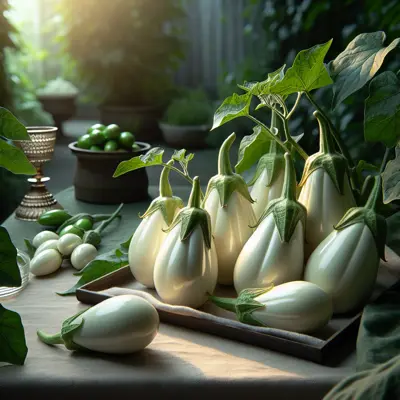
Casper is a distinctive heirloom squash variety prized for its pale, creamy-white skin and exceptional flavor profile. Maturing in approximately 95 days, this winter squash produces medium-sized fruits with a mild, exceptionally sweet taste and creamy, non-bitter flesh that sets it apart from other squash varieties. Its unique color and tender meat make it ideal for roasting, purees, and soups. The variety thrives in full sun with rich, well-drained soil amended with organic matter, though moderate cultivation skills are required. Despite its refined flavor, Casper requires vigilance against common squash pests including flea beetles, aphids, and hornworms.
Harvest
95d
Days to harvest
Sun
Full sun
Zones
3–11
USDA hardiness
Height
1-3 feet
Planting Timeline
Showing dates for Casper in USDA Zone 7
All Zone 7 squash →Zone Map
Click a state to update dates
Casper · Zones 3–11
Growing Details
Succession Planting
Casper runs 95 days to harvest, which makes it a single-planting crop for most growers — start it indoors in February or March, transplant in April or May, and pull it by October. There's no practical second-sowing window in zone 7 before frost closes things down.
One timing detail worth keeping: NC State Extension recommends getting squash in the ground as early as conditions allow to stay ahead of squash vine borers, which begin laying eggs in July. Hit that April transplant window and the plants are well past the vulnerable seedling stage before borer pressure peaks.
Complete Growing Guide
At 95 days to maturity, Casper demands consistent warmth and should be started indoors 6–8 weeks before your last frost, then transplanted only after soil reaches 70°F to prevent stunting. Space plants exactly 24 inches apart in-row to optimize air circulation and fruit development, as tighter spacing increases susceptibility to powdery mildew and early blight—diseases that plague this cultivar more readily than standard eggplants. Casper's naturally mild flavor depends on consistent moisture; drought stress concentrates bitterness and triggers early bolting of side shoots, so mulch heavily and water deeply three times weekly. Watch for spider mites on stressed plants, particularly in hot, dry climates. A practical tip: pinch off flowers during the first three weeks after transplanting to redirect energy into robust root establishment rather than premature fruiting, which ensures fuller yields of those characteristic 5–8 ounce fruits later in the season.
Light: Full sun (6 or more hours of direct sunlight a day). Soil: High Organic Matter, Loam (Silt). Soil pH: Neutral (6.0-8.0). Drainage: Good Drainage, Moist. Height: 1 ft. 0 in. - 3 ft. 0 in.. Spread: 2 ft. 0 in. - 25 ft. 0 in.. Spacing: 12 inches-3 feet. Growth rate: Rapid. Maintenance: High. Propagation: Seed. Regions: Coastal, Mountains, Piedmont.
Harvesting
Casper eggplants reach peak harvest readiness when the skin develops rich, deep coloring across the green, orange, yellow, and white sections while the distinctive daisy pattern at the stem end becomes fully pronounced, and the fruit feels firm yet slightly yielding to gentle pressure. Fruits in the 5 to 8-ounce range offer optimal texture and flavor, though slightly smaller specimens can be harvested for tenderness. These plants produce continuously throughout the season, so regular picking every two to three days encourages sustained flowering and fruiting rather than a single harvest window. Begin harvesting when plants are approximately 95 days from planting, using pruning shears to cut the fruit cleanly from the vine to avoid damaging the delicate plant structure.
A type of berry called a pepo that has a hard rind. Fruits may be long or round, large or small, smooth or warty– some have edible flesh and some are too hard or insipid to eat, though the seeds of all are edible. Has a harder, thicker stem compared to other species.
Color: Black, Cream/Tan, Gold/Yellow, Green, Orange, Pink, Red/Burgundy, Variegated, White. Type: Berry. Length: > 3 inches. Width: > 3 inches.
Garden value: Edible, Showy
Harvest time: Fall
Storage & Preservation
Store freshly harvested Casper eggplants at room temperature for up to 3 days for peak flavor and texture. For longer storage, refrigerate in the crisper drawer wrapped loosely in perforated plastic bags for up to one week. Unlike heartier purple varieties, Casper's delicate skin makes it more susceptible to chilling injury below 50°F, so avoid storing in very cold refrigerators.
For preservation, Casper's creamy texture makes it ideal for freezing after blanching. Cut into rounds, blanch for 4 minutes, then freeze on baking sheets before transferring to freezer bags. The mild flavor also excels in pressure-canned ratatouille or caponata. Avoid dehydrating, as Casper's high moisture content makes it prone to spoilage during the drying process. Consider fermenting small fruits whole in salt brine for a unique probiotic preserve that showcases the variety's naturally sweet flavor.
History & Origin
Developed by Larry Eckler of Niles, Michigan, Casper represents a modern heirloom selection within the summer squash (Cucurbita pepo) tradition. While detailed documentation of the breeding methodology remains limited in public records, Eckler's work reflects the late-20th-century amateur plant breeding movement that sought to expand vegetable diversity beyond commercial standards. The variety's distinctive daisy-patterned stem end and pale coloration suggest intentional selection for visual appeal alongside culinary qualities. Casper entered the seed-saving community through networks of heirloom gardeners and small-scale seed companies, establishing itself as a recognized cultivar among those seeking mild, non-bitter summer squash varieties suited to home gardens.
Origin: North America
Advantages
- +Stunning multicolored daisy pattern makes Casper visually distinctive and marketable.
- +Exceptionally mild and creamy flesh appeals to eggplant-averse home gardeners.
- +Medium 5-8 oz size is ideal for individual servings and cooking.
- +95-day maturity provides reliable harvest window in most growing regions.
Considerations
- -Susceptible to multiple wilts limiting success in contaminated soil conditions.
- -Vulnerable to flea beetles requiring consistent pest management throughout season.
- -Moderate difficulty and specific 24-inch spacing needs careful planning and attention.
Companion Plants
Marigolds and nasturtiums pull their weight near Casper by throwing off the scent-based cues that aphids and cucumber beetles use to zero in on a host — not a guarantee, but enough interference to reduce early pressure during that vulnerable 7-to-14-day window after transplant. Basil works in the same general way at close range, and it's going to end up in the kitchen with white squash anyway, so the planting decision is easy.
Fennel is the hard no — its root exudates stunt a wide range of vegetables, and squash doesn't get a pass. Corn is the subtler problem: in a zone 7 Georgia summer, pairing it with sprawling squash vines creates a wall of canopy that locks in humidity and feeds the fungal pressure Casper already faces from Phomopsis and Verticillium, while both crops strip the same nitrogen from the soil at the same time. Black walnut (juglone toxicity) is well documented in cucurbits — don't put Casper within 50 feet of one.
Plant Together
Basil
Repels aphids, spider mites, and thrips while potentially improving eggplant flavor
Tomatoes
Similar growing requirements and can share support structures, both nightshades with compatible needs
Peppers
Fellow nightshades with similar soil and water requirements, can deter some common pests
Marigolds
Repel nematodes, aphids, and whiteflies while attracting beneficial predatory insects
Nasturtiums
Act as trap crops for aphids and cucumber beetles, drawing pests away from eggplant
Catnip
Repels flea beetles, aphids, and ants that commonly attack eggplant
Hot Peppers
Natural pest deterrent that repels many insects harmful to eggplant
Oregano
Repels aphids and provides ground cover while improving soil health
Keep Apart
Black Walnut
Produces juglone toxin that inhibits nightshade family growth and can kill eggplant
Fennel
Allelopathic properties inhibit growth of most vegetables including eggplant
Corn
Competes for nutrients and can harbor corn earworms that also attack eggplant
Nutrition Facts
Per 100g serving. % Daily Value based on 2,000 calorie diet. Source: USDA FoodData Central (FDC #169228)
Pests & Disease Resistance
Resistance
Powdery Mildew (Intermediate); Watermelon Mosaic Virus (Intermediate)
Common Pests
Flea beetles, Colorado potato beetle, aphids, hornworms
Diseases
Verticillium wilt, fusarium wilt, bacterial spot, phomopsis blight
Troubleshooting Casper
What you'll see, why it happens, and what to do about it.
Vines wilting suddenly mid-season despite adequate water, with no obvious aboveground pest damage
Likely Causes
- Fusarium wilt (Fusarium oxysporum) — soil-borne fungus that colonizes vascular tissue and cuts off water transport
- Verticillium wilt (Verticillium dahliae) — similar mechanism, more common in cooler, poorly drained soils
- Cucumber beetle feeding that transmitted bacterial wilt (Erwinia tracheiphila) earlier in the season
What to Do
- 1.Slice the stem near the base and look for brown or tan discoloration in the interior — that confirms a vascular wilt rather than a root-zone water problem
- 2.Pull and bag the affected plant; don't compost it — both Fusarium and Verticillium persist in soil for years
- 3.Rotate cucurbits out of that bed for at least 3 seasons, and next year use row cover at transplant time to keep cucumber beetles off before the plant is established
Water-soaked lesions on fruit that expand into sunken, tan-to-brown rot, sometimes with pinkish spore masses in humid weather
Likely Causes
- Phomopsis blight (Diaporthe cucurbitacearum) — favored by warm, wet conditions and often enters through wounds or the blossom end
- Bacterial spot (Xanthomonas campestris) — similar early appearance on fruit, more common when rain splashes soil onto the fruit surface
What to Do
- 1.Remove and trash any infected fruit immediately — leaving it on the vine accelerates spore spread to the rest of the planting
- 2.Get fruit off the ground: set developing squash on a piece of straw or a small tile to reduce contact moisture and soil splash
- 3.At next planting, avoid overhead irrigation after fruit set, and consider a copper-based fungicide spray on a 7-to-10-day schedule once wet weather sets in
Frequently Asked Questions
How long does Casper eggplant take to grow from seed?▼
Is Casper eggplant good for beginners?▼
Can you grow Casper eggplant in containers?▼
What does Casper eggplant taste like compared to purple eggplant?▼
When should I plant Casper eggplant seeds?▼
Why are my Casper eggplants turning yellow?▼
Zone-by-Zone Planting Calendar
| Zone | Indoor Start | Transplant | Direct Sow | Harvest |
|---|---|---|---|---|
| Zone 1 | — | — | July – August | November – August |
| Zone 2 | — | — | June – August | October – September |
| Zone 11 | — | — | January – March | May – July |
| Zone 12 | — | — | January – March | May – July |
| Zone 13 | — | — | January – March | May – July |
| Zone 3 | April – April | June – July | — | September – October |
| Zone 4 | March – April | June – June | — | September – October |
| Zone 5 | March – March | May – June | — | September – October |
| Zone 6 | March – March | May – June | — | August – October |
| Zone 7 | February – March | April – May | — | August – October |
| Zone 8 | February – February | April – May | — | July – September |
| Zone 9 | January – January | March – April | — | June – August |
| Zone 10 | January – January | February – March | — | June – August |
Growing Guides from Wind River Greens
Sources & References
External authority sources used in compiling this guide.
See the Methodology page for how this data is sourced, what's AI-assisted, and known limitations.