Norway Spruce
Picea abies
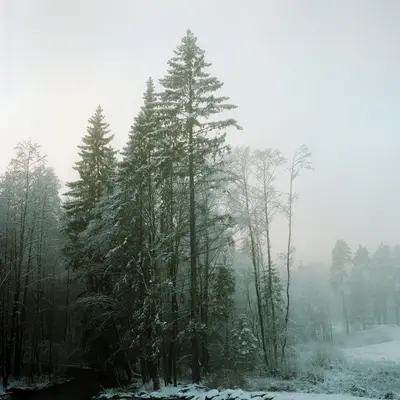
A majestic evergreen giant that serves as the classic Christmas tree silhouette, featuring gracefully drooping branches and dense, dark green needles that create dramatic winter interest. This fast-growing conifer develops into an impressive specimen with distinctive pendulous branchlets that sway beautifully in the wind, while producing large decorative cones that add architectural appeal. Its reliability in cold climates and ability to serve as an effective windbreak make it a cornerstone tree for northern landscapes.
Sun
Full sun
Zones
2–7
USDA hardiness
Height
40-60 feet
Planting Timeline
Showing dates for Norway Spruce in USDA Zone 7
All Zone 7 ornamental-tree →Zone Map
Click a state to update dates
Norway Spruce · Zones 2–7
Growing Details
Complete Growing Guide
Light: Full sun (6 or more hours of direct sunlight a day). Soil: Sand. Soil pH: Acid (<6.0). Drainage: Good Drainage, Moist. Height: 40 ft. 0 in. - 60 ft. 0 in.. Spread: 25 ft. 0 in. - 30 ft. 0 in.. Growth rate: Rapid. Maintenance: Low. Propagation: Seed. Regions: Mountains, Piedmont.
Harvesting
The cones are greenish to violet when young, and as they mature they become silvery-brown. They are 4 to 6 inches long and 1 to 2 inches in diameter with rounded scales. The scales have a blunt point and rounded tips. The thin scales are irregularly toothed and cylindrical. The cones are pendulous. The seeds are black and up to 0.2 inches long with a pale brown wing.
Color: Brown/Copper. Length: > 3 inches. Width: 1-3 inches.
Harvest time: Fall
Storage & Preservation
Norway Spruce trees are ornamental specimens meant for long-term landscape cultivation rather than harvest storage. For potted or nursery trees, keep in cool conditions (32-50°F) with moderate humidity (50-60%) if temporary indoor storage is needed. Living trees develop deep root systems and should be planted outdoors in well-drained, slightly acidic soil as soon as possible. For freshly cut branches used in holiday arrangements, store in water at 40°F to maintain needle retention for 2-3 weeks. Preservation methods include: 1) Allowing natural drying of cut branches for dried arrangements, 2) Misting foliage to maintain moisture during display, and 3) Applying commercial anti-desiccant sprays to reduce needle drop on cut material.
History & Origin
The Norway Spruce is a naturally occurring species native to Scandinavia and central Europe rather than a deliberately bred cultivar, making its true "origin" prehistoric in horticultural terms. Picea abies evolved across northern European forests over millennia and was first formally described scientifically in the 18th century as European settlement expanded and botanical classification advanced. The species became widely cultivated throughout Europe and North America during the 19th and 20th centuries, establishing itself as the quintessential Christmas tree through both cultural tradition and practical merit. Its adoption as an ornamental specimen reflects its natural range and adaptation to cold climates rather than deliberate breeding work, making it fundamentally different from modern cultivars that trace to specific breeders or programs.
Origin: Europe
Advantages
- +Attracts: Small Mammals, Songbirds
- +Fast-growing
- +Low maintenance
Companion Plants
Acid-loving plants are the most natural fit under and around a Norway Spruce. Rhododendrons share the tree's preferred soil pH of 4.5–6.0, so there's no chemical tug-of-war going on — they want the same ground. Blueberries work on the same logic, and they don't mind the partial shade the spruce casts as it matures. Hostas, ferns, astilbe, heuchera, and wild ginger all tolerate the dry, low-light conditions under a large spruce canopy — that needle-covered zone where little else survives. Wild ginger in particular will spread as a ground cover in those deep-shade pockets without making a fuss about the needle litter.
Turfgrass is the thing to keep away from the base. Lawn grass competes directly for the shallow moisture Norway Spruce roots depend on, and routine mowing brings equipment close enough to nick the bark — a reliable entry point for cytospora canker. Vegetables, tomatoes, and roses all need full sun and consistent fertilization; planted near a mature spruce, they'll be starved of both and you'll spend the season chasing problems that are really just a siting mistake.
Plant Together
Rhododendron
Both prefer acidic soil and partial shade, creating compatible growing conditions
Hosta
Thrives in the acidic soil and dappled shade created by spruce canopy
Ferns
Naturally complement spruce in woodland settings, sharing preference for moist, acidic conditions
Blueberry
Benefits from acidic soil conditions created by spruce needle litter
Astilbe
Flourishes in the cool, moist, acidic environment under spruce trees
Heuchera
Tolerates acidic soil and provides colorful ground cover beneath spruce canopy
Wild Ginger
Natural woodland companion that thrives in acidic soil with consistent moisture
Winterberry Holly
Shares preference for acidic soil and provides winter interest alongside evergreen spruce
Keep Apart
Grass Lawn
Struggles to grow under dense spruce canopy due to low light and acidic needle drop
Tomatoes
Cannot tolerate the acidic soil conditions and shade created by mature spruce trees
Roses
Require alkaline soil and full sun, opposite of conditions created by Norway Spruce
Vegetables
Most vegetables need full sun and neutral pH, incompatible with spruce growing conditions
Pests & Disease Resistance
Resistance
Generally hardy, susceptible to spruce gall adelgid and needle cast in humid conditions
Common Pests
Spruce budworm, spider mites, adelgids
Diseases
Needle cast, cytospora canker in stressed trees
Troubleshooting Norway Spruce
What you'll see, why it happens, and what to do about it.
Needles turning brown from the inside out, with webbing visible on branch tips in hot, dry weather
Likely Causes
- Spider mites (Tetranychus urticae or Oligonychus ununguis) — thrive when temps exceed 85°F and humidity drops
- Drought stress weakening the tree's natural defenses
What to Do
- 1.Blast affected branches with a strong stream of water to knock mite populations down — do this in the morning so foliage dries before evening
- 2.Apply neem oil or insecticidal soap to branch tips, covering both sides of needles; repeat every 7-10 days for 3 applications
- 3.Mulch the root zone out to the drip line with 3-4 inches of wood chips to retain soil moisture
Purple or brown banding on needles, followed by needle drop on lower branches, spreading upward over one or two seasons
Likely Causes
- Rhizosphaera needle cast (Rhizosphaera kalkhoffii) — a fungal disease that spreads in wet spring weather
- Crowded planting that limits airflow between trees
What to Do
- 1.Rake and dispose of fallen needles — do not compost them
- 2.Apply a copper-based fungicide or chlorothalonil in spring when new growth is about half an inch long, then again 3-4 weeks later
- 3.Space new plantings at least 20 feet apart; prune any dead interior branches to open up the canopy
Resin-soaked, sunken patches on the bark of lower branches or the main trunk, with surrounding needles dying back in wedge-shaped sections
Likely Causes
- Cytospora canker (Leucostoma kunzei) — a fungal pathogen that almost always targets trees already stressed by drought, poor drainage, or root damage
- Mechanical injury from lawn equipment nicking the bark
What to Do
- 1.Prune out infected branches at least 6 inches below the visible canker, and sterilize your saw between cuts with 70% isopropyl alcohol
- 2.No effective fungicide exists for established cytospora canker — put your effort into fixing the underlying stress: deep watering during dry spells, and improving drainage if the site stays wet after rain
- 3.Keep string trimmers and mower blades away from the trunk; even small bark wounds are an entry point
Frequently Asked Questions
How long does a Norway Spruce live?▼
Is Norway Spruce good for beginners?▼
Can you grow Norway Spruce in containers?▼
When should I plant Norway Spruce?▼
What pests affect Norway Spruce?▼
Why do Norway Spruce needles drop after cutting?▼
Zone-by-Zone Planting Calendar
Growing Guides from Wind River Greens
Sources & References
External authority sources used in compiling this guide.
- ExtensionNC State Extension
See the Methodology page for how this data is sourced, what's AI-assisted, and known limitations.