Jericho
Lactuca sativa
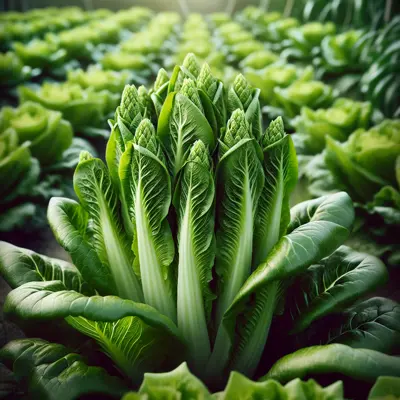
Attractive, fast-growing, bright green lettuce for baby leaf. Seed densely for narrower petioles and leaves. Sometimes grown as a full-size head. Tolerant to both heat and tipburn. MT0-30.
Harvest
60-70d
Days to harvest
Sun
Full sun to partial shade
Zones
2–11
USDA hardiness
Height
6-12 inches
Planting Timeline
Showing dates for Jericho in USDA Zone 7
All Zone 7 lettuce →Zone Map
Click a state to update dates
Jericho · Zones 2–11
Growing Details
Succession Planting
In zone 7, direct sow Jericho every 14-18 days starting around March 1 and continue through mid-May. Each sowing matures at 60-70 days out, so staggering keeps you from drowning in romaine one week and having nothing the next. Once daytime highs are consistently above 85°F — usually late May to early June — quality drops fast even in a heat-tolerant variety like Jericho, so stop new sowings at that point.
Pick back up with a late-summer succession around August 15, once nighttime temps settle back below 70°F. Fall-sown Jericho often outperforms spring plantings in flavor — slower, cooler growth concentrates the sugars noticeably. A low tunnel lets you push that fall window through October and into November, well past first frost.
Complete Growing Guide
Jericho lettuce thrives when started either by direct sowing or indoor seed trays, depending on your preference and growing season. For spring crops, sow seeds directly into the garden two to three weeks before your last frost date, as lettuce germinates well in cool soil. If you prefer indoor seeding, start plants four to six weeks before transplanting outdoors, which allows them to develop sturdy seedlings ready for the garden. For summer harvests, delay sowing until late spring to avoid bolting in intense heat, taking advantage of Jericho's notable heat tolerance that many gardeners overlook when selecting lettuce varieties.
Prepare your soil with generous organic matter—compost or aged manure worked into the top six inches creates the loose, nutrient-rich foundation this variety prefers. Space Jericho seedlings eight to ten inches apart for full-size heads, but if you're growing it as a baby leaf crop, which is this variety's primary use, plant much more densely at two to three inches apart. This dense spacing naturally produces the narrower petioles and refined leaves that make Jericho attractive on salad plates. Sow seeds just barely covered, roughly one-quarter inch deep, keeping the seedbed consistently moist until germination occurs in seven to ten days.
Water Jericho regularly and evenly throughout the growing season, providing about one inch of water weekly through rainfall or irrigation. Inconsistent watering stress can trigger tipburn, though Jericho demonstrates better tolerance to this condition than most lettuce varieties—still, steady moisture prevents the calcium deficiency issues that cause this disorder. Apply a balanced fertilizer every three weeks, or work a slow-release organic fertilizer into the soil at planting time. Lettuce is a light feeder relative to other garden vegetables, so avoid over-fertilizing, which promotes excessive leaf production at the expense of flavor.
Watch closely for aphids and leafminers, which find Jericho's tender young leaves particularly appealing. Inspect the undersides of leaves weekly for early detection. Floating row covers protect young plants effectively, and insecticidal soap handles light infestations well. Caterpillars occasionally appear later in the season; hand-picking or organic Bt applications work efficiently on this variety.
Many gardeners make the mistake of allowing Jericho to sit too long in the garden once mature. This lettuce reaches harvest readiness in 60 to 70 days and should be harvested promptly—waiting creates opportunities for bolting even in this heat-tolerant variety and allows leaves to become bitter. For continuous harvest, practice succession planting by sowing seeds every two to three weeks throughout the growing season. This approach ensures a steady supply of tender Jericho leaves rather than one overwhelming harvest followed by a gap in production.
Harvesting
Jericho reaches harvest at 29 baby from sowing per Johnny's Selected Seeds. As an annual, harvest continues until frost ends the season.
Tiny seeds with a dandelion-like tuft (pappus) to aid in wind dispersal.
Color: Brown/Copper. Type: Achene. Length: < 1 inch. Width: < 1 inch.
Harvest time: Summer
Edibility: Leaves can be used raw or cooked in salads, sandwiches, and other dishes. Head lettuce can be stored for 2-3 weeks while leaf and butterhead store for 1-2 weeks.
Storage & Preservation
Store freshly harvested Jericho lettuce in the refrigerator immediately after harvest to maintain its exceptional crispness. Wrap whole heads loosely in damp paper towels, then place in perforated plastic bags in the crisper drawer at 32-36°F with high humidity. Properly stored heads maintain peak quality for 10-14 days—significantly longer than most romaine varieties.
For longer-term preservation, Jericho's sturdy leaves make it ideal for dehydrating into lettuce powder for seasoning blends, though this isn't common practice. The variety's exceptional structure also makes it suitable for brief blanching and freezing for use in cooked applications like stir-fries or soups, though texture will soften considerably.
Avoid washing before storage unless necessary, as excess moisture promotes decay. If you must wash, use cold water, spin completely dry, and consume within 3-4 days. The variety's natural crisp texture helps it maintain quality better than softer lettuces when properly handled.
History & Origin
Jericho is open-pollinated, meaning seed saved from healthy plants will produce true-to-type offspring. Listed in the Johnny's Selected Seeds catalog.
Origin: Mediterranean to Siberia
Advantages
- +Grows quickly and produces harvestable baby leaves in 60-70 days
- +Excellent heat tolerance makes it suitable for warm season growing
- +Crisp, sweet flavor with natural resistance to bitter aftertaste
- +Attractive bright green color ideal for fresh market appeal
Considerations
- -Susceptible to aphids, leafminers, and caterpillar damage without management
- -Vulnerable to bacterial spot and lettuce drop disease pressure
- -Requires dense seeding and careful spacing for optimal leaf quality
Companion Plants
Radishes are the most practical companion for Jericho, and not for any mystical reason — they germinate in 5-7 days and mark your rows while the lettuce is still barely showing. Pull them before they bolt around day 30 and you've also loosened the top few inches of soil for the lettuce roots without any extra effort. Carrots work on a different principle: their roots go 12+ inches deep versus lettuce's shallow 6-8 inch zone, so there's no real competition. Around here in the Georgia zone 7 heat, running a short row of carrots on the south side of your lettuce gives a few inches of root-zone shade that slows surface moisture loss on dry stretches.
Chives and garlic both pull weight as aphid deterrents — the sulfur compounds they emit seem to confuse Myzus persicae (green peach aphid), which is the species most likely to colonize your romaine. I won't overclaim the mechanism, but solid lettuce blocks get hit harder than mixed beds in my experience. Nasturtiums deserve a row as a trap crop: aphids pile onto them before touching the lettuce, so you get early warning and can knock them back with a hard spray of water before the infestation moves.
Fennel is genuinely allelopathic — it suppresses germination and root development in a wide range of vegetables, lettuce included, so keep it on the opposite end of the garden. Sunflowers compete hard for water in the top 12 inches of soil, exactly where Jericho is feeding. Broccoli occasionally gets suggested as a shade provider in hot weather, but it shares susceptibility to some of the same soilborne pathogens, and the root competition isn't worth the marginal canopy benefit.
Plant Together
Chives
Repels aphids and improves lettuce flavor while providing natural pest deterrent
Carrots
Deep roots complement lettuce's shallow roots, maximizing soil use without competition
Radishes
Quick-growing radishes loosen soil for lettuce and can be harvested before lettuce needs space
Marigolds
Repel nematodes, aphids, and other pests while attracting beneficial insects
Garlic
Natural fungicide properties help prevent lettuce diseases and deter slugs
Spinach
Similar growing requirements and can provide mutual shade in hot weather
Nasturtiums
Act as trap crop for aphids and cucumber beetles while repelling ants
Dill
Attracts beneficial insects like ladybugs and parasitic wasps that control lettuce pests
Keep Apart
Broccoli
Large leaves create excessive shade and compete heavily for soil nutrients
Sunflowers
Allelopathic compounds inhibit lettuce germination and growth
Fennel
Strong allelopathic effects inhibit growth of lettuce and most other garden plants
Nutrition Facts
Per 100g serving. % Daily Value based on 2,000 calorie diet. Source: USDA FoodData Central (FDC #2346388)
Pests & Disease Resistance
Resistance
Superior heat tolerance, excellent bolt resistance, good downy mildew resistance
Common Pests
Aphids, leafminers, caterpillars
Diseases
Bacterial spot, lettuce drop, tipburn in extreme conditions
Troubleshooting Jericho
What you'll see, why it happens, and what to do about it.
Seedlings collapsing at the soil line within the first 7-10 days after transplanting or germination, sometimes with a fuzzy white mold visible on the soil surface
Likely Causes
- Damping off — a fungal complex (commonly Pythium or Rhizoctonia solani) that thrives in cold, waterlogged, or poorly drained soil
- Overwatering or compacted seed-starting mix that holds moisture too long
What to Do
- 1.Pull affected seedlings and check surrounding soil drainage — if water is pooling for more than a few hours, amend with perlite or move to a raised bed
- 2.Don't replant lettuce in that same spot until you've worked in compost and confirmed drainage; NC State's IPM guidance treats recurrent damping-off beds as a soil condition problem, not just a seed problem
- 3.Start fresh seed in sterile seed-starting mix, not garden soil pulled from the same bed
Brown water-soaked spots on outer leaves, sometimes with a slimy edge, appearing during humid stretches
Likely Causes
- Bacterial spot (Xanthomonas campestris) — spreads fast in warm, wet weather above 75°F
- Overhead watering that keeps foliage wet for hours at a time
What to Do
- 1.Switch to drip irrigation or water at the base of plants in the morning so leaves dry before nightfall
- 2.Remove and trash — don't compost — affected outer leaves as soon as you see symptoms
- 3.Rotate lettuce out of that bed for at least one full season
Outer leaf tips turning brown and papery while the rest of the plant looks healthy — no visible insects, no slime
Likely Causes
- Tipburn — a calcium uptake failure triggered by rapid growth during heat spikes or inconsistent watering, not a pathogen
- Soil moisture swings greater than what 1–1.5 inches per week of steady irrigation would provide
What to Do
- 1.Stabilize irrigation first — tipburn almost always follows a dry spell chased by heavy watering
- 2.Jericho handles heat better than most romaines, but if daytime temps are regularly hitting 85°F+, a 30-40% shade cloth slows the growth rate and cuts tipburn pressure significantly
- 3.Skip calcium foliar sprays until watering is consistent — that's the actual fix in the vast majority of cases
Plants suddenly collapsing mid-season, with a water-soaked brown rot at the crown and white cottony mycelium visible near the soil
Likely Causes
- Lettuce drop (Sclerotinia sclerotiorum or S. minor) — a soilborne fungus that produces hard black sclerotia that persist in soil for years
- Dense planting under 8 inches apart that traps humidity around the crown
What to Do
- 1.Pull and bag affected plants immediately — do not compost; the sclerotia survive the pile and come back next season
- 2.Space plants at the full 8-12 inches to improve airflow around the crown
- 3.Hold off on planting lettuce or other susceptible crops (carrots, celery, beans) in that bed for at least 2-3 seasons — Sclerotinia sclerotia don't break down quickly
Frequently Asked Questions
How long does Jericho lettuce take to grow from seed?▼
Can you grow Jericho lettuce in containers?▼
Is Jericho lettuce good for beginners?▼
What does Jericho lettuce taste like compared to regular romaine?▼
When should I plant Jericho lettuce for summer harvest?▼
Jericho vs regular romaine lettuce - what's the difference?▼
Zone-by-Zone Planting Calendar
| Zone | Indoor Start | Transplant | Direct Sow | Harvest |
|---|---|---|---|---|
| Zone 3 | — | — | May – June | July – October |
| Zone 4 | — | — | April – June | June – October |
| Zone 5 | — | — | April – May | June – November |
| Zone 6 | — | — | April – May | June – November |
| Zone 7 | — | — | March – May | May – November |
| Zone 8 | — | — | March – April | May – December |
| Zone 9 | — | — | February – March | April – December |
| Zone 10 | — | — | January – March | March – December |
| Zone 1 | — | — | June – July | August – September |
| Zone 2 | — | — | May – July | July – September |
| Zone 11 | — | — | January – February | February – December |
| Zone 12 | — | — | January – February | February – December |
| Zone 13 | — | — | January – February | February – December |
Growing Guides from Wind River Greens
Sources & References
External authority sources used in compiling this guide.
- BreederJohnny's Selected Seeds
- USDAUSDA FoodData Central
See the Methodology page for how this data is sourced, what's AI-assisted, and known limitations.